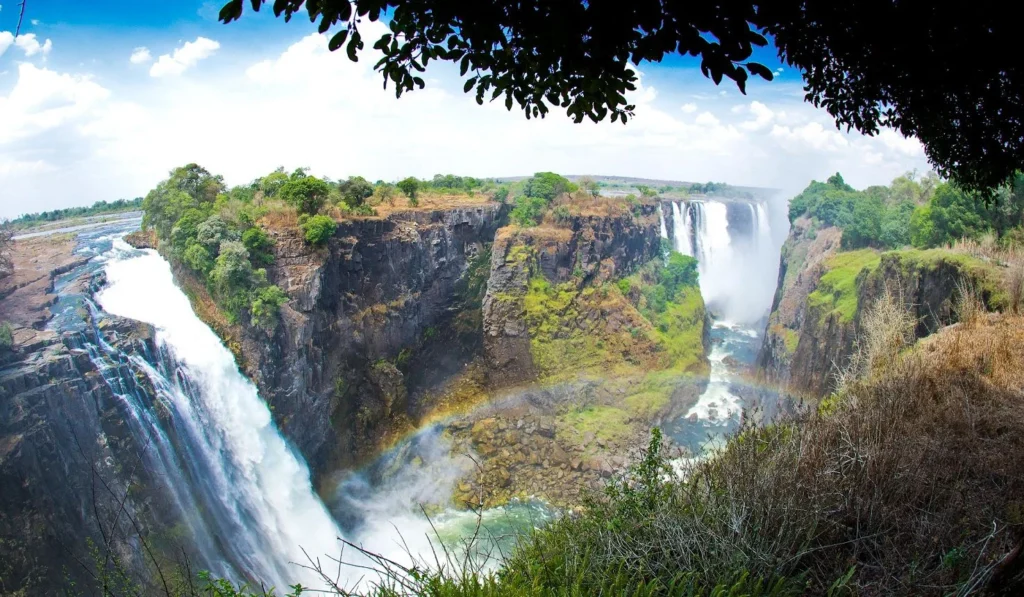

Ecology of the Okavango Delta
What is the Okavango Delta?
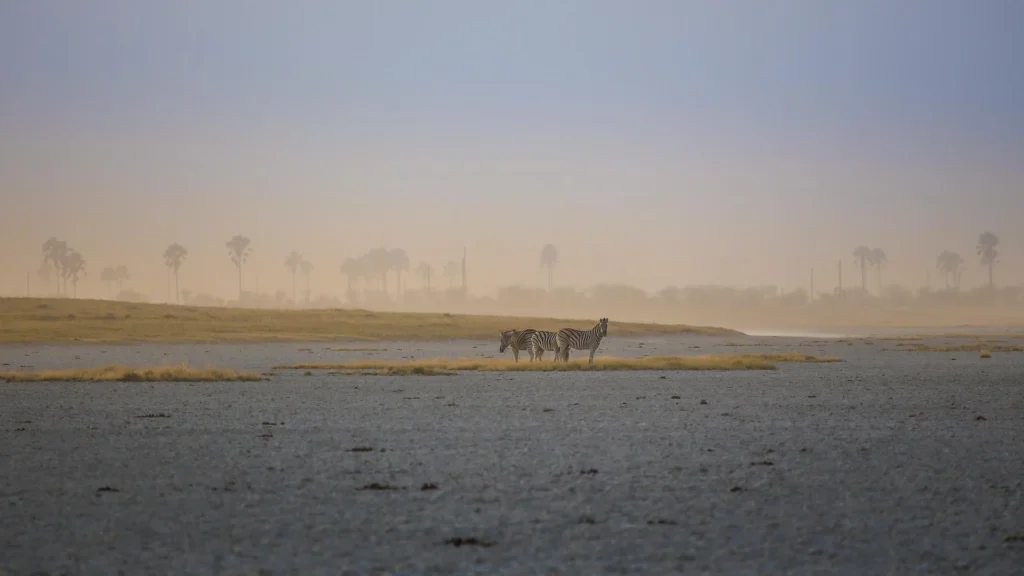
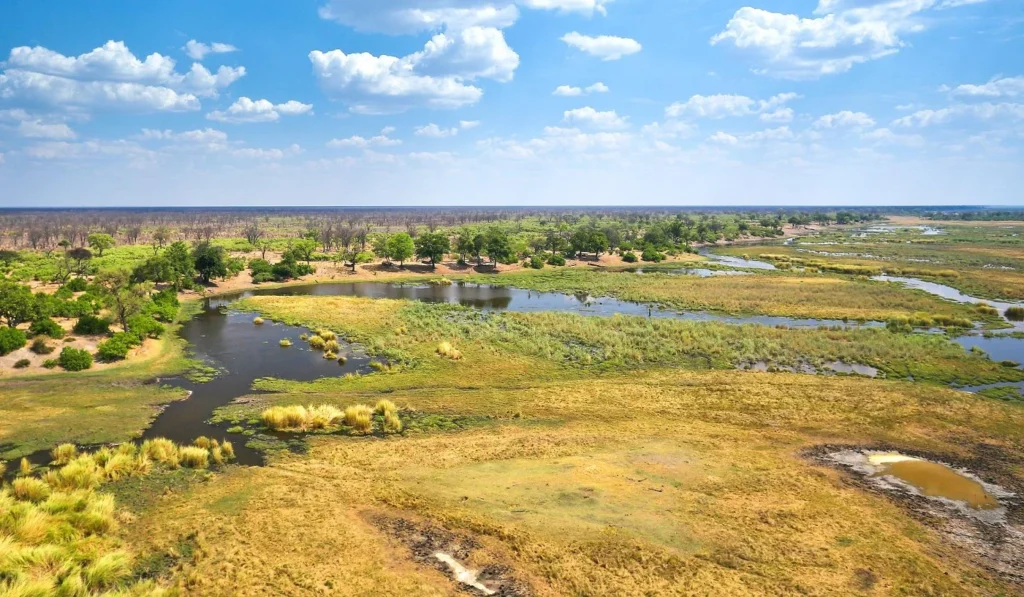
The Okavango Delta is Africa’s most counterintuitive river system. The Okavango River rises in Angola’s highlands, flows south through Namibia, and then rather than reaching the sea, it simply disappears into the Kalahari sands of northern Botswana, spreading across roughly 15,000 square kilometres of channels, islands and floodplains. The water doesn’t drain away. It evaporates. It transpires. It gets consumed by the landscape itself.
Here’s what makes it extraordinary: the system runs on a months-long delay. Summer rains fall in Angola between November and March, gathering into the Cubango and Cuito rivers. These merge and begin the long journey south. By the time that water reaches Botswana between June and August, it’s transformed the timing of everything. While the surrounding Kalahari is drying out and local rains have long stopped, the Angolan flood pulse arrives. Channels deepen. Lagoons swell. Floodplains fill. Grazing improves. The Delta expands at precisely the moment when the region is tightening under dry season pressure.
Rain that fell in Angola in January doesn’t reshape the landscape until June or July. This delayed impact means the Delta becomes a refuge when wildlife needs it most. The concentration of animals during those months is unlike anything else in Africa.

Habitats of the Okavango Delta
The Delta isn’t one vast area but a series of different habitats stitched together by water.
The Okavango’s permanent channels are deep, slow moving waterways that hold water year round, this is where the crocodiles, hippos and fish anchor here. Seasonal floodplains are usually shallow grasslands that flood during peak water. When water recedes they become nutrient rich grazing lawns. Then there are the papyrus and reed beds, which are dense wetlands that filter sediment and create shelter for birds and breeding fish, and islands often formed from termite mounds and sediment build up. Many become slightly saline over time as minerals concentrate in the centre, pushing trees to the edges and creating ring shaped woodlands. On higher ground that rarely floods, you find dry woodland and mopane forest. Elephants browse here. Predators den here. It is dry season security.
This patchwork allows aquatic and terrestrial species to exist side by side, often within a few hundred metres of each other.

Wildlife distribution and movement in the Okavango Delta
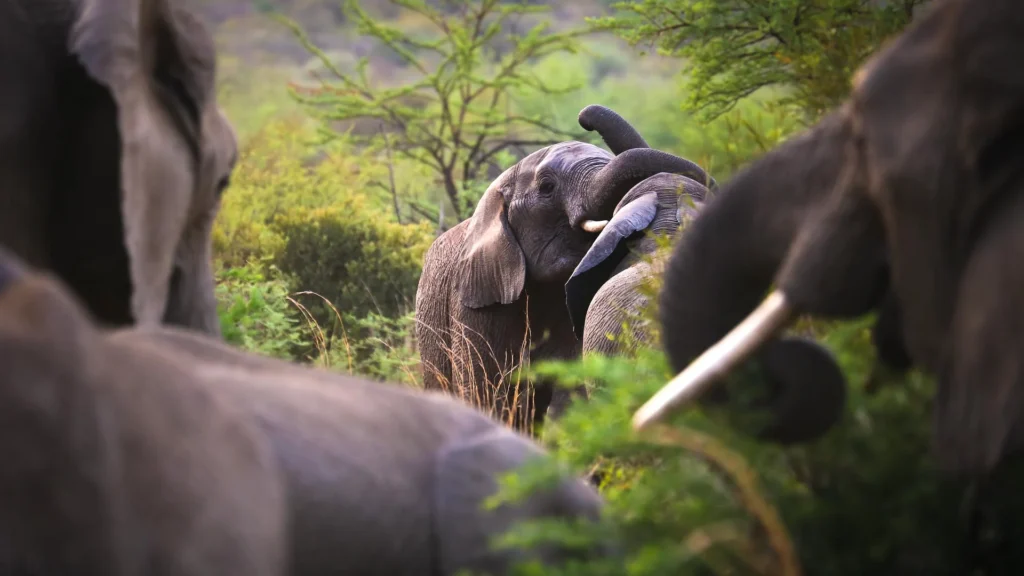
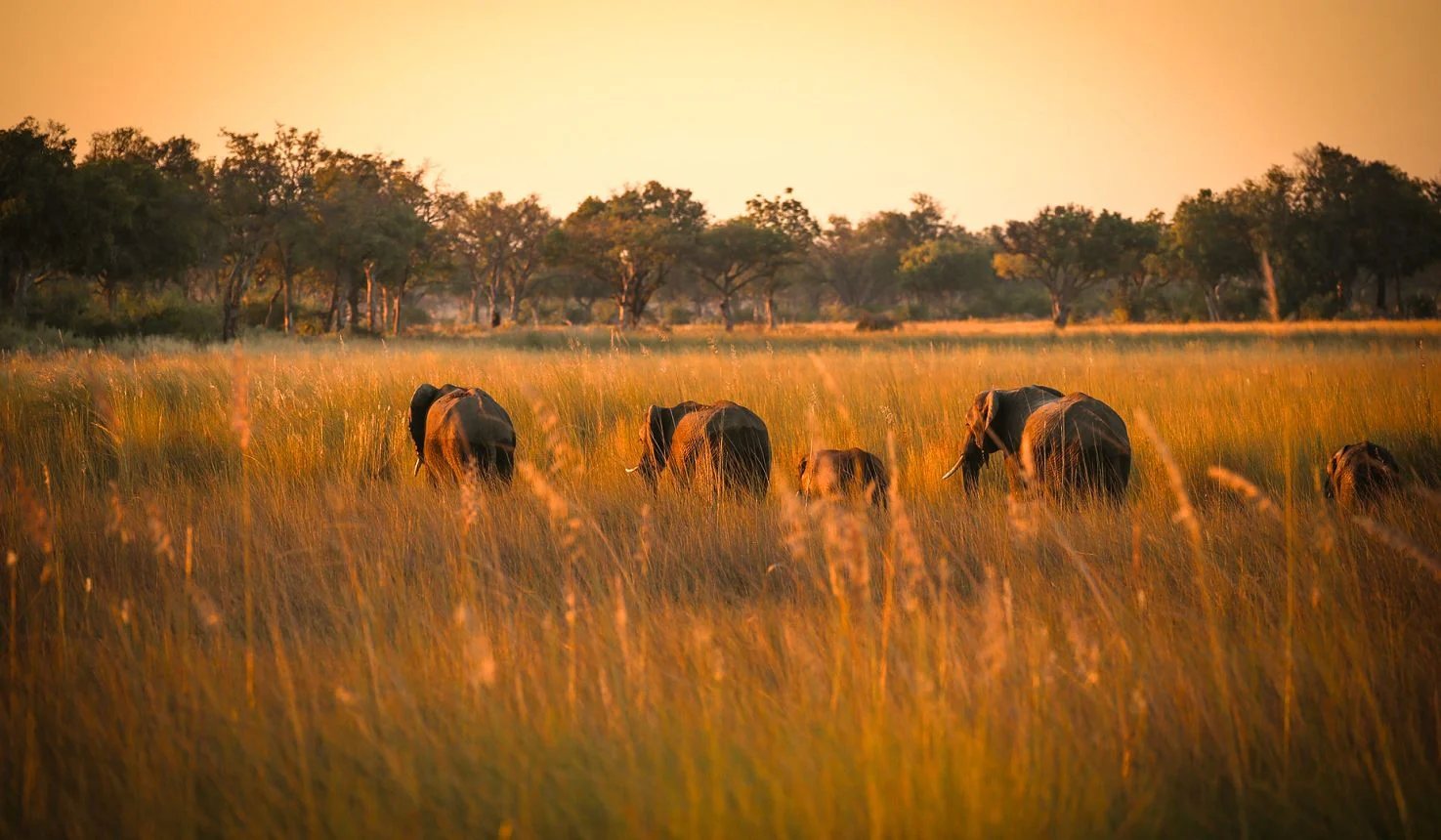
The changing waters of the Okavango Delta have a direct impact on wildlife movement. During peak flood, red lechwe and sitatunga favour the marsh edges where they can outmanoeuvre predators in shallow water. Buffalo and elephant spread through newly green floodplains. Lions adjust territories to match prey concentrations. As the water recedes, animals disperse. Grazers follow fresh growth. Predators follow grazers. Fish retreat into deeper channels. Birds track the changing edge of water like clockwork.
Distribution shifts with water depth, grass quality and access to permanent drinking sources.
In the late dry season, when water elsewhere is scarce, the Delta pulls wildlife inward. Densities increase. Encounters intensify. It can feel dramatic because it is. Then the rains return locally. Surface pans fill outside the Delta. Animals begin to spread outward again into the wider ecosystem.
The Okavango Delta works because water, sand, vegetation and wildlife are locked into a long standing ecological rhythm. Interrupt that rhythm and the system feels it, this is why conservation matters so deeply when it comes to the Okavango.

Further reading
- Okavango Delta
- The Okavango Delta experience
- When to visit the Okavango Delta
- How long to spend in the Okavango Delta
- How much does it cost to visit the Okavango Delta
- Where to stay in the Okavango Delta
- Logistics and practicalities
- Conservation in the Okavango Delta
Extraordinary tailor-made adventures,
from earthy and edgy to easy and extravagant
From around USD 2500 per person, you set the ceiling
Sample Trips
Here are some of our popular trip shapes

Get started on your trip
It’s never too soon to get in touch, we are here to help with every stage of your planning.
Best Lodges
We regularly inspect and photograph all of the the best lodges, to ensure that we always recommend the most suitable options

Key Locations
Take a look around related locations. Click ‘View more’ to explore locations further afield.