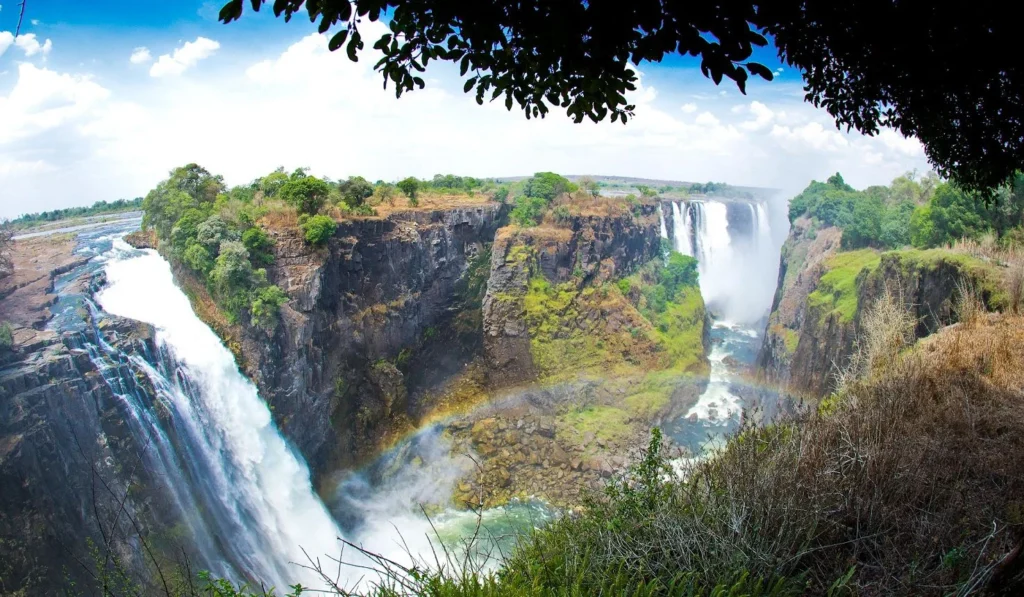

When to visit the Okavango Delta
When is the best time to go to the Okavango Delta
The Okavango Delta is shaped by seasonal rhythms, water levels, wildlife movements, vegetation, temperature, and accessibility all shift throughout the year. Understanding these patterns isn’t just helpful, it’s essential. It determines which camps you can reach, which activities are available, which animals you’ll see, and what you’ll pay.
This guide breaks down each season, from peak dry and flood (June–October) through the green season (November–March) and shoulder months, explaining what to expect in terms of wildlife, conditions, photography opportunities, and pricing. We’ve also included a month-by-month breakdown so you can see exactly what each period offers. By the end, you’ll know precisely when to visit based on your priorities, whether that’s the most reliable game viewing, the best value, exceptional birding, or a quieter, more atmospheric experience.

Safari seasons in the Okavango Delta
Peak Dry and Flood Season : June–October
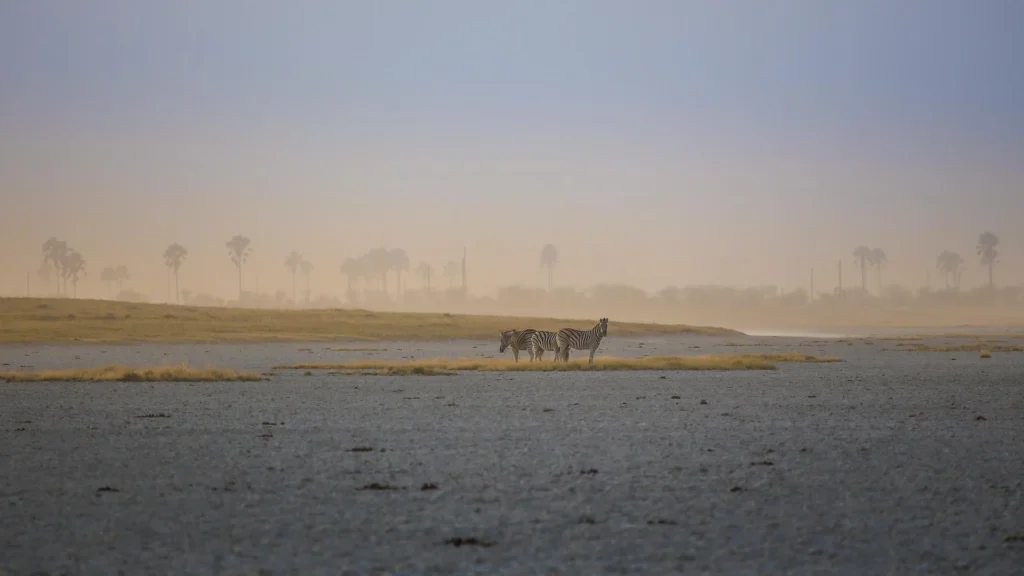
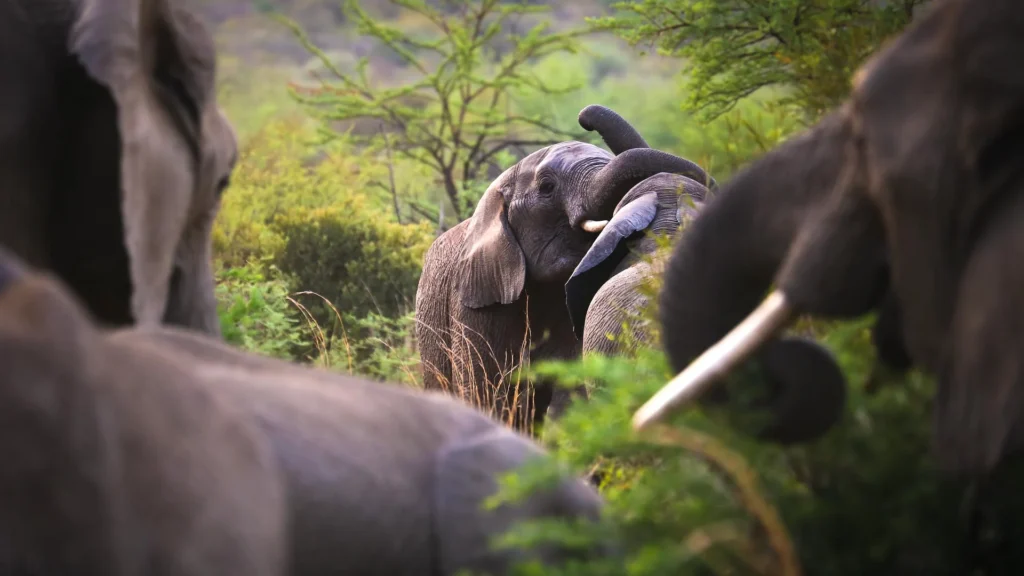
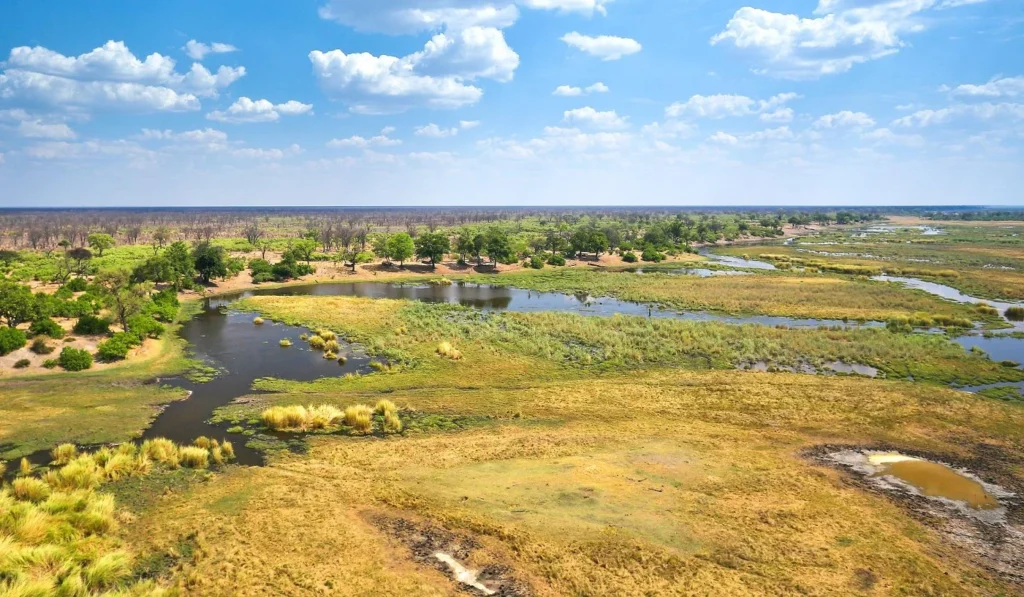
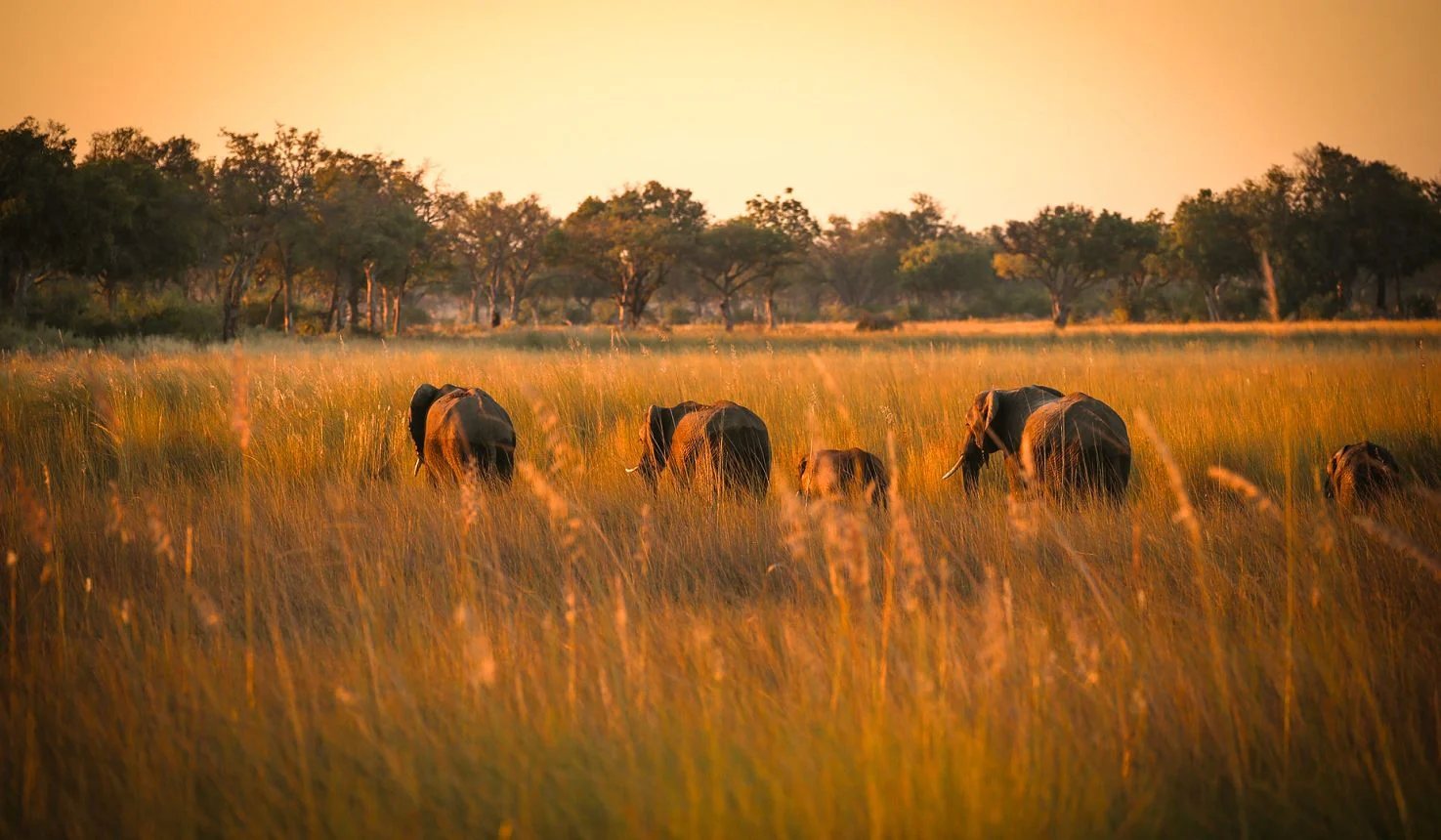
The peak dry and flood season in the Okavango runs from June to October, during this time the delta truly comes alive. Seasonal floods arrive from Angola, gradually filling channels, marshes, and pans, transforming the landscape into a maze of waterways. These water-rich areas act like magnets for wildlife, drawing animals from the vast dry hinterlands. Herds of elephants, buffalo, and antelope gather around permanent and seasonal water sources, while predators, including lions, leopards, and wild dogs, follow, creating some of the most concentrated and predictable wildlife sightings anywhere in Africa.
The combination of dry weather, open terrain, and peak flood conditions makes this season ideal for a wide range of safari activities. Walking safaris and game drives are at their most exhilarating, with clear tracks and excellent visibility. Meanwhile, mokoro trips, boat safaris, and guided water excursions allow you to explore channels and lagoons that are inaccessible at other times of year. This interplay of land and water gives visitors a 360-degree delta experience that is impossible to replicate outside this window.
Photographers in the Okavango during the peak dry and flood season are in paradise. The combination of open terrain, high wildlife concentrations, and striking water landscapes creates near-perfect conditions for capturing iconic African scenes. Elephants wade through flooded plains, their reflections mirrored in the water, while predators such as lions and leopards move along riverbanks, providing dramatic, action-filled compositions. Birdlife is abundant, from colorful bee-eaters and jacanas to flocks of egrets gliding over shimmering channels, giving endless opportunities for dynamic, multi-layered shots. Early mornings and late afternoons offer golden light that illuminates the delta, turning simple scenes into cinematic frames.
As the busiest season, June–October is also peak pricing. Daily rates typically range from USD 1,000 to 4,500 per person per night, depending on camp style and location. To put this in perspective, Okavango safaris are around 30% more expensive than similar experiences in Zimbabwe, Zambia, Kenya, and Tanzania, and roughly 50% higher than South Africa. High demand and limited camp capacity mean that early planning is essential if you want to secure the best lodges, guides, and itineraries.
In short, this season offers unparalleled wildlife encounters, stunning delta landscapes, and the quintessential Okavango safari experience. While it carries a premium, for travelers who want the richest, most reliable game viewing and the classic delta experience, June to October is unquestionably the time to go.

Green season : November–March
The green season in the Okavango runs from November to March, when local summer rains transform the landscape. Dry plains turn lush and green, seasonal pans fill, and the delta takes on a softer, more atmospheric character. Storm clouds build dramatic skies, vegetation thickens, and the bush feels alive with movement and sound, offering a very different but equally compelling safari experience.
Despite the rains, wildlife remains prolific throughout the Okavango due to its permanent water sources. Elephants, buffalo, and plains game continue to move through the delta, while predators remain active, drawn by an abundance of prey and the arrival of newborn animals. This is a season defined by life and renewal, with young antelope, heightened predator activity, and constant interaction between species.
Safari conditions vary throughout the green season. Early months can be more challenging, with higher humidity and occasional heavy downpours affecting accessibility and activity timing. As the season progresses, conditions improve markedly, with February and March standing out as particularly rewarding. Wildlife viewing becomes more consistent, the bush settles into a rhythm, and the experience feels both immersive and relaxed, earning this period its reputation as a genuine “secret season” for those in the know.
For birders and photographers, this is the Okavango at its most expressive. Migratory species arrive in large numbers, making this the best time of year for birding, while lush vegetation and dramatic skies create striking photographic opportunities. Soft light after rain, vibrant greens, and scenes featuring newborn animals lend a sense of depth and emotion rarely seen during the drier months.
From a pricing perspective, the green season offers exceptional value. Discounts of over 50 percent are common, with prices starting from around USD 500 per person per night. Fewer visitors and quieter camps add to the appeal, but limited availability means long lead times are often required to secure the best lodges and locations.
In short, the green season offers a quieter, richer, and more atmospheric Okavango experience. For travelers willing to embrace a little unpredictability in exchange for value, birdlife, and a deeper connection to the landscape, November to March delivers one of the delta’s most rewarding safari windows.

Shoulder season : October
October marks the hot end of the dry season in the Okavango and sits apart from both the peak flood months and the green season. By this point, water is scarce outside the main channels, vegetation is thin, and wildlife is drawn tightly toward permanent water sources. This creates exceptional game viewing, with frequent predator sightings and intense interactions around rivers and remaining pans.
Wildlife density in October is among the highest of the year. Elephants, buffalo, and plains game cluster around water, while lions, leopards, and wild dogs take full advantage of the conditions. Sightings are often dramatic and close, making this one of the most wildlife-rich periods in the Okavango from a purely observational perspective.
However, these conditions come with significant challenges. October is the hottest month of the year, with daytime temperatures regularly reaching uncomfortable levels. Safari activities are carefully timed around the heat, with early morning and late afternoon outings essential, and walking safaris often limited. Midday hours are typically spent resting, making this a demanding time for travelers who are sensitive to heat.
Despite the physical intensity, October remains a high season in terms of pricing. Rates are comparable to the peak dry and flood months, reflecting continued demand and exceptional wildlife viewing. There are few cost advantages compared to earlier in the dry season, so this period is best suited to experienced safari-goers who prioritize wildlife density over comfort.
In short, October delivers some of the Okavango’s most intense and rewarding game viewing, but it is not for everyone. For travelers prepared for extreme heat and looking for raw, dramatic wildlife encounters, it can be unforgettable. For others, earlier dry season months or the cooler shoulder periods may offer a more balanced experience.

Month by month guide to the Okavango Delta
January
January sits firmly in the green season. The landscape is lush and vibrant, with local rains refreshing the delta and dramatic skies building in the afternoons. Wildlife remains present thanks to permanent water, birding is exceptional, and newborn animals are common. Conditions can be humid, but the atmosphere is rich and immersive.
February
February marks a turning point in the green season. Rainfall becomes more settled, wildlife viewing improves noticeably, and the bush feels calmer and more predictable. This is one of the best-value months in the Okavango, offering excellent birdlife, fewer visitors, and increasingly rewarding game viewing.
March
March is often considered the sweet spot of the green season. Vegetation is still lush, skies remain dramatic, and wildlife sightings are consistently good. Temperatures ease slightly, camps are quiet, and the overall safari experience feels balanced, atmospheric, and deeply rewarding.
April
April is a true transition month. The rains fade, bush conditions improve, and visibility increases as grasses begin to thin. Wildlife remains widespread but easier to spot, and the delta feels fresh and open. This is an excellent month for travelers seeking quality conditions without peak season crowds.
May
May bridges the gap between green and dry seasons. Conditions are excellent, nights cool, and wildlife viewing continues to improve. Wild dogs often den during this month, offering rare and memorable sightings. Visitor numbers remain relatively low, making this a calm and highly appealing time to visit.
June
June marks the start of the peak dry and flood season. Floodwaters begin arriving from Angola, temperatures are mild, and wildlife starts to concentrate around water sources. Safari conditions are superb, with a mix of land and water activities becoming increasingly available.
July
July is classic Okavango safari season. Flood levels rise, wildlife densities increase, and game viewing is highly reliable. Cooler temperatures make activities comfortable throughout the day, and the delta’s waterways come fully into play.
August
August delivers some of the most consistent wildlife viewing of the year. The delta is fully flooded, animals are concentrated, and both water- and land-based safaris are at their best. This is peak season in every sense, with corresponding demand and pricing.
September
September continues the peak season experience, with excellent wildlife sightings and increasingly warm days. Flood levels remain high, and predator activity is strong. This is a popular month for experienced safari-goers seeking intensity and reliability.
October
October is the hot end of the dry season. Wildlife viewing is exceptional, with animals tightly clustered around water, but temperatures can be extreme. Activities are carefully timed around the heat, and this month is best suited to travelers who prioritize wildlife over comfort.
November
November signals the return of the green season. Early rains refresh the landscape, temperatures remain high, and conditions can be variable. Wildlife is still present, birdlife increases, and visitor numbers drop sharply, offering a quieter safari experience.
December
December is firmly green and atmospheric. The bush is lush, birding is outstanding, and newborn animals appear across the delta. While conditions can be humid and unpredictable, the sense of space, value, and seasonal drama appeals to travelers seeking a more immersive safari.
When is the right time to visit the Okavango Delta
Choosing when to visit the Okavango Delta is about understanding what you value most. If your priority is the richest and most reliable wildlife viewing, cooler temperatures, and access to both land and water activities, the peak dry and flood season from June to September delivers the classic delta experience. If you are comfortable with heat and want intense, dramatic wildlife encounters, October offers exceptional game viewing for those prepared for demanding conditions.
For travelers drawn to atmosphere, birdlife, photography, and value, the green season from November to March reveals a quieter, more expressive Okavango, with February and March standing out as particularly rewarding months. If you want excellent bush conditions, fewer visitors, and unique seasonal highlights such as wild dog denning, the shoulder months of April and May strike an ideal balance.
At ATR Safari, we understand how every month affects every camp, every activity, and every wildlife movement. By matching your priorities to the rhythms of the delta, we ensure you are in exactly the right place at exactly the right time, turning a well-planned safari into an unforgettable one.
Further reading
- Okavango Delta
- The Okavango Delta experience
- How long to spend in the Okavango Delta
- How much does it cost to visit the Okavango Delta
- Where to stay in the Okavango Delta
- Logistics and practicalities
- Ecology of the Okavango Delta
- Conservation in the Okavango Delta
Extraordinary tailor-made adventures,
from earthy and edgy to easy and extravagant
From around USD 2500 per person, you set the ceiling
Sample Trips
Here are some of our popular trip shapes

Get started on your trip
It’s never too soon to get in touch, we are here to help with every stage of your planning.
Best Lodges
We regularly inspect and photograph all of the the best lodges, to ensure that we always recommend the most suitable options

Key Locations
Take a look around related locations. Click ‘View more’ to explore locations further afield.