
Safari to Isla Genovesa
Isla Genovesa
is a birding hotspot
in the north of Galapagos
a relatively bleak and rocky island
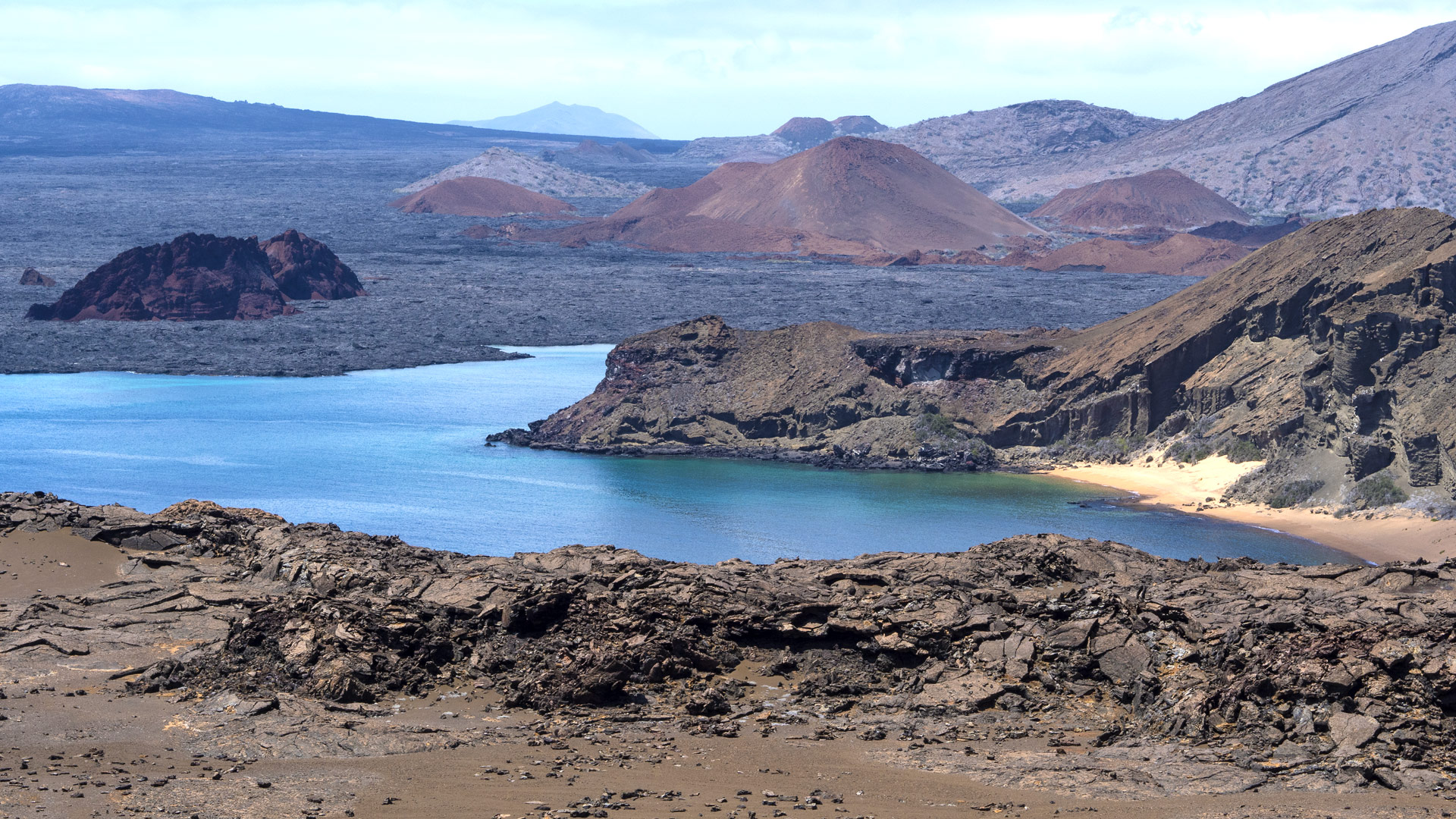
Isla Genovesa is a horseshoe-shaped island, the top of a shield volcano whose caldera has collapsed, allowing the ocean to flow in and form what is now the sheltered Great Darwin Bay.
Area : 14 sq km / 5 sq mi
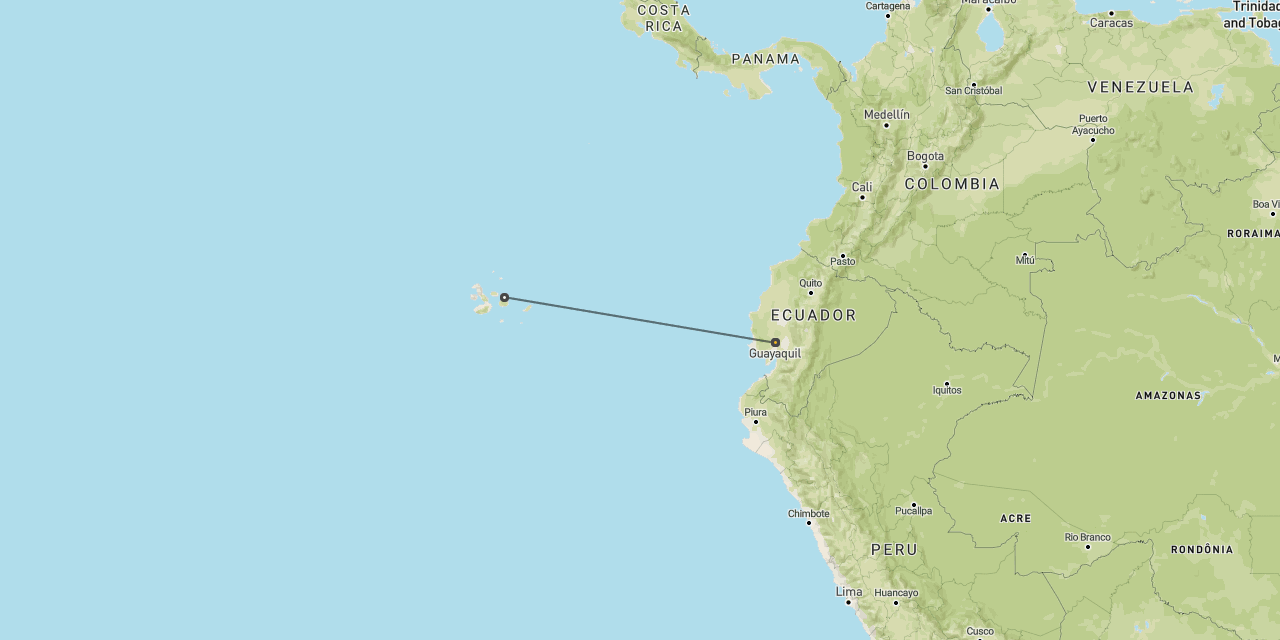
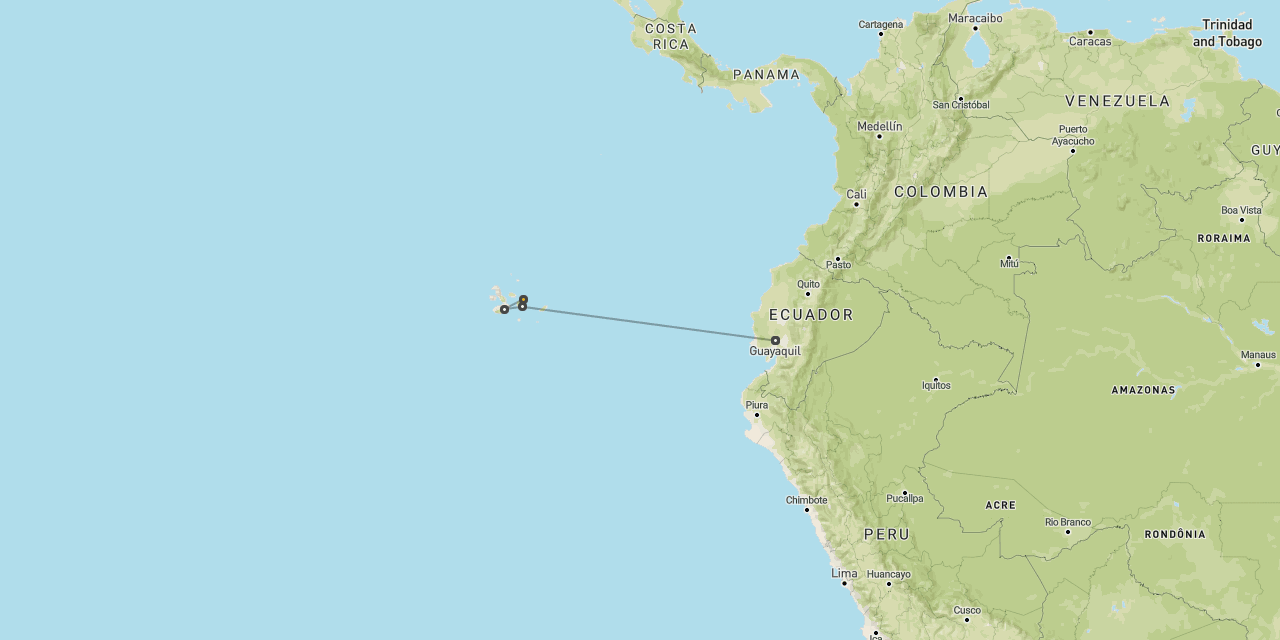
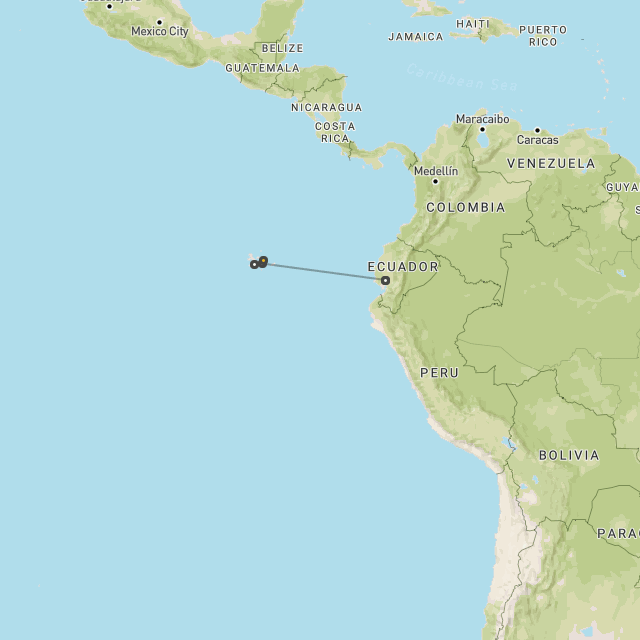
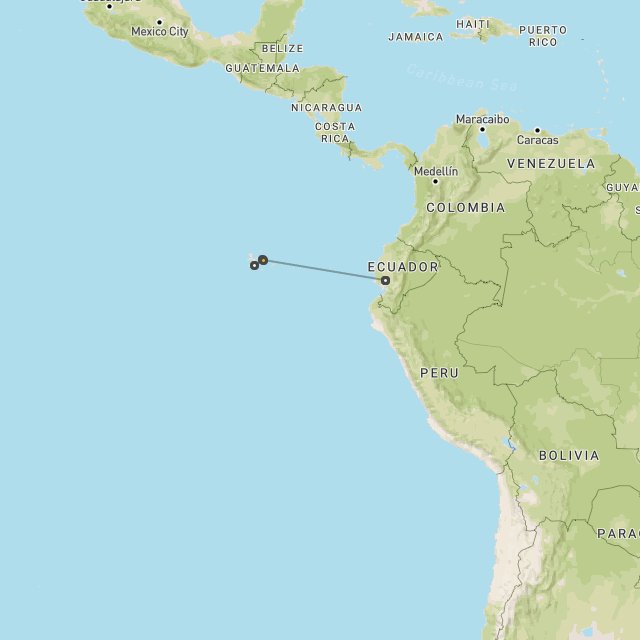
Location : 100 km northeast of Seymour Airport
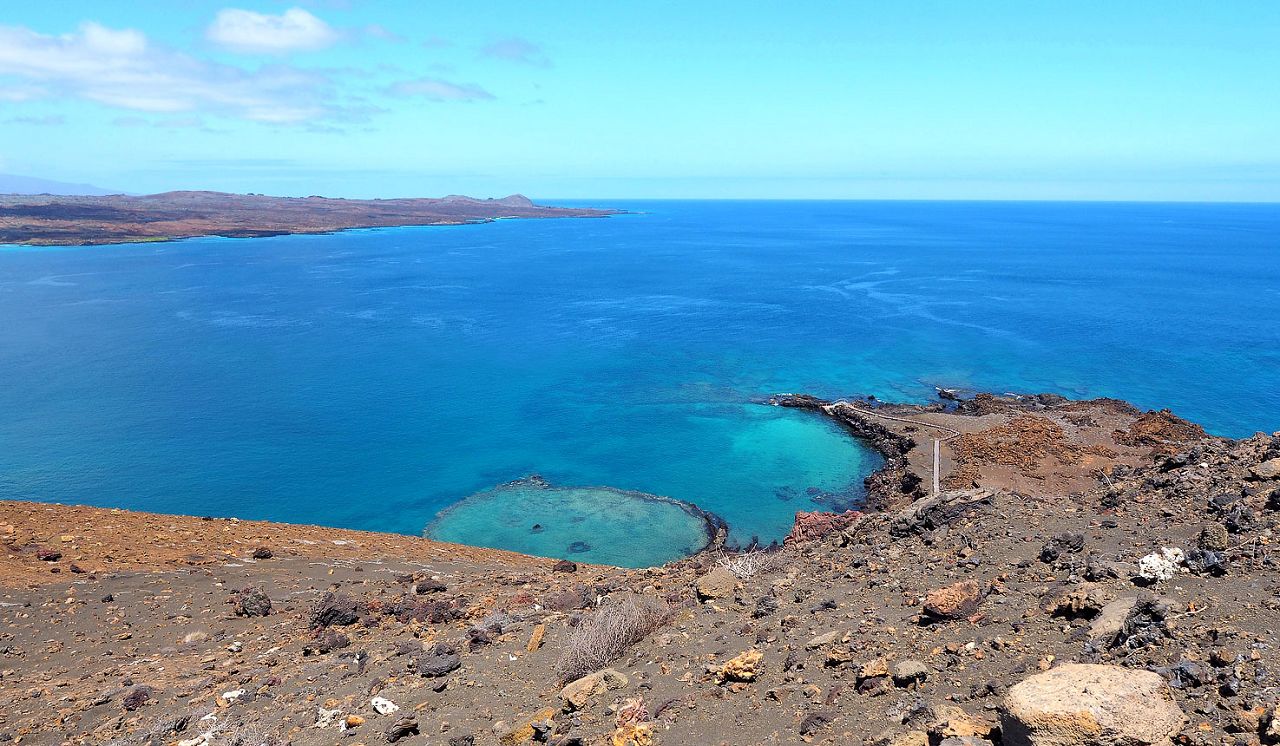
The broad sweep of Great Darwin Bay, along with much of the outer fringes of the island, are surrounded by cliffs, whilst the largely undulating and rocky surface of the island, which rises to just 64m (210’) above sea level, is punctuated by a round depression containing the saline Lake Arcturus.
Although there have been no recorded eruptions on the island, there are some apparently very young lava flows on the flanks of the volcano.
Genovesa and Fernandina are the only two larger islands in Galapagos whose ecosystems have not suffered at the hands of feral animals, meaning that they are much more pristine.
The island is home to a plethora of birds.
The island was named after the city of Genoa in Italy, birthplace of navigator Christopher Columbus (even though he never visited Galapagos). It has also been known as Tower Island and Bird Island.
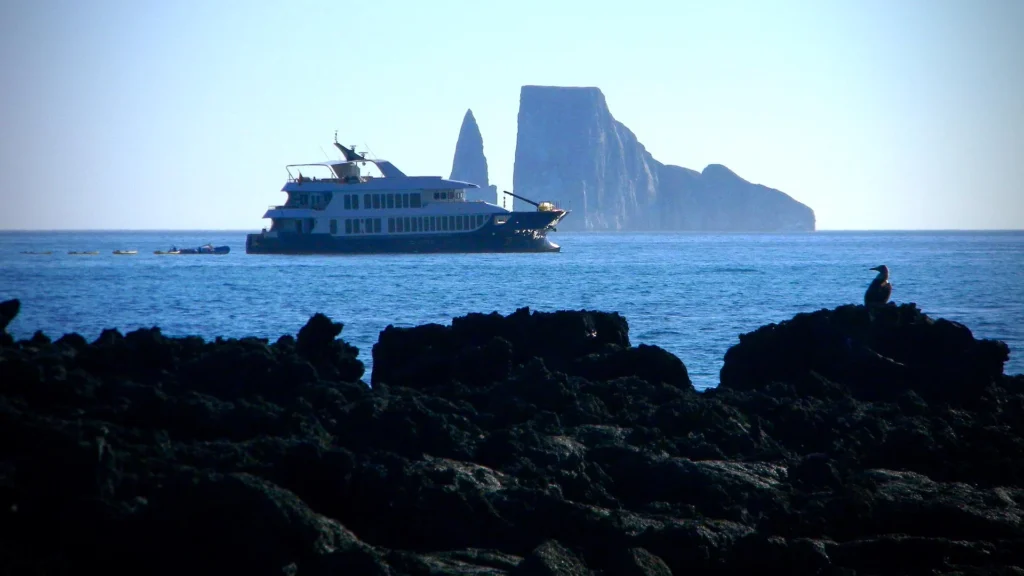
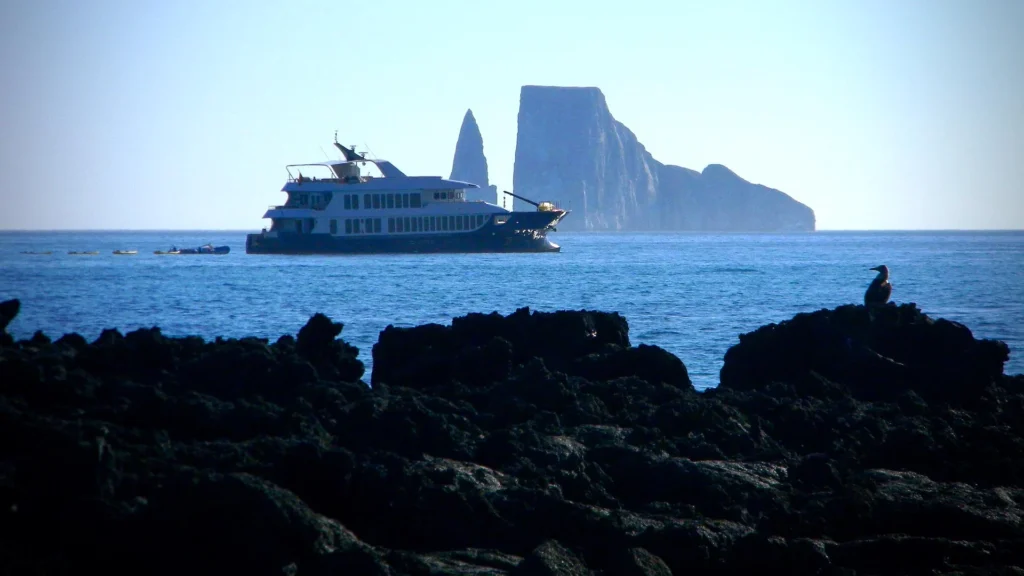
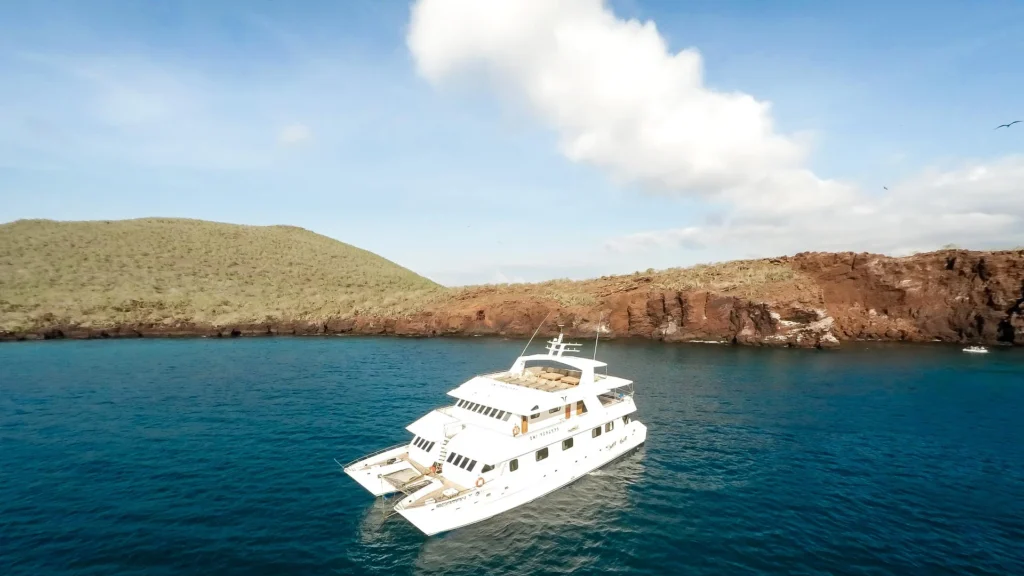
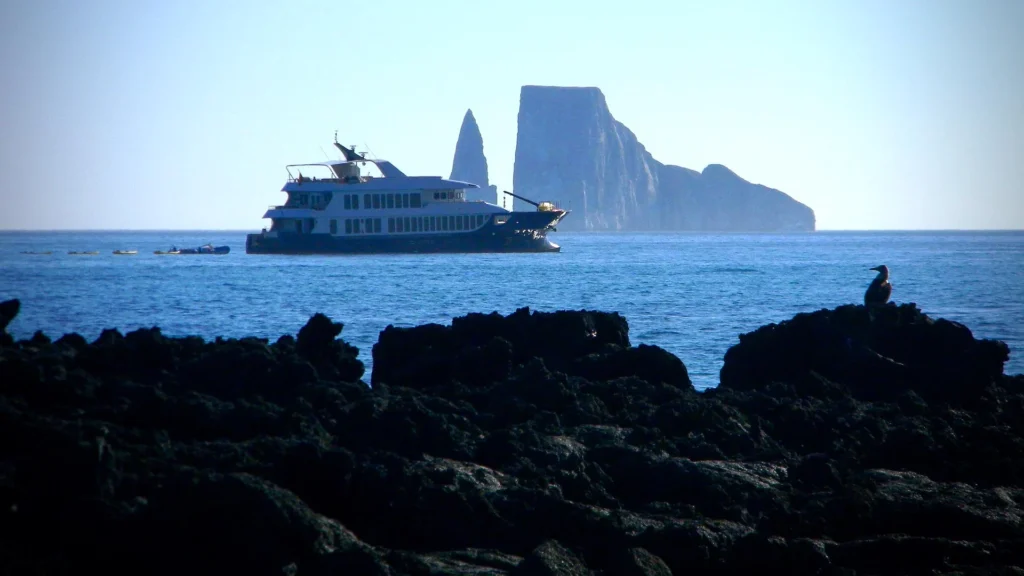
Despite its relatively remote location, Isla Genovesa is a popular location amongst smaller live-aboard boats, which are able to take advantage of the excellent mooring in the bay.
Due to the pristine nature of the island, it is essential that you do not inadvertently import any seeds or foodstuffs.
Landing sites
Live-aboard boats are able to access a couple of interesting landing sites, both on the inside and outside of the main Great Darwin Bay …
Landing site GE1 : Great Darwin Bay
Activities : walking, bird-watching
Highlights : frigatebirds, red-footed boobies, Darwin’s finches.
From the mooring in Great Darwin Bay, it is possible to access the island via a small beach.
A short stroll around the area should also provide opportunities of seeing red-footed boobies (the largest nesting population in the world), noddy terns, lava gulls, tropicbirds, doves, storm petrels, various finches and Genovese mockingbirds.
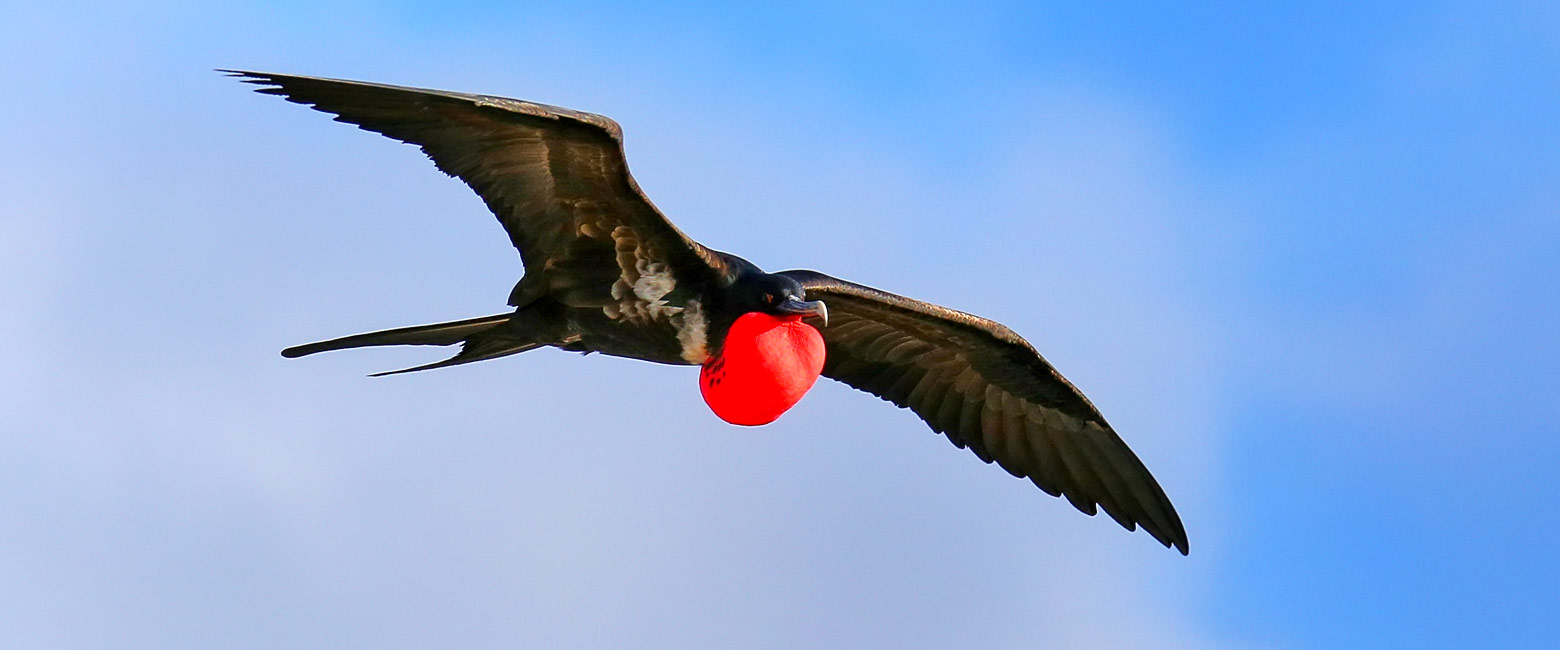
Small forests of opuntia cactus and mangroves provide shelter for frigatebirds, the males looking to attract a mate inflate the oversized red pouches on their chests.
Swallow-tailed gulls feed exclusively at night on squid and fish. They usually nest on cliffs, but here they often choose to do so on sand, in order to camouflage their black-spotted eggs.
Many of the birds in this area are unusually relaxed, but it’s recommended that guests maintain a distance of at least 1m (3’) at all times.
The endemic Genovese mockingbirds (Nesomimus parvulus) are unusual for their cooperative behaviour. A single population of large-billed cactus finches (Geospiza conirostris) is divided into two groups, which sing different mating songs, an early indicator of species separation.
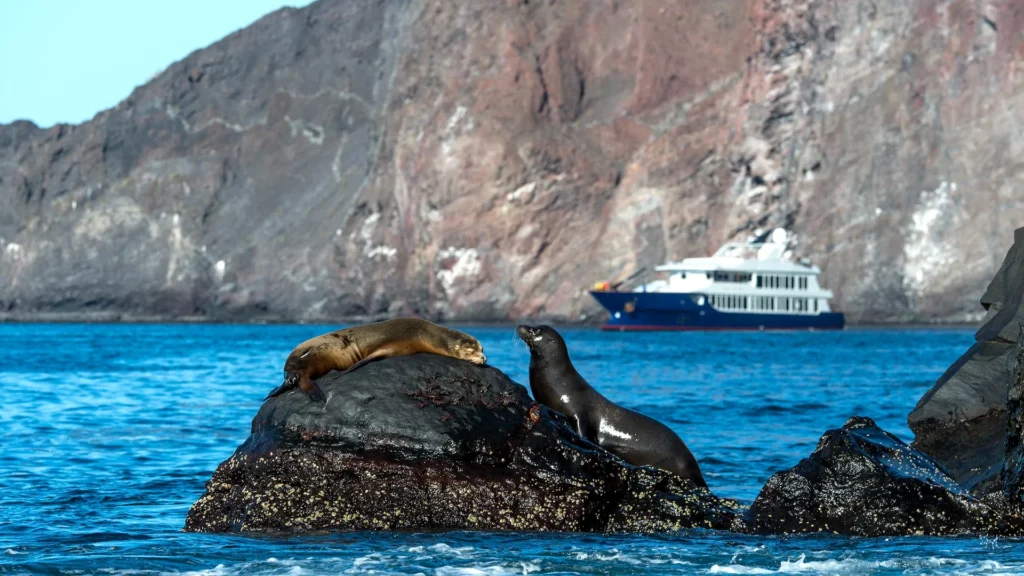
Very relaxed sea lions are often encountered on the main beach and can usually be approached to within just a few paces, although care should be taken as they can become aggressive.
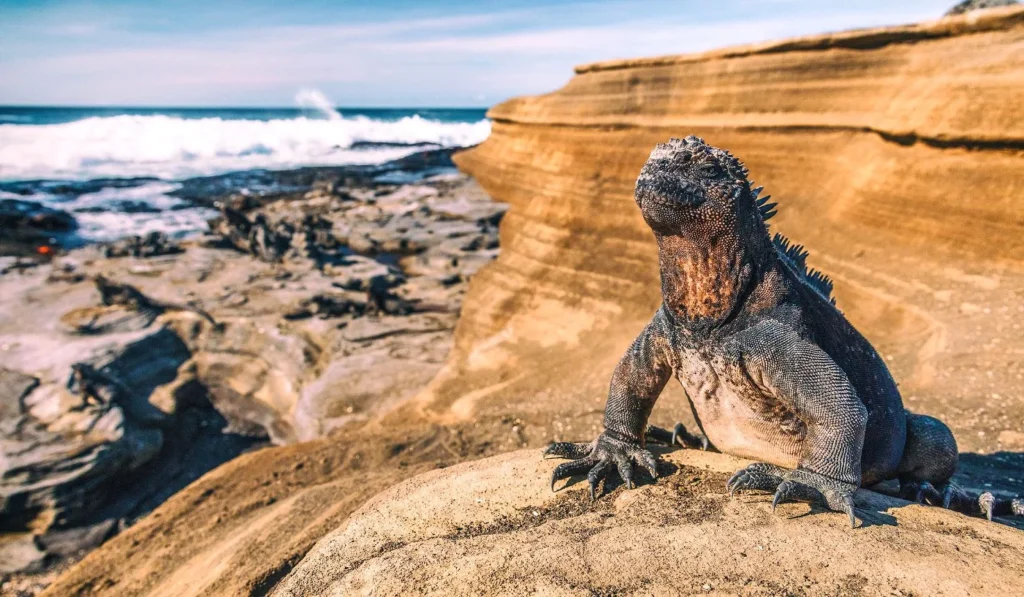
The island is also home to the smallest of the various species of marine iguanas that live in Galapagos.
It can also be fun to explore these protected waters in kayaks and on paddle-boards, searching for red-billed tropicbirds hiding in the crevices of the rock.
The trail is around 1.5km in total, largely across undulating lava fields.
Landing site GE2 : El Barranco
Activities : hiking, bird-watching
Highlights : Nasca boobies, storm petrels
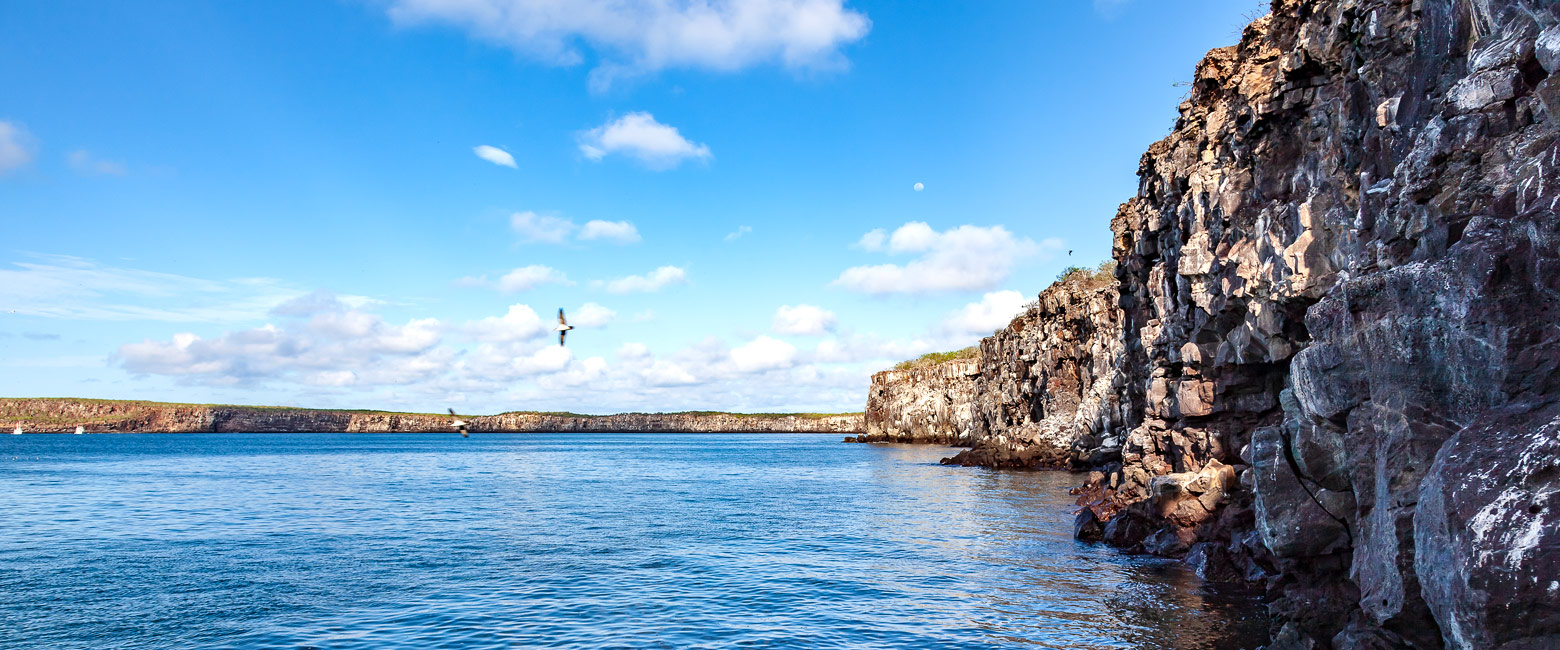
On the southern side of Darwin Bay is an area of rocky sea cliffs known as El Barranco. Here lies a trail known as Prince Philip’s Steps, an extraordinarily steep path that leads through a forest of palo santo (incense) trees to a busy seabird colony.
Sightings here usually include Nazca boobies, red-footed boobies and storm petrels. You may even get to see elusive short-eared owls and masked boobies.
The trail is only around 1.5km in length, but requires at least two hours to explore properly.
Marine site GE1 : Great Darwin Bay
Activities : diving
Highlights : various marine pelagics.
As well as hiking and bird-watching, there are also some interesting options for diving, both in the protected waters inside the caldera and along the more exposed outer flanks of the island.
/


Gallery
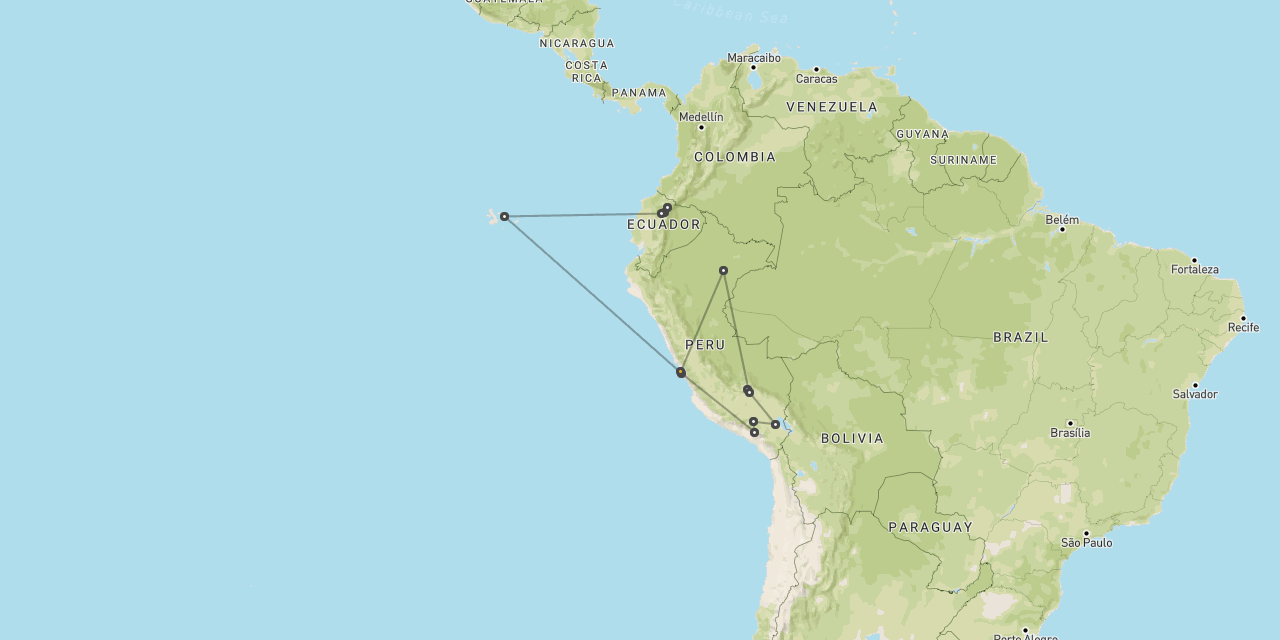
Map
If you specifically want to include Isla Genovesa in your trip, then do let us know and we will make sure that you get onto the best and most appropriate vessel.
The island is usually included in the following live-aboard cruise itineraries.
most often included in more easterly boat itineraries
let us know your thoughts about Galapagos
and we will help you create the perfect trip
Extraordinary tailor-made adventures,
from earthy and edgy to easy and extravagant
From around USD 2500 per person, you set the ceiling
Sample Trips
Here are some of our popular trip shapes
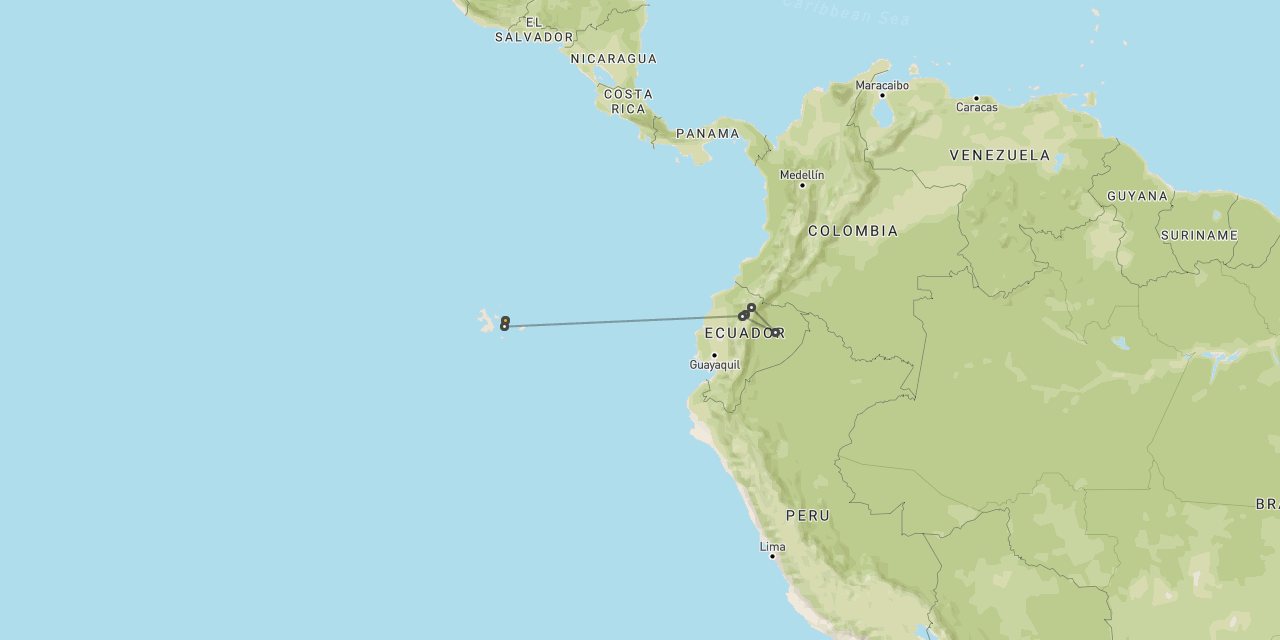
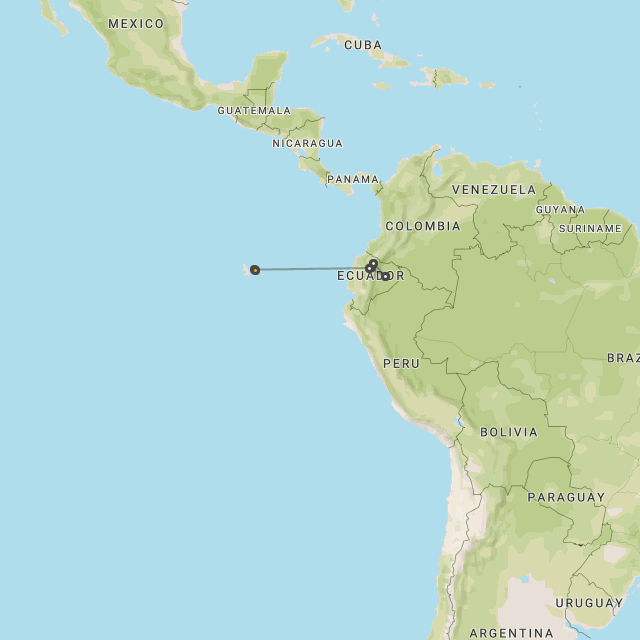
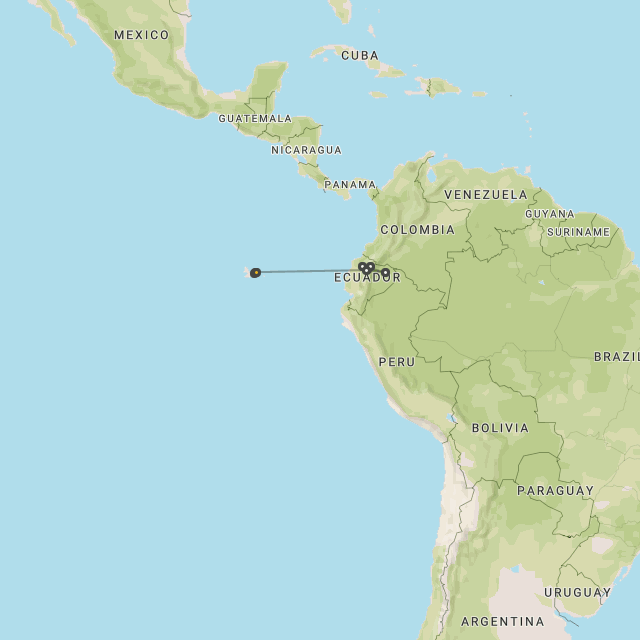
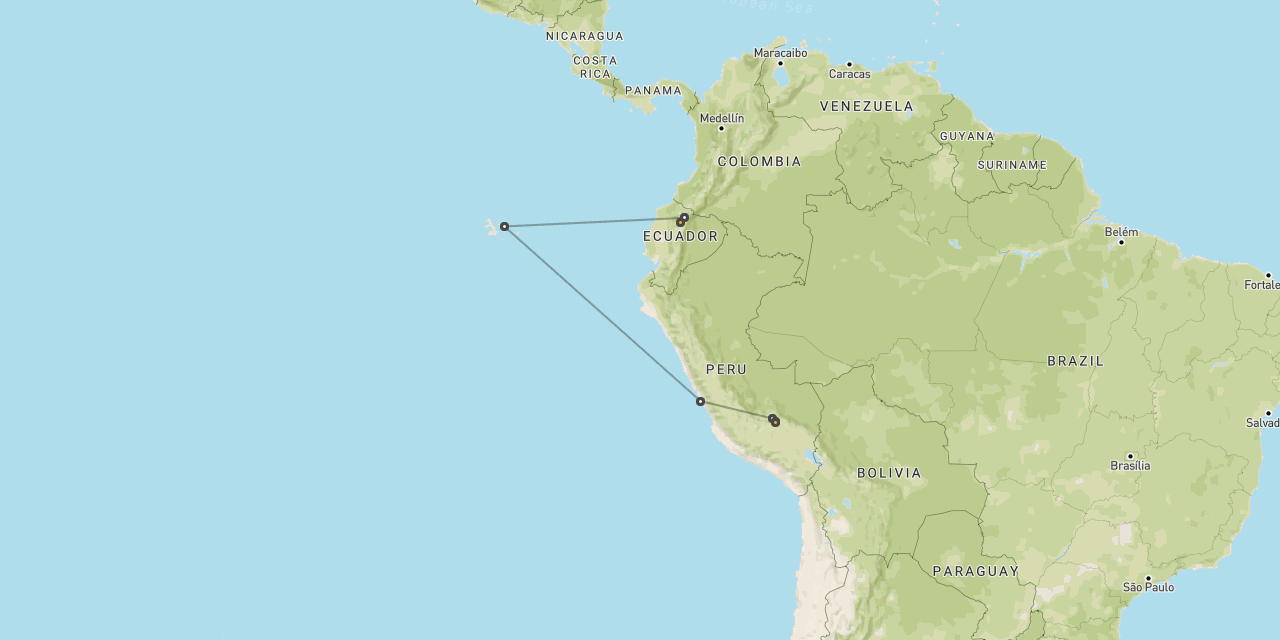

Get started on your trip
It’s never too soon to get in touch, we are here to help with every stage of your planning.
Best Lodges
We regularly inspect and photograph all of the the best lodges, to ensure that we always recommend the most suitable options

Key Locations
Take a look around related locations. Click ‘View more’ to explore locations further afield.
Where Next?
Where Next?
We offer trips to dozens of fabulous countries.
Might one of these might be your next great adventure?

Get started on your trip
It’s never too soon to get in touch, we are here to help
with every stage of your planning.
ATR Safari
© 2026

Please rotate your screen.