

Gorilla tracking in Virunga
What is a gorilla tracking experience in Virunga?
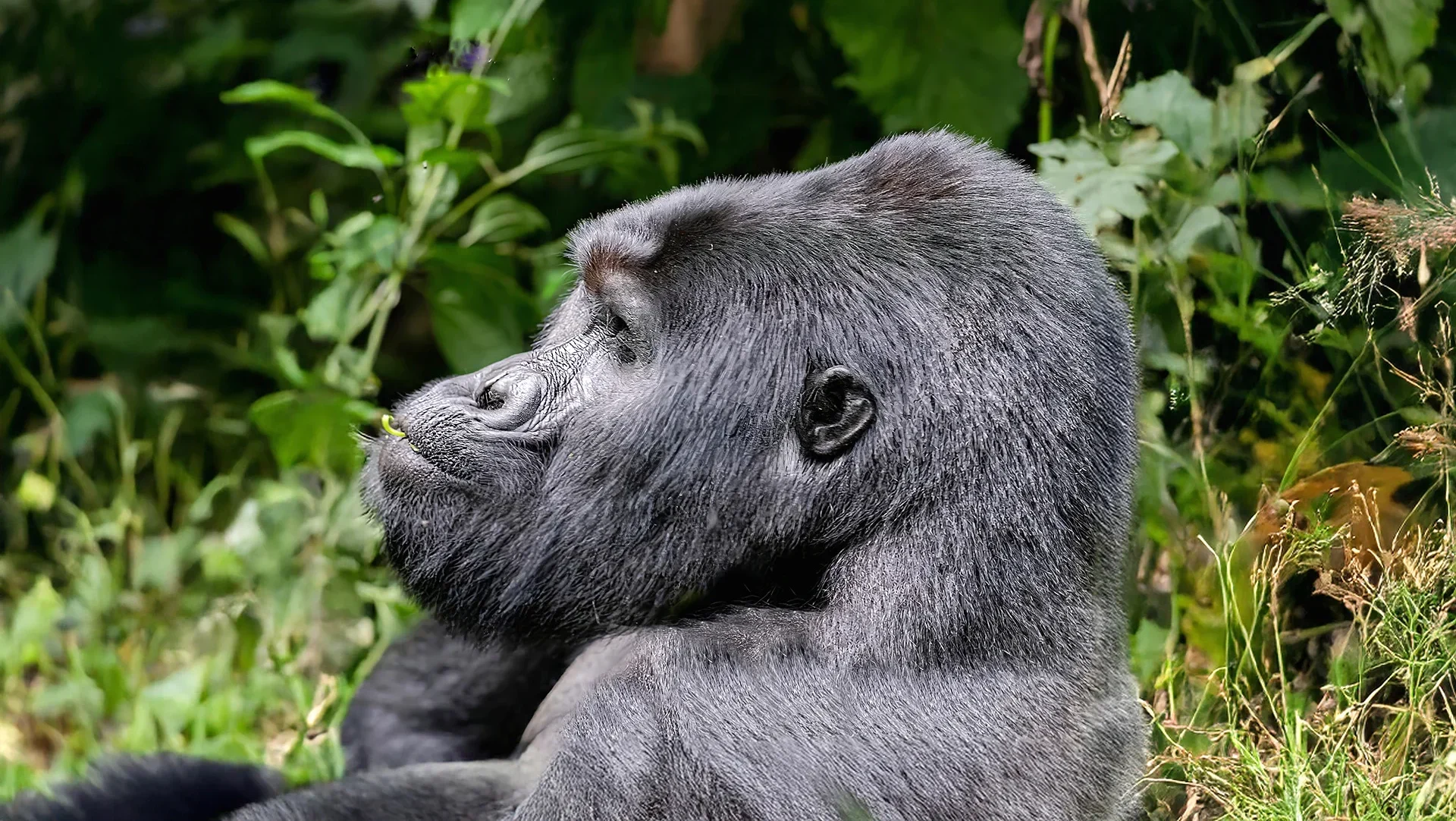
Tracking gorillas in Virunga is one of Africa’s most intense and unforgettable wildlife experiences. This is a land of volcanoes, high-altitude forest and thick jungle, where protecting mountain gorillas is paramount. Gorillas are the biggest living primates and, after chimpanzees, our closest relatives, sharing around 98 percent of our DNA. Standing quietly in the forest as a gorilla family eats, rests or plays, you can’t help but notice their intelligence, emotion and strong social bonds. With so few left in the wild, every encounter feels rare, personal and humbling.
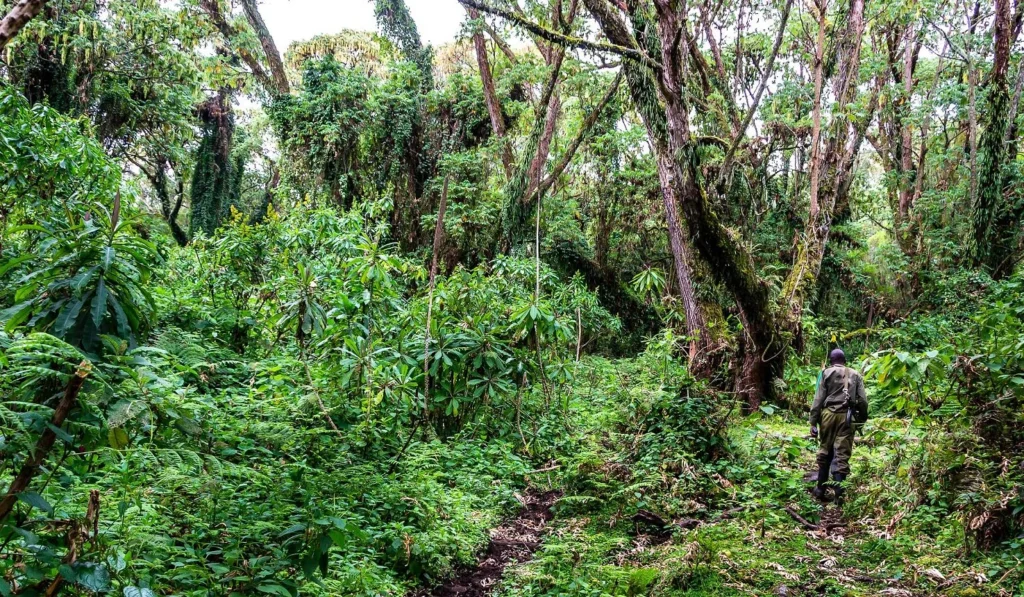
The trek itself is a big part of the adventure. Gorilla tracking isn’t just a walk in the forest, it’s a full-on exploration. You’ll follow steep, often muddy trails through high-altitude jungle, cross streams, and sometimes scramble up rocky slopes, all guided by rangers and trackers who know every twist and turn of the forest like the back of their hand. Along the way you’ll notice the subtle signs of gorilla life, broken branches, footprints in the mud, and the occasional distant call that hint at what’s ahead.
The gorillas you meet are habituated, meaning they’ve been carefully accustomed to human presence over many years without ever being tamed. That means you can watch them from just a few metres away, moving freely, feeding, playing, and interacting exactly as they would in the wild. Every family is different, every encounter unique. You get to feel their presence, sense their intelligence, and notice their emotions, but always on their terms, never ours. It’s part trek, part wildlife observation, and entirely unforgettable.
Gorillas have their own rules. Each family is different, with its own quirks and personalities. Silverbacks draw your attention naturally through their sheer size, confidence, and the occasional chest-beat that reminds you just how powerful they are. That respect, that awareness, is what makes the experience so unforgettable. Spending time in the world of Virunga’s mountain gorillas is brief but life-changing, and every visit plays a real part in protecting one of Africa’s most incredible species.
Types of gorilla tracking experiences in Virunga
In Virunga, there are two main ways to experience gorillas: the classic tracking encounter and the more immersive habituation trek. The gorilla tracking experience is the most popular and accessible option. You can spend up to one hour with a fully habituated gorilla family, watching them feed, play, and interact in their forest home. The trek to find them can take anywhere from 1 to 8 hours, depending on where the family is that day. It’s a physically demanding hike, often over steep, muddy trails, across streams, and up rocky slopes, but every step is worth it. Your guides and trackers know the forest inside out, making sure the journey is safe, smooth, and full of chances to spot signs of gorilla life along the way.
The gorilla habituation experience is a rarer, more immersive option. It’s also more costly, but it gives you a deeper, more personal connection. You can spend up to four hours with a gorilla family, joining conservationists in the final stages of the habituation process. This means watching the gorillas slowly get used to human presence while still remaining completely wild. It’s logistically more complex and the trek can be even tougher, but for anyone who wants to see the gorillas in a more intimate, behind-the-scenes way, it’s an unforgettable opportunity.
What does a typical day look like gorilla tracking in Virunga?
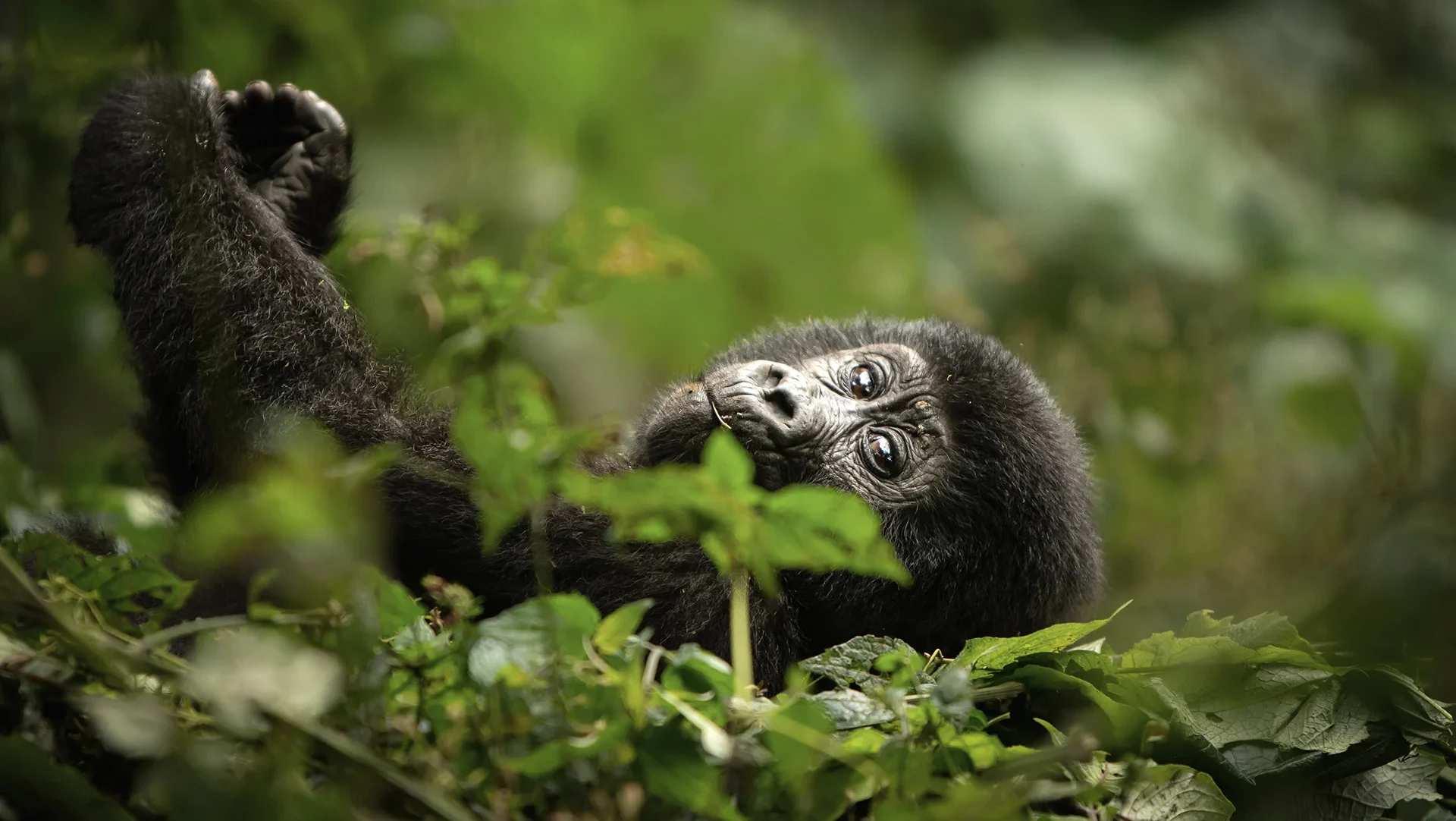
The day starts early with a light breakfast at your lodge before heading to the park headquarters. Here, permits are checked and visitors are assigned to small groups, each tracking a specific gorilla family. Before entering the forest, your guides lead a detailed briefing covering tracking rules, safety guidelines and what to expect on the trek. They will also confirm which gorilla family you will be visiting based on the latest tracking information, giving you a chance to ask questions before setting off.
The trek to the gorillas can last several hours and varies from day to day. Expect a steady hike through dense forest and steep volcanic slopes, with regular pauses for rest and water. Virunga’s rugged terrain is a defining part of the experience and adds a real sense of adventure to the day. Once the gorillas are found, you are allowed one hour in their presence. This time limit is strictly controlled to protect the gorillas and minimise disturbance. During the encounter, you may watch them feed, groom and interact, while the dominant silverback keeps a close and watchful eye on his family. After the hour is up, the group slowly withdraws and begins the return walk to camp.
Most visitors use the afternoon to rest and enjoy the surroundings at your lodge. For those who still have energy, optional activities may include visiting nearby communities or joining a guided nature walk to explore more of Virunga’s remarkable landscape.
How hard is gorilla tracking in Virunga?
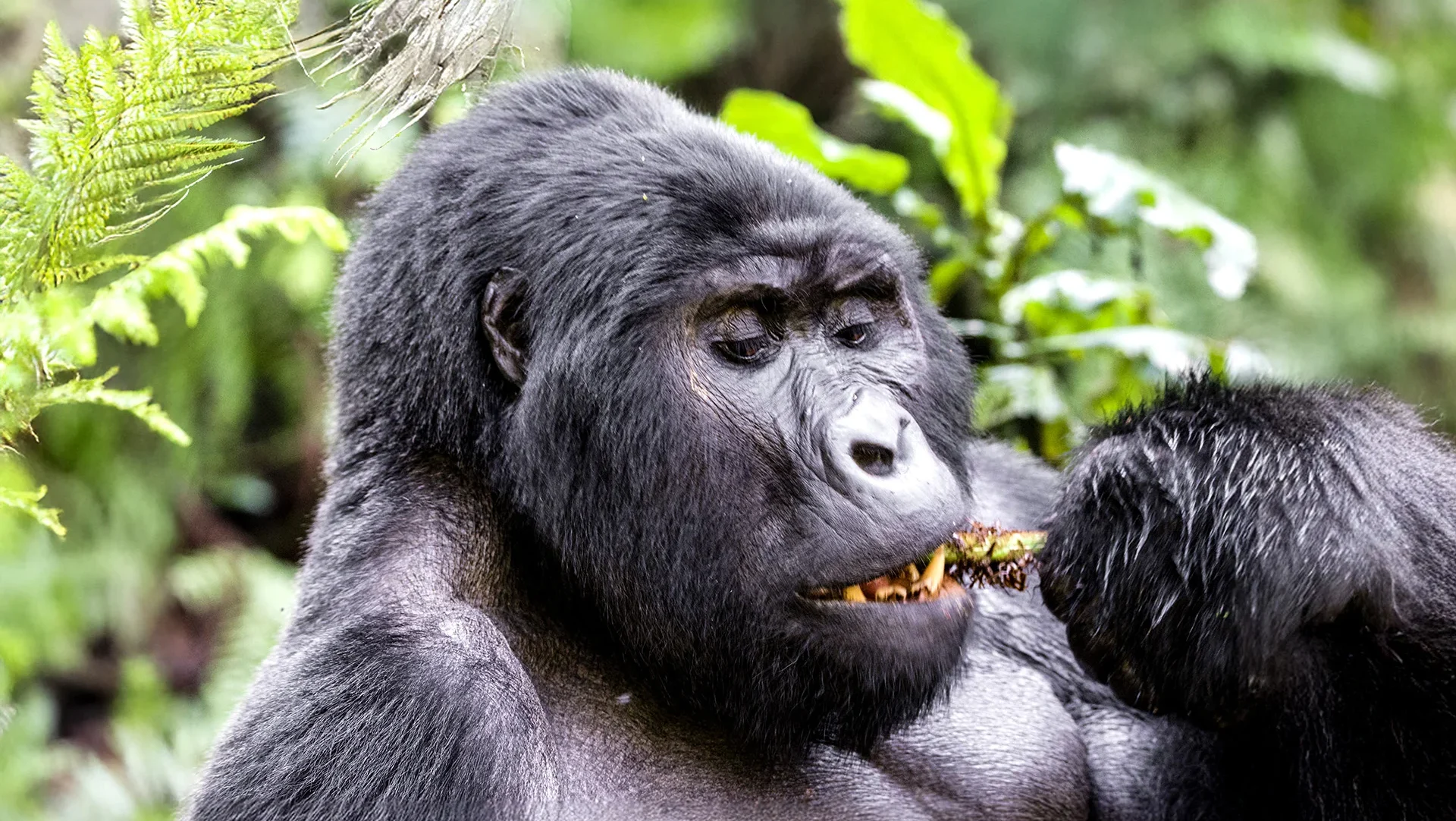
Gorilla tracking in Virunga is physically demanding, primarily due to the rugged terrain of the Virunga Volcanoes. The gorillas here live on steep volcanic slopes, making the trek an uphill challenge in many cases. While it’s not an extreme mountain climb, the hike can be strenuous, especially after rain when the trails are muddy and slippery.
The hike itself could take anywhere between 1 and 8 hours, depending on where the gorillas were last seen and how deep into the forest they’ve moved. The duration of the hike alone demands a reasonable level of fitness but guides go at a pace that suits everyone in the group, and regular breaks help manage the intensity.
Altitude can also play a factor in Virunga. The park sits at elevations between 2,000 and 3,000 meters, which can make the air thinner and the hike feel harder. You don’t need to be an athlete, but you should be prepared for a physically demanding experience.
What is it like being with a gorilla family in Virunga?
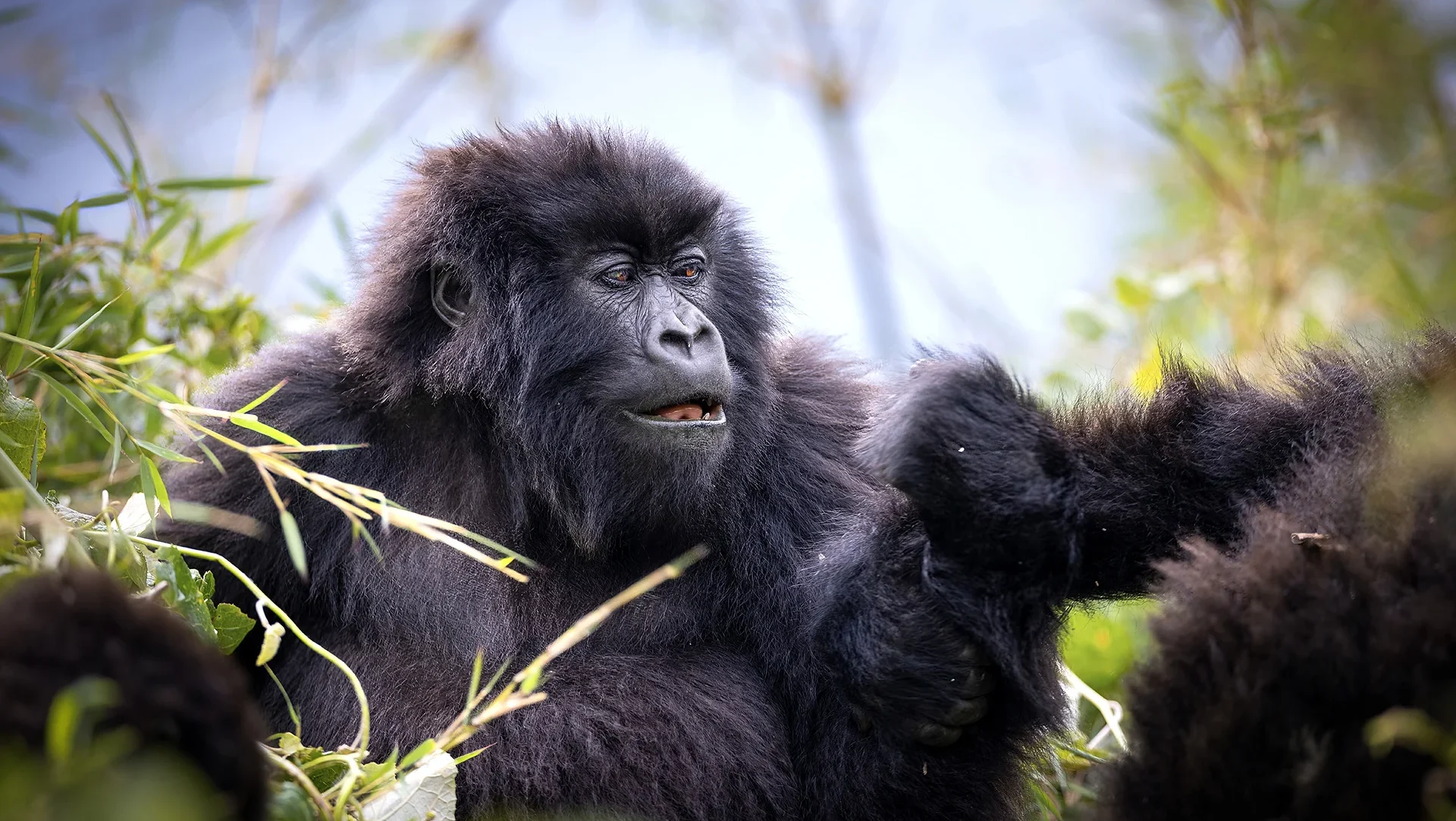
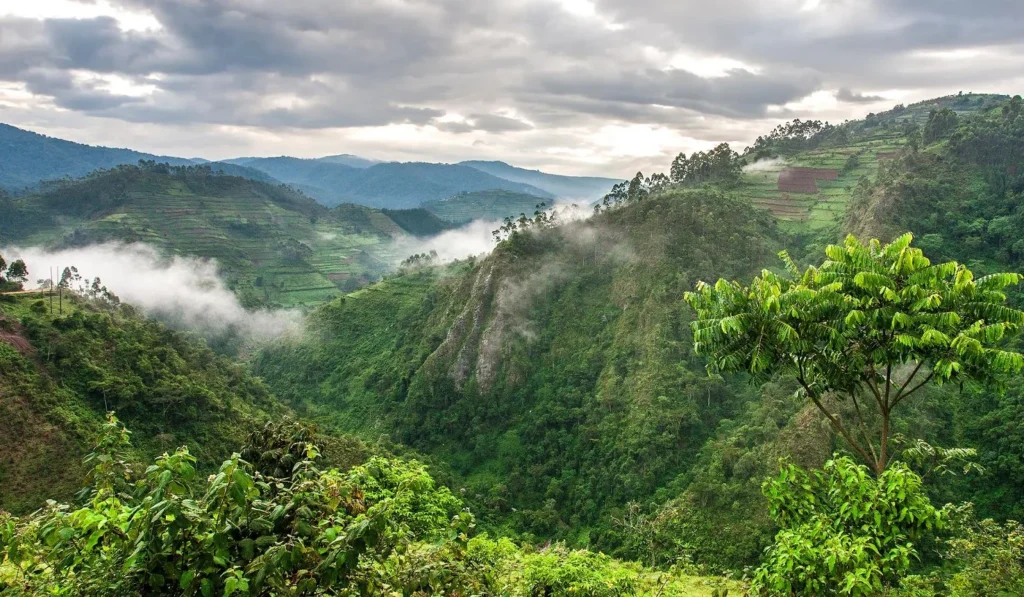
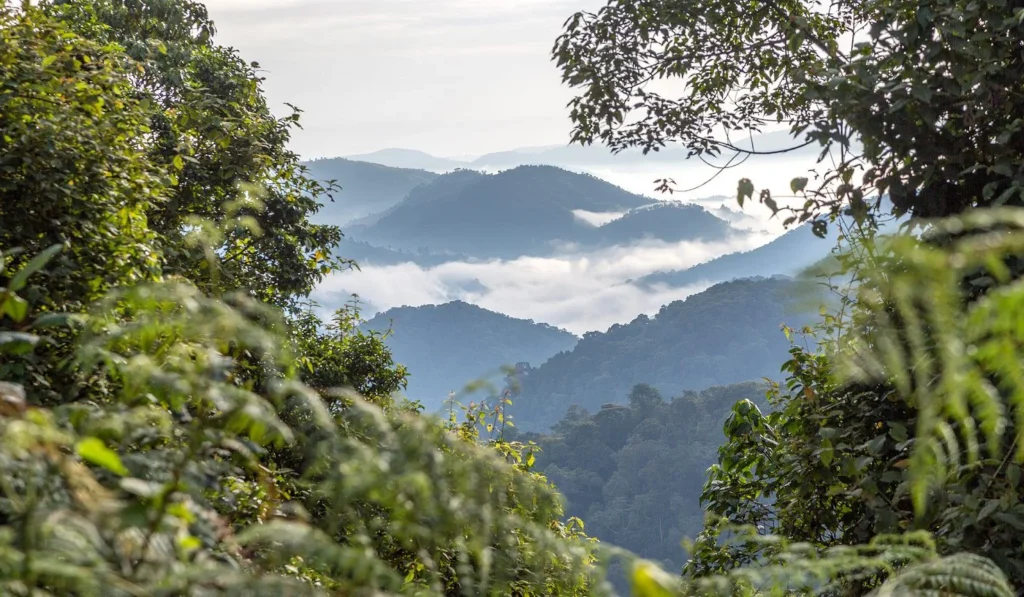
The Virunga mountain gorillas live on the forested slopes of old volcanoes, surrounded by mist, bamboo and giant lobelias. The forest feels alive, and that sense of wildness is part of the encounter. There are about eight habituated gorilla families in Virunga, all monitored daily by trackers and rangers. Each family is different and which one you visit depends on where they’re hanging out that day.
Some of the more familiar families include Kabirizi, one of the largest, Rugendo, known for its multiple silverbacks, and Humba, which moves through steeper volcanic areas. Smaller groups like Lulengo or Nyakamwe feel more intimate, with fewer gorillas and tighter family bonds. New families appear as conservation work continues, while older groups change when silverbacks split off and form their own.
Every family has a dominant silverback. Even when he’s resting, you feel his presence, he controls the group without needing to be loud or aggressive. Mothers stay close to their infants, juveniles play constantly, and subordinate males quietly follow along. The family runs on a rhythm that seems effortless but carefully balanced.
The gorillas are habituated, which means they’re used to humans but still completely wild. Most encounters are calm. You might see them feeding in bamboo thickets, resting in a clearing, or moving slowly as they forage. Visitors are required to stay at least seven metres away, though curious younger gorillas often wander closer. Guides handle it quietly, keeping both gorillas and people safe.
No two encounters are the same. Some days are quiet, spent watching the family move and interact. Other days bring chest-beating, mock charges, or playful chaos from the juveniles. What stays the same is their awareness, they know you’re there, and they decide how much of their world to let you into.
In Virunga, those moments feel real and grounded. You’re not just ticking off a wildlife experience, you’re seeing gorillas as they live, in a forest they call home, supported by rangers and trackers who know them personally.
Further reading
- Virunga
- Where to go gorilla tracking in Virunga
- When is the best time to go gorilla tracking in Virunga
- How much does it cost to track gorillas in Virunga
- How much time do I need for tracking gorillas in Virunga
- Where to stay when tracking gorillas in Virunga
- What practicalities should I consider when gorilla tracking in Virunga
- Why are gorillas endangered and what is being done to protect them in Virunga
Extraordinary tailor-made adventures,
from earthy and edgy to easy and extravagant
From around USD 2500 per person, you set the ceiling
Sample Trips
Here are some of our popular trip shapes
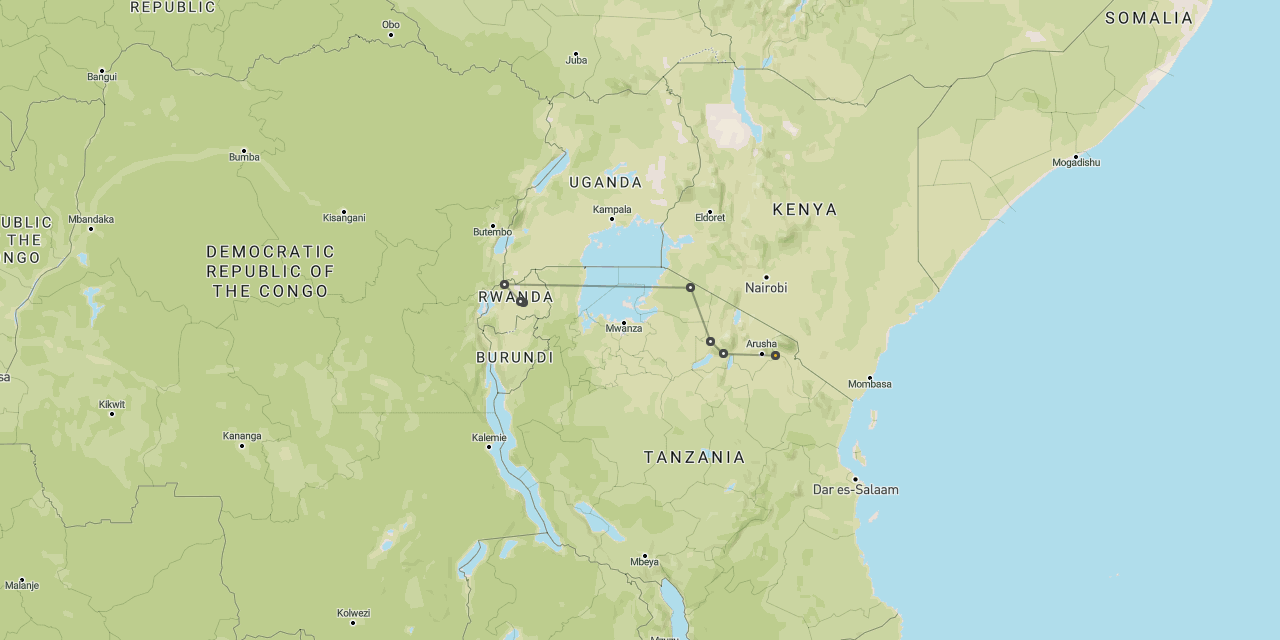
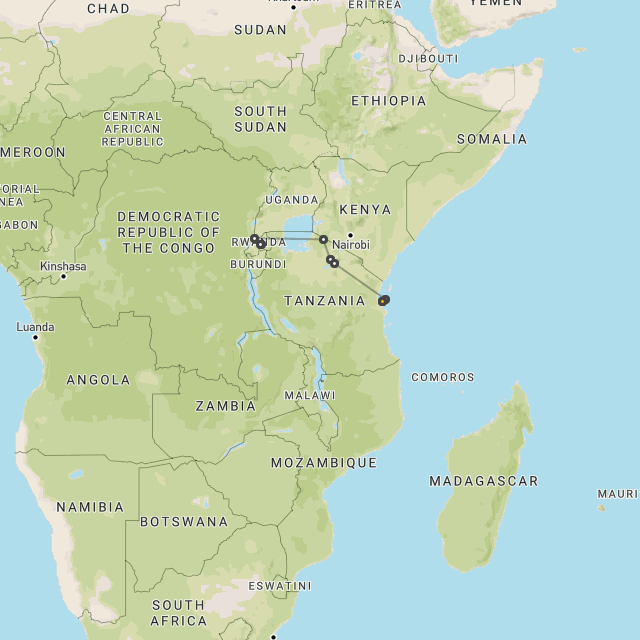
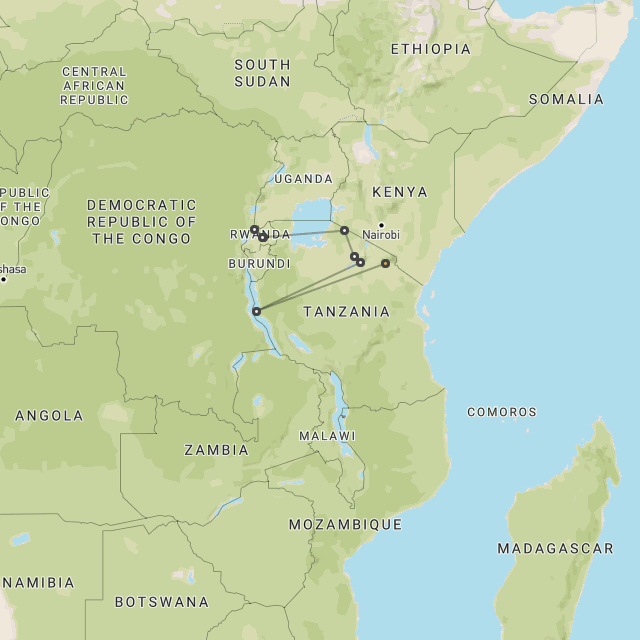
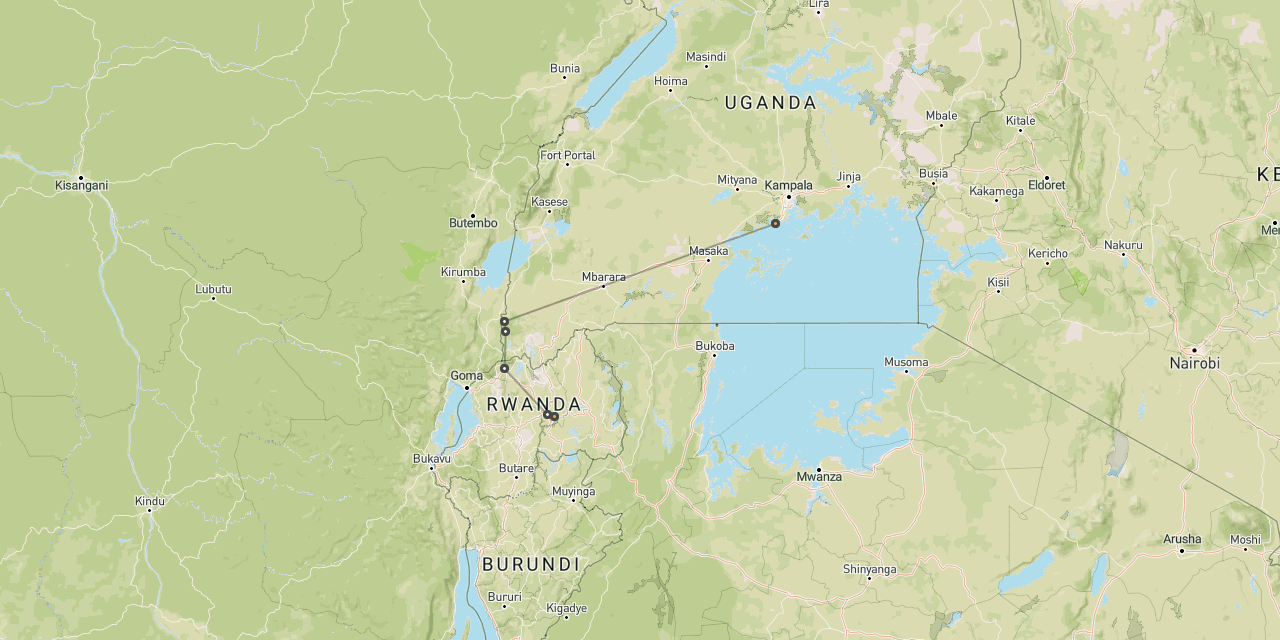

Get started on your trip
It’s never too soon to get in touch, we are here to help with every stage of your planning.
Best Lodges
We regularly inspect and photograph all of the the best lodges, to ensure that we always recommend the most suitable options

Key Locations
Take a look around related locations. Click ‘View more’ to explore locations further afield.
Where Next?
Where Next?
We offer trips to dozens of fabulous countries.
Might one of these might be your next great adventure?

Get started on your trip
It’s never too soon to get in touch, we are here to help
with every stage of your planning.
ATR Safari
© 2026

Please rotate your screen.