Safari to Antipodes
The Antipodes
are diverse and remote islands
south of New Zealand
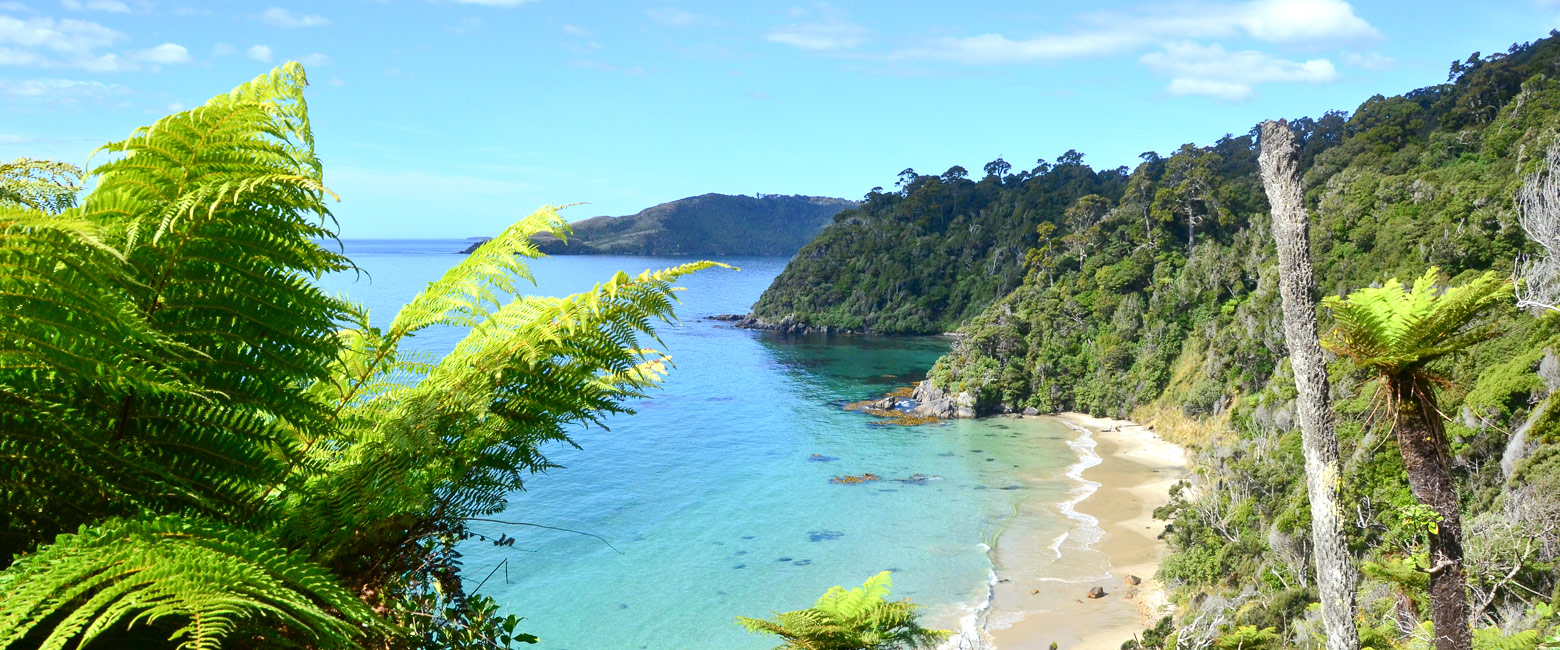
the Galapagos of the Southern Ocean
The Antipodes is a diverse collection of islands that are dispersed across the vast oceans to the south and east of New Zealand.
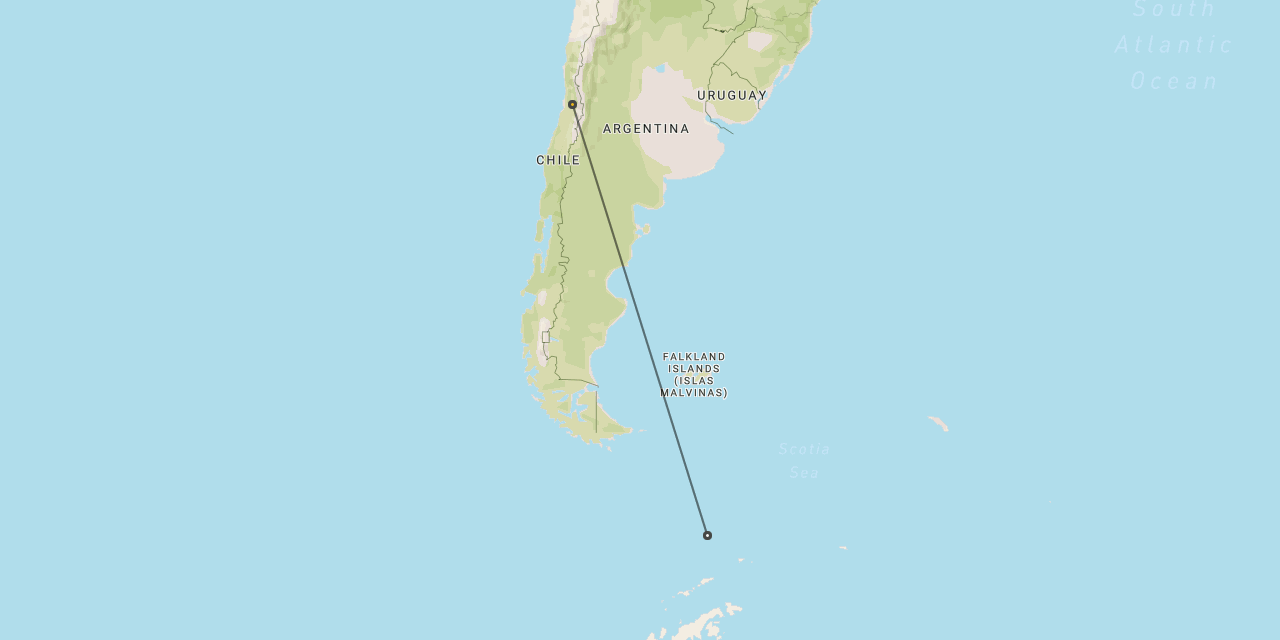
The name is derived from the fact that the islands lie diametrically across the planet from London. Due to their isolation and prolific wildlife, the area is also often referred to as ‘the Galapagos of the Southern Ocean’.
The islands are home to no native land mammals, amphibians or reptiles. Most of the larger islands have been overrun by invasive species like rats and mice, but extermination projects are underway, leading to a remarkable restoration of the indigenous flora.
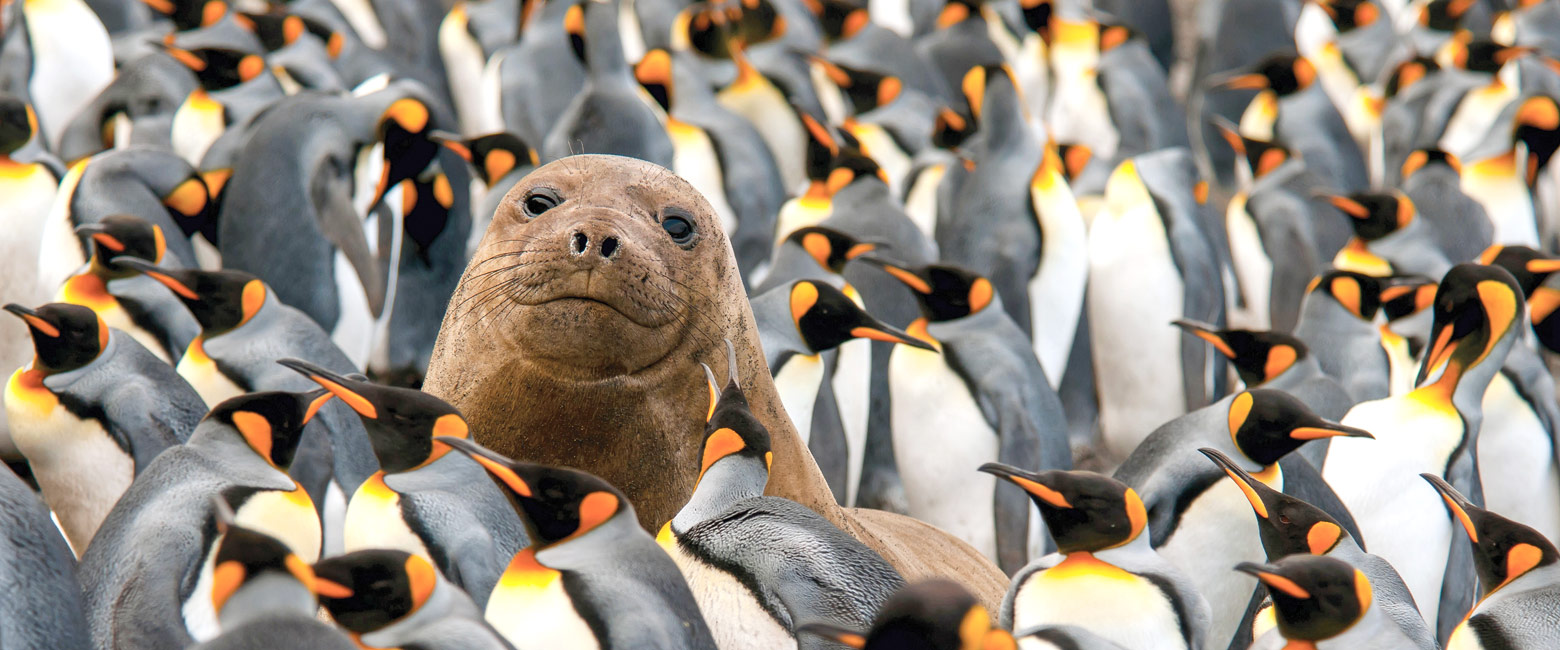
Some of the islands are seasonally visited by huge numbers of seabirds and marine mammals, with highlights including several species of penguins, albatrosses, a plethora of endemic bird species, fur seals and elephant seals.
Cruises out of both Hobart and Invercargill tend to include visits to at least some of these islands on their Antarctic itineraries.
Shorter trips out of Invercargill, typically of 8-16 nights, explore these islands in more depth, without heading all the way south to Antarctica, but which we include in this section.
The best time to visit is during the Nov-Feb southern summer, when the various species visit the islands to raise their young.
The climate is relatively mild during the summer, with daytime peak temperatures around 10-15C (50-59F), but with a great deal of precipitation virtually every day.
The islands are described here in an anti-clockwise order. The first, Stewart Island, is very close to New Zealand and rarely features in Antarctic cruises, but the next four are highlights on most itineraries to the distant southern continent.
/


Gallery
Map
Here’s a quick description of each of the main islands in the Antipodes.
Stewart Island
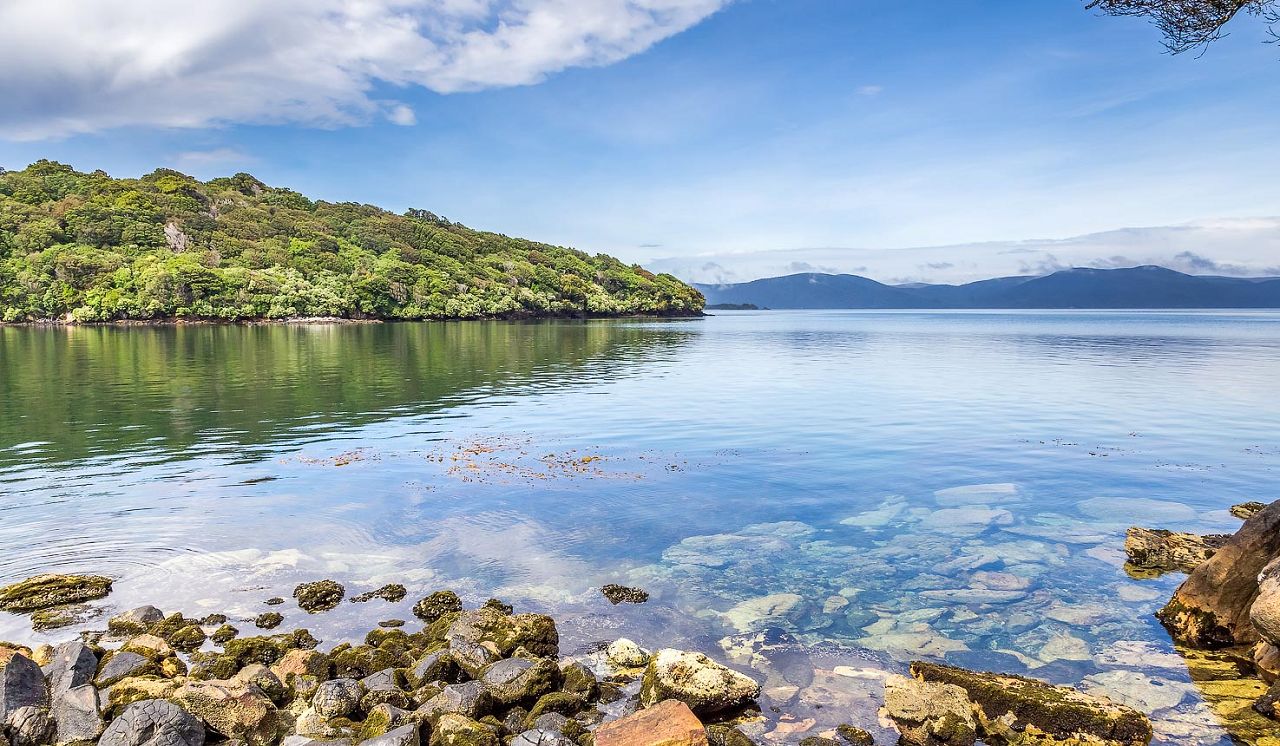
Set just 30 km (18 mi) south of New Zealand, Stewart Island is a relatively large landmass, extending over 1750 sqkm (675 sqmi).
The island consists of undulating hills, most of which are cloaked by thick forest, home to a wide range of indigenous wildlife. It is particularly known for its flightless and ground-nesting birds, which thrive here in the absence of introduced pests.
The island has a permanent human population of around 400 people, with around 80% of the land area being taken up by Rakiura National Park.
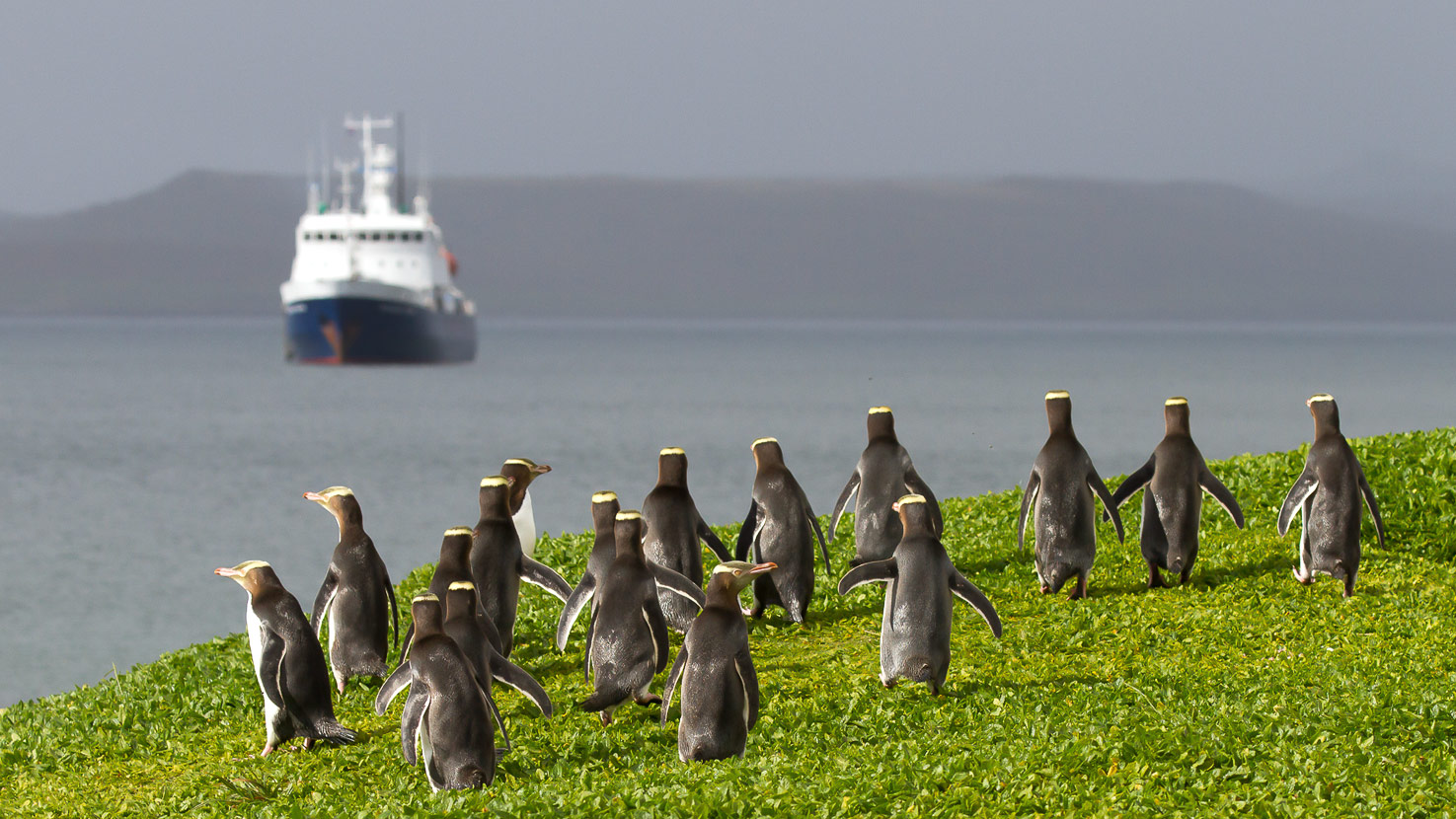
Bird highlights include wekas, kakas, albatrosses, Stewart Island kiwis, silvereyes, fantails, kereu and rare yellow-eyed penguins.
The Snares
Situated around 200 km (120 mi) southeast of New Zealand, The Snares is a group of small islands, so-named for the danger that they represented to shipping in years gone by.
The islands are uninhabited and are under full protection as nature reserves, flanked by steep cliffs and with much of the land area being covered with forests of giant daisy trees.
The climate is mild and very wet.
The birdlife here is prolific, with hundreds of thousands of sooty shearwaters. Buller’s Albatross breed here from early January, whilst other highlights include endemic Snares crested penguins, Snares Island tomtits and fernbirds.
Landing on The Snares is largely forbidden, with visits therefore being limited to motorboat excursions around the coastline.
“The air was full of titi, diving petrels, Snares petrels and Buller’s albatrosses. Little white dots high above us signified Snares crested penguins, clambering up the rocks to their nests in the tree daisy forest.
“Anchoring off Mollymawk Bay, a lone New Zealand fur seal spiralled slowly in the swell around our motorboat. Closer to shore we witnessed dozens of penguins torpedoing out of the water, shaking themselves down and looking around. If they didn’t like the penguin they landed next to, they bickered and pecked each other aggressively.
“On North East Island we nosed in and out of rocky inlets and caves fringed by long golden ribbons of leathery bull kelp and passed through a sea cave, to emerge into the idyllic calm of Boat Harbour, where a Snares fernbirds foraged under a fringing hebe bushes.
“Around the point, a massive light-grey elephant seal (around five metres in length and weighing well over a tonne) drifted in and out with the swell, watching us closely with huge black eyes.”
Auckland Islands
Located around 500 km (300 mi) southeast of New Zealand, the Auckland Islands is a small collection of small but dramatic landmasses that rise steeply out of the ocean.
The islands are volcanic in origin, having been formed back 10-25 million years. The landscapes have been subsequently eroded by intense glaciation but retains precipitous cliffs with huge sea caves on the western and southern sides. The main island in the group is 39 km (24 mi) long and has a dramatic flooded caldera that can be entered by smaller vessels.
This is a rich location for wildlife, along with some colourful human history, including tales of shipwrecks, buried treasure and failed settlement.
The climate is mild and very wet, with rain almost every day of the year.
Of the several smaller outlying islands, Enderby is the prettiest and most visited. The island was cleared of introduced animals in 1994, with the vegetation and birdlife having made dramatic recoveries since. Sandy Bay is a rare breeding site for rare Hooker’s sea lions. There are boardwalk routes across the island and there is rich birding for species including Southern royal albatrosses, light-mantled sooty albatrosses, Northern giant petrels, Auckland Island shags, Auckland Island flightless teals, Auckland Island banded dotterels, Auckland Island tomtits, bellbirds, pipits, red-crowned parakeets and yellow-eyed penguins.
“This morning we woke to a fine chorus of bellbirds. First off the ship was a party of walkers, who were shuttled by motorboat to a kelp-covered rocky platform on the northern side of Victoria Passage, to spend the morning clambering up a steep hillside to view a colony of white-capped albatrosses. Hundreds of these enormous birds are soaring above the sheer volcanic buttresses of Adams Island.
“A second group headed to Sandy Bay, where Hooker’s Sea lion pups raced around and play-fought in little creches, except for one unfortunate pup which was gruesomely dispatched by giant petrels. Red-crowned Parakeets fed on nettle seeds behind the foreshore, oblivious to our presence and we ate lunch in the low, twisted rata forest, the understory a sea of bright green rhubarb-like Macquarie Island cabbage. Making our way to the northern cliffs through a spectacular display of golden blooms, three light-mantled sooty albatrosses flew repeated circuits at eye level, completely captivating us, while their grey fluff-ball chicks sat quietly on their adobe nests on the precarious ledges below.”
“The rest of us took to the motorboats to cruise through the Victoria Passage, with Gibson’s wandering albatrosses gliding alongside like small planes. From the cliffs above a 200 metre waterfall dissipates into wind-driven spray. On our way back we explored a huge sea cavern with four separate entrances, before retreating back to calm waters and birdsong in the lee of Adams Island. Later we cruised over the Epigwaitt to visit the wreck of the Grafton.
Macquarie Island
Situated 1100 km (700 miles) southwest of New Zealand, Macquarie Island is one of the great wildlife locations in the world.
This rugged island is long and thin, in a north-south orientation, running to around 34 km (21 mi) in length, surrounded by precipitous slopes all-round, with just a few sheltered inlets for marine wildlife.
It is the only place where the beautiful Royal penguins breed, along with the more familiar king penguins, gentoo penguins and rockhopper penguins. The colonies are enormous, chaotic and stinky.
The other major attraction is the large numbers of enormous Southern elephant seals, which occupy the beaches, often with dramatic territorial disputes.
The island is under full protection and landings are always in the company of resident rangers and scientists. It is actually an Australian territory.
Campbell Island
Situated 700 km (430 miles) due south of New Zealand, Campbell Island is more gently undulating and features moorland landscapes. The remnant of an ancient volcano, the mountains have been heavily eroded by glaciation.
When the islands were first visited by Sir Joseph Hooker in 1840, he described them as having : “A floral display second to none outside the tropics”. Since then the island has been heavily grazed, but since the sheep were removed the vegetation has made a dramatic comeback.
In 2001 a major project saw the complete extermination of invasive Norwegian rats, which had been accidentally released here in 1810. The flora and fauna has made a further recovery since then.
A deep inlet known as Perseverance Harbour penetrates the island from the east, to provide a safe anchorage. From the abandoned meteorological station, it is possible to explore the island on foot along a network of trails and boardwalks.
Wildlife highlights include Campbell Island shags, penguins, fur seals and rare Hooker’s sea lions.
A route to the top of the island leads to a major breeding site for over 1200 Southern royal albatrosses. These enormous birds are very approachable and make excellent photographic subjects, with their playful gaming, courting and roosting rituals.
“Yesterday we sat spellbound as we watched a group of four albatrosses gaming among the mega-herbs on the back of Mount Honey, the highest peak on the island. against a backdrop of Six Foot Lake, framed by the sweeping flanks of Puiseux and Eboule peaks and the jagged Jacquemart Island. They displayed to each other with haunting calls, head-waving and beak-clacking, showing off their three metre wingspans. Other birds soared so low across the tussock-clad mountainside that we could hear the air-rip of their wings as they glided over us.”
A local legend tells of a French princess who was exiled to Campbell Island in the early 1800s and who was found dead in her earthen hut a year later. The introduction of non-native heather to the island is tied in with this story, brought as a keepsake for the Scottish beau that she left behind
Antipodes Islands
Set 800 km (420 mi) southeast of New Zealand, these modest islands cover only 60 sqkm (23 sqmil). Although they are the natural home for a wide range of sea birds, the presence of invasive mice has decimated the flora and fauna. A campaign is underway to raise money to undertake an extermination and see the islands rejuvenated.
“We sailed up the West Coast, around the spectacular undercut cliffs and amphitheatre of Bollons and Archway Islands, to reach Anchorage Bay. The twin-masted Evoe was anchored nearby and busy discharging a BBC crew to film Antipodean albatrosses for Frozen Planet 2.
“In motorboats, we meandered in and out of storm-gouged coves, caves, clefts and cliffs, watching colony after colony of erect-crested penguins and rockhopper penguins.
“Moulting elephant seals lay on a boulder-strewn beach while Sub-Antarctic fur seals and their pups watched us warily, with strange high-pitched wails. A light-mantled sooty albatross cried out from its nest high above a sea cave, as its mate arrived to take over nesting duties.”
Bounty Islands
Set 800 km (420 mi) east of New Zealand, the Bounty Islands were named by the infamous Captain Bligh, who sailed here on his ill-fated ship, The Bounty, in 1788.
The islands are small, rocky and inhospitable, but do host very large populations of sea birds during the breeding season, notably including Salvin’s albatrosses and the endemic erect-crested penguins.
Chatham Islands
Set 1000 km (600 miles) east of New Zealand, the Chatham Islands are the only location in The Antipodes to host a significant human population, with around 600 permanent residents. The islands are volcanic in origin, but have been weathered into relatively gentle landscapes. Chatham Island itself is the largest in the group and notably contains several large freshwater lakes.
The presence of settlements on the island over the centuries has led to major damage to the native flora and fauna, meaning that a visit here tends to be more of a cultural than a wildlife experience.
a great diversity of island life
Let us know your thoughts about Antarctica
and we will help you create the perfect trip
Extraordinary tailor-made adventures,
from earthy and edgy to easy and extravagant
From around USD 2500 per person, you set the ceiling
Sample Trips
Here are some of our popular trip shapes



Get started on your trip
It’s never too soon to get in touch, we are here to help with every stage of your planning.
Best Lodges
We regularly inspect and photograph all of the the best lodges, to ensure that we always recommend the most suitable options

Key Locations
Take a look around related locations. Click ‘View more’ to explore locations further afield.