Safari to Isla Fernandina
Isla Fernandina
is the most volcanic island
in the Galapagos,
the earliest, fastest and most evident stages of evolution
At 642 square kilometres (248 square miles), Isla Fernandina is a relatively large island, the third largest, the youngest and most westerly of the group.
It is also, arguably, the most impressive.
Area : 642 sq km / 248 sq mi
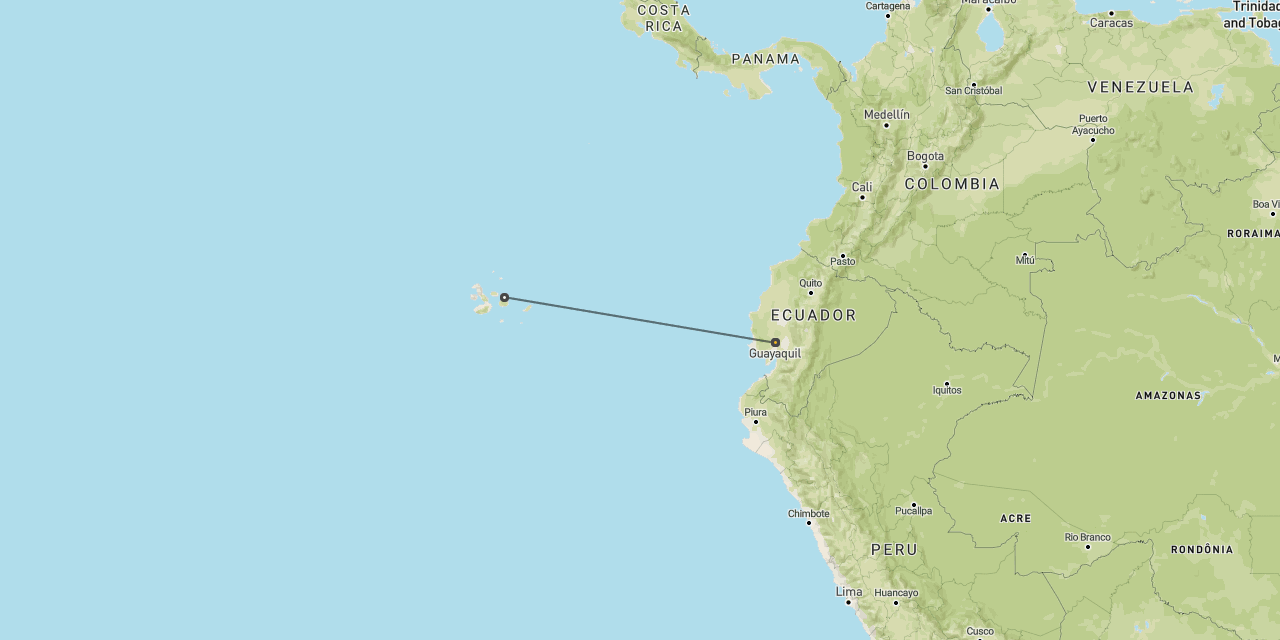
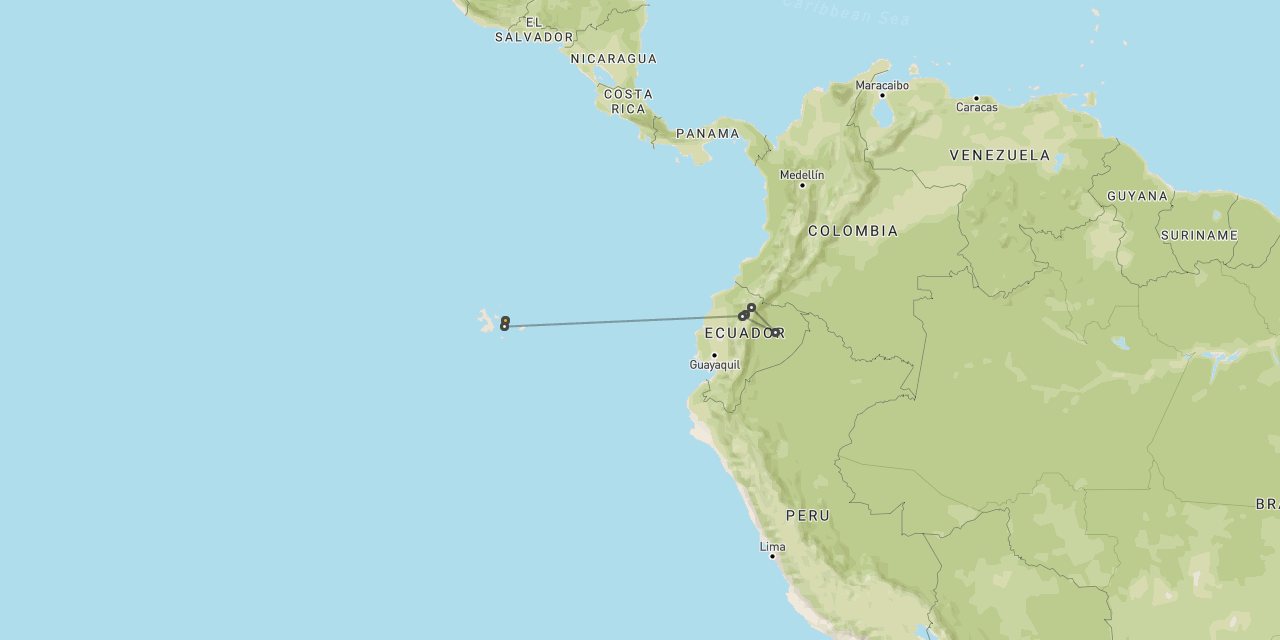
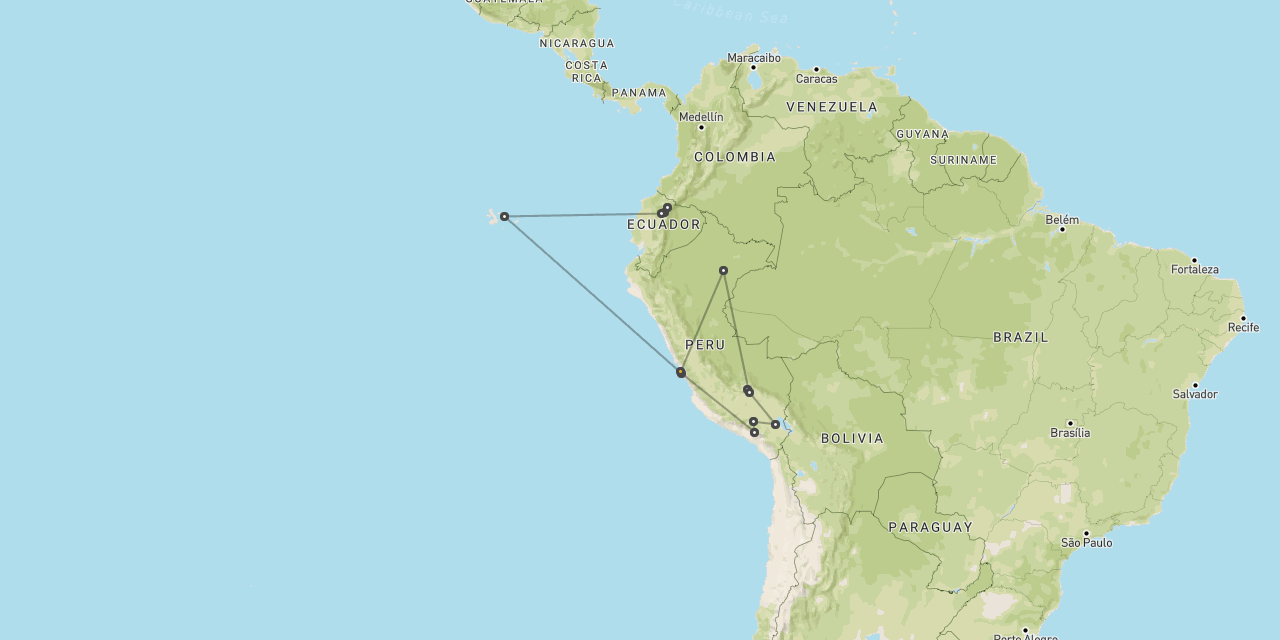
Location : 110 km west of Seymour Airport
Volcanic activity
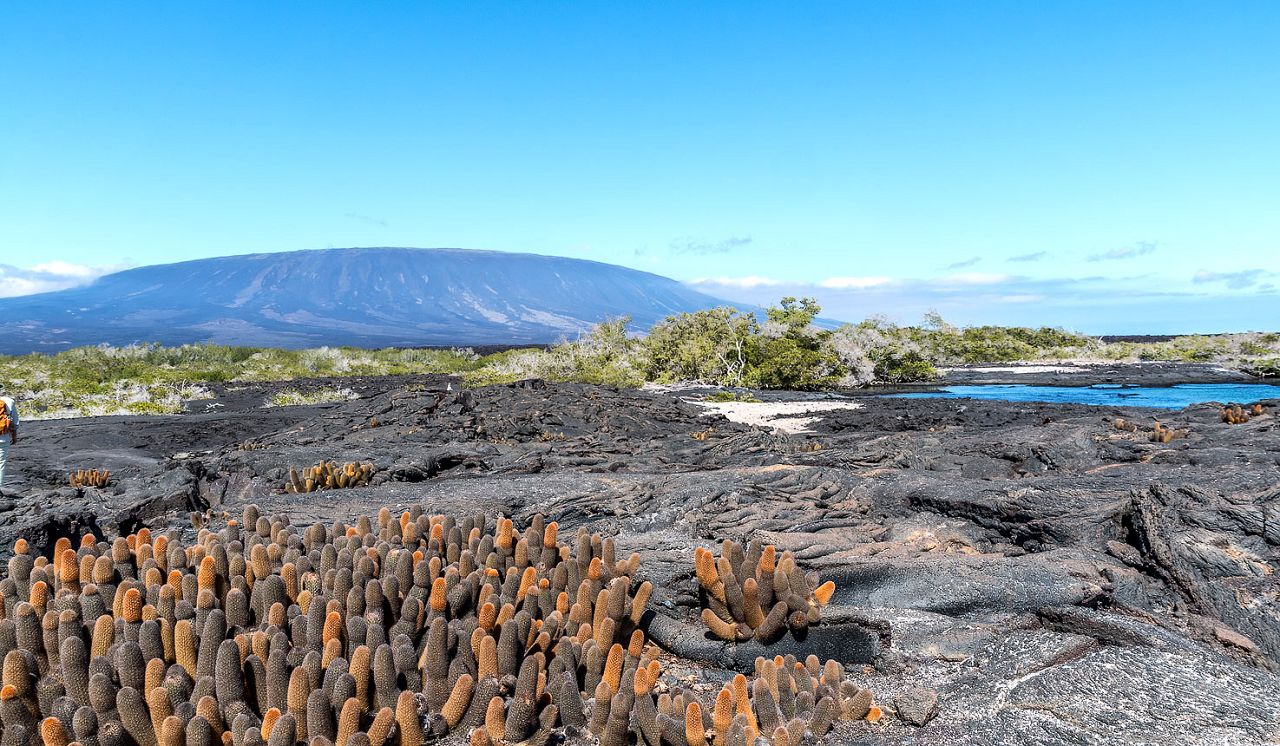
Isla Fernandina is a massive shield volcano that rises up from the depths of the ocean to reach an impressive 1476 metres (4843’), topped by a volcanic caldera 6.5 km (4 miles) in diameter.
The volcano is still very much active and there has been a string of significant events over the years.
In 1825 a British ship called The Tartar, under the command of Captain Benjamin Morrell, was moored in Bay Banks when there was a massive eruption. Lava flowed down from the crater to reach the sea, the air temperature rose to 50C (122F) and the water temperature shot up to 40C (104F). The crew sweated their way through the night and, as they made their escape at first light, the air temperatures had reached 60C (140F) and the tar with which the hull was waterproofed had started to melt. When they returned two weeks later, the eruption was still in progress.
In 1968 there was a major volcanic event, which caused two thirds of the floor of the caldera to collapse, dropping by around 350 metres (1150’).
Further significant eruptions were recorded in 1972, 1973, 1977, 1986, 1988, 1991 and 1995.
In 2005 a new and very eruptive process began on this island, causing an ash and steam plume to rise to a height of 7 km (23,000’), with lava flowing down the outer slopes. The event lasted for three days.
There have been other events more recently and there is always the chance of further eruptions taking place without significant advanced notice.
For safety reasons, visitors are only allowed to visit a couple of areas of the outer shore of the island and trips up to the caldera are not possible.
Flora and fauna
Fernandina and Genovesa are the only two larger islands in Galapagos whose ecosystems have not suffered at the hands of feral animals, meaning that they are much more pristine.
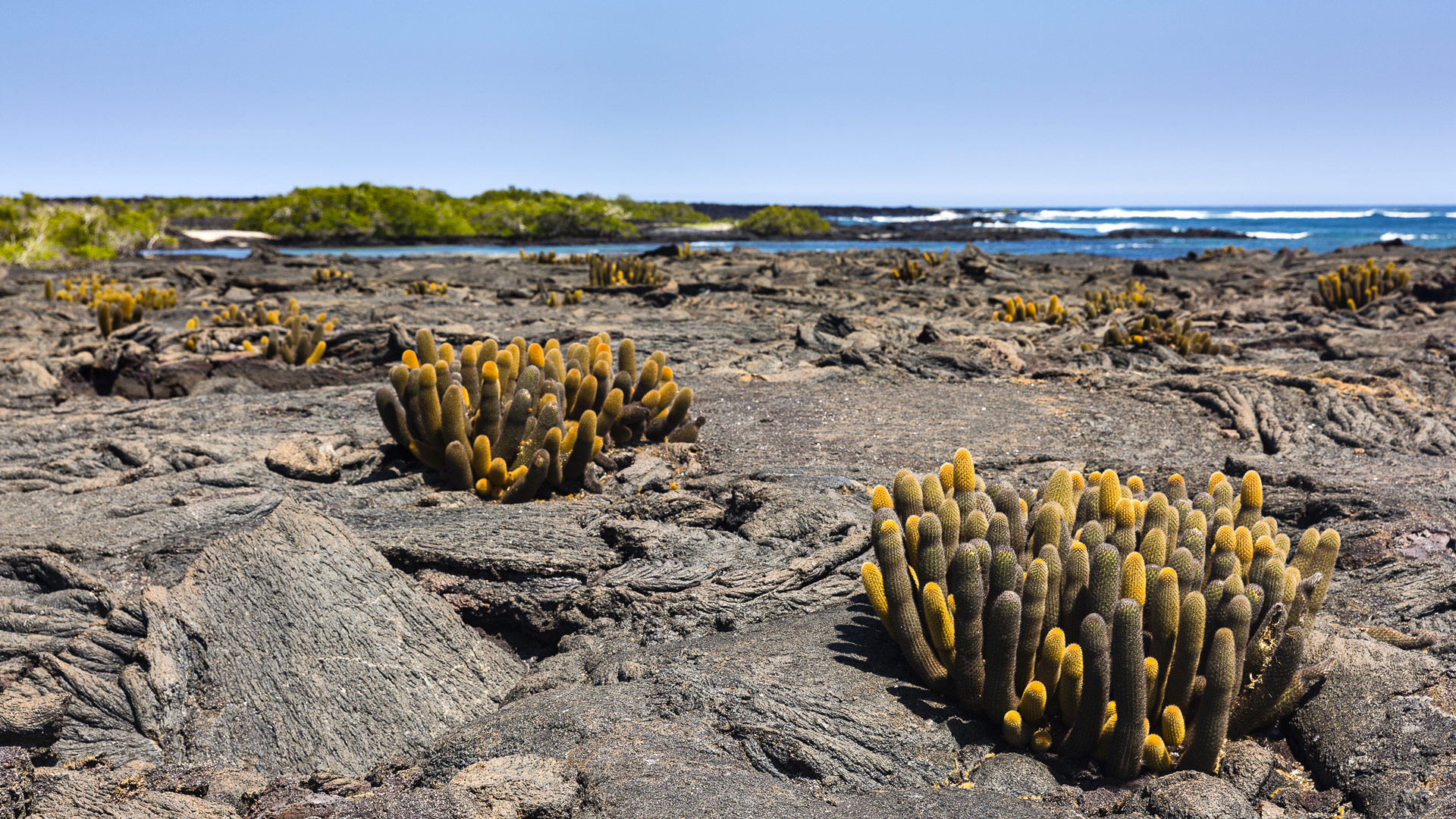
However, due to the continuing volcanic activity, this particular island is largely rocky and is not blessed with a great deal of plant life, which obviously keeps a lid on the range and number of grazing animals that it can sustain.
The island has its own sub-species of giant tortoise (the Narborough Island tortoise, Chelonoidis phantastica). The first specimen was discovered in 1906, but then 113 years passed until a second one was found. This elderly female was removed to a breeding centre on another island. It is suspected that a few other animals may exist on the island, but that the harsh conditions naturally limit their numbers. They only continue to survive due to their very low metabolism and extreme longevity.
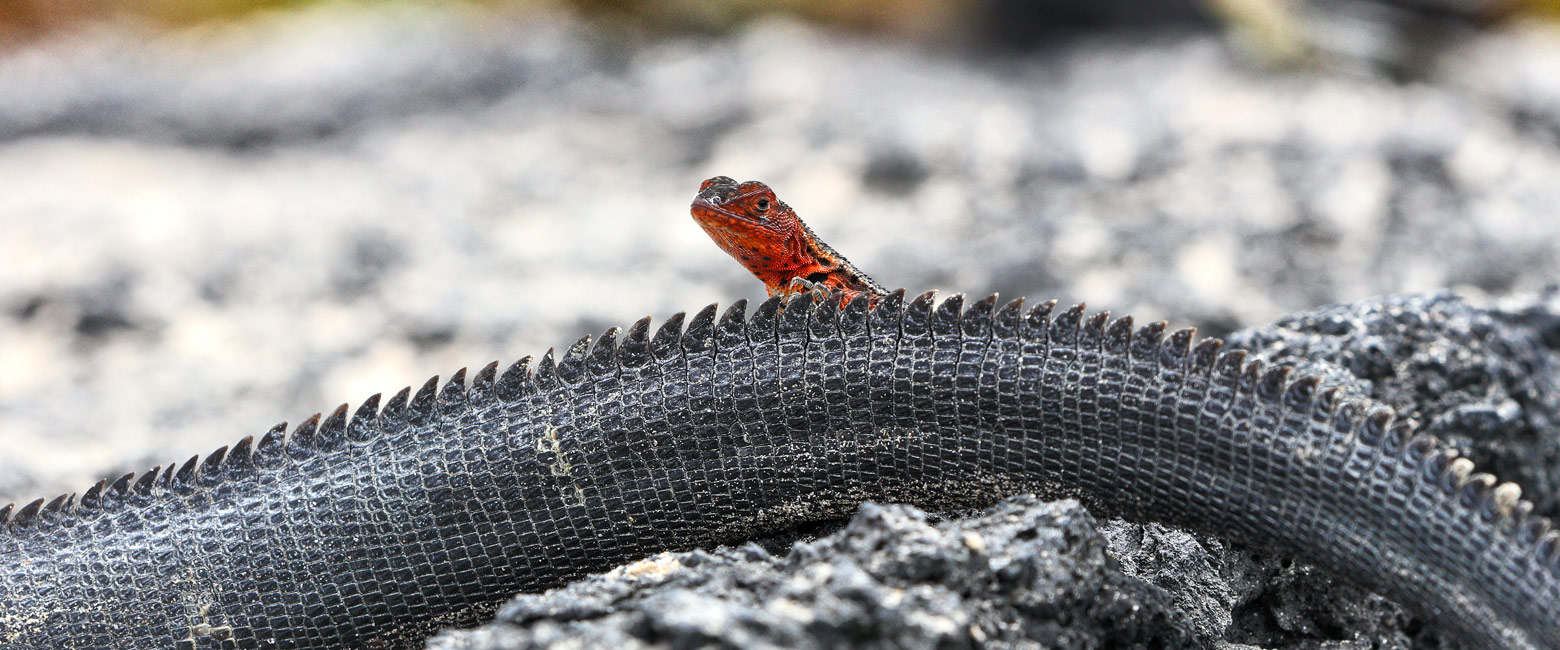
There are good populations of land iguanas, which nest high up on the flanks of the volcano and even within the caldera itself.
Due to the cold, upwelling waters of the subsurface Cromwell Current, that hits the archipelago from the west, the waters surrounding Fernandina are very rich in fish, which provides a prime environment for the various creatures that live along the shoreline and prey upon this bounty.
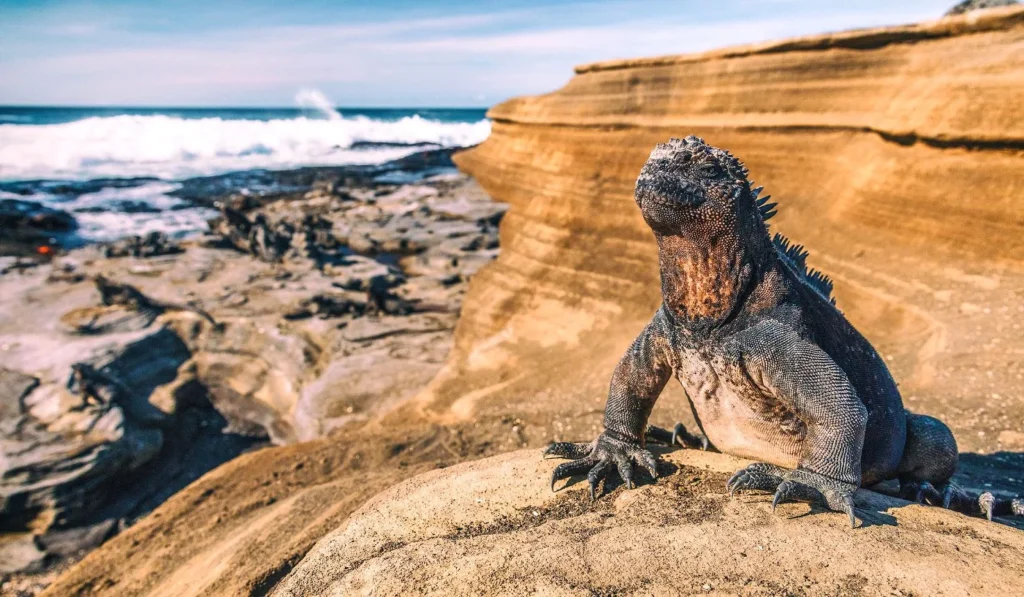
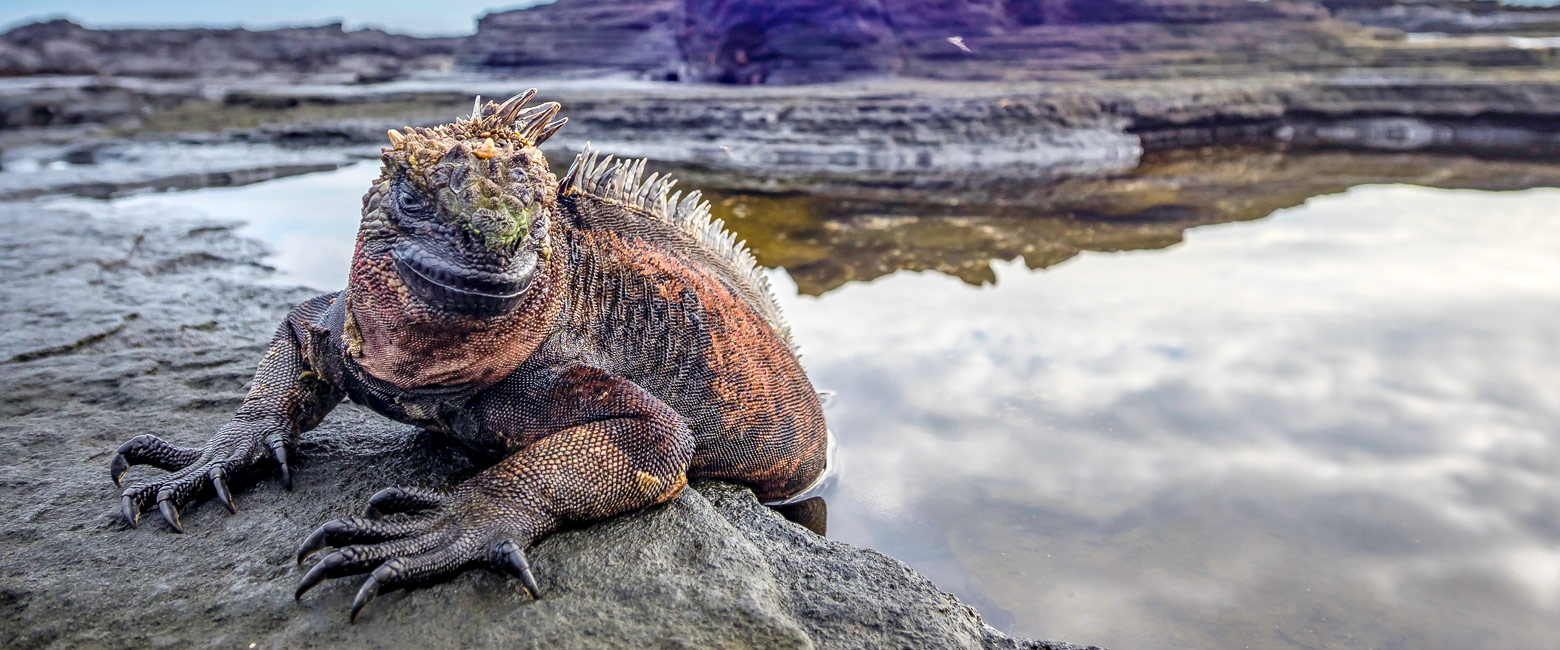
The most famous residents are the marine iguanas, which cover the rocks above the ocean. This is the location where BBC Wildlife filmed those amazing and freaky sequences of snakes hunting baby iguanas. Apparently, although there appear to be venomous snakes in just about every crack in the rocks, they show no interest and pose little threat to human visitors.
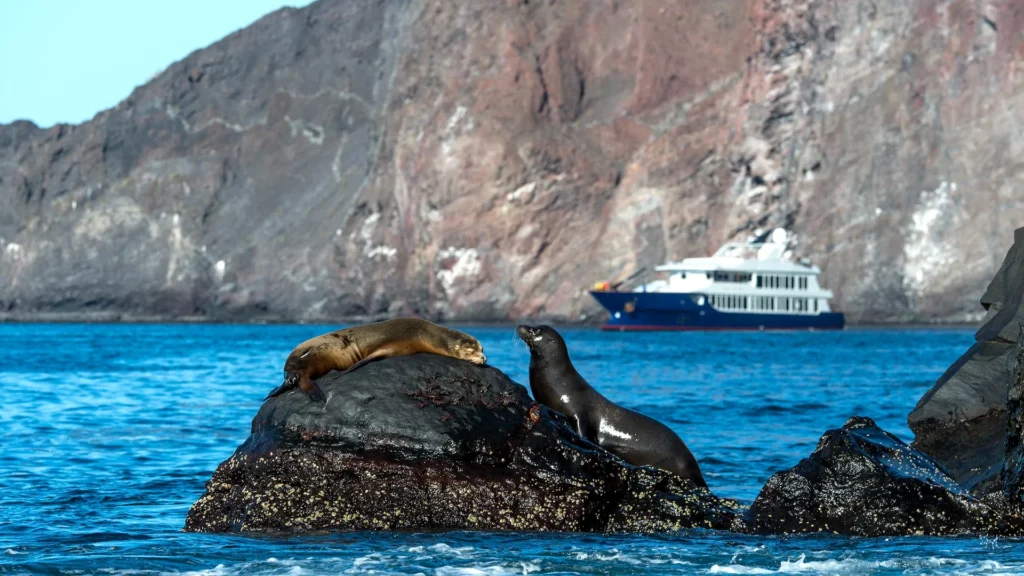
Other residents include Galapagos penguins, pelicans, Galapagos sea lions and Galapagos fur seals.
The cliffs are also home to flightless cormorants, which have sacrificed their ability to take to the air, in favour of becoming excellent divers, feeding off fish and octopuses in the waters immediately offshore.
The island also has two endemic species of rice rats. This is unusual since, on most islands, the indigenous rats have been exterminated by feral black or brown rats.
Island name
The island was named after King Ferdinland II of Aragon, a patron of the voyage of Christopher Columbus (even though the latter never actually visited Galapagos). It has also been known as Narborough Island (named by British buccaneer Ambrose Cowley in 1684 after John Narborough, an English naval commander).
/


Gallery
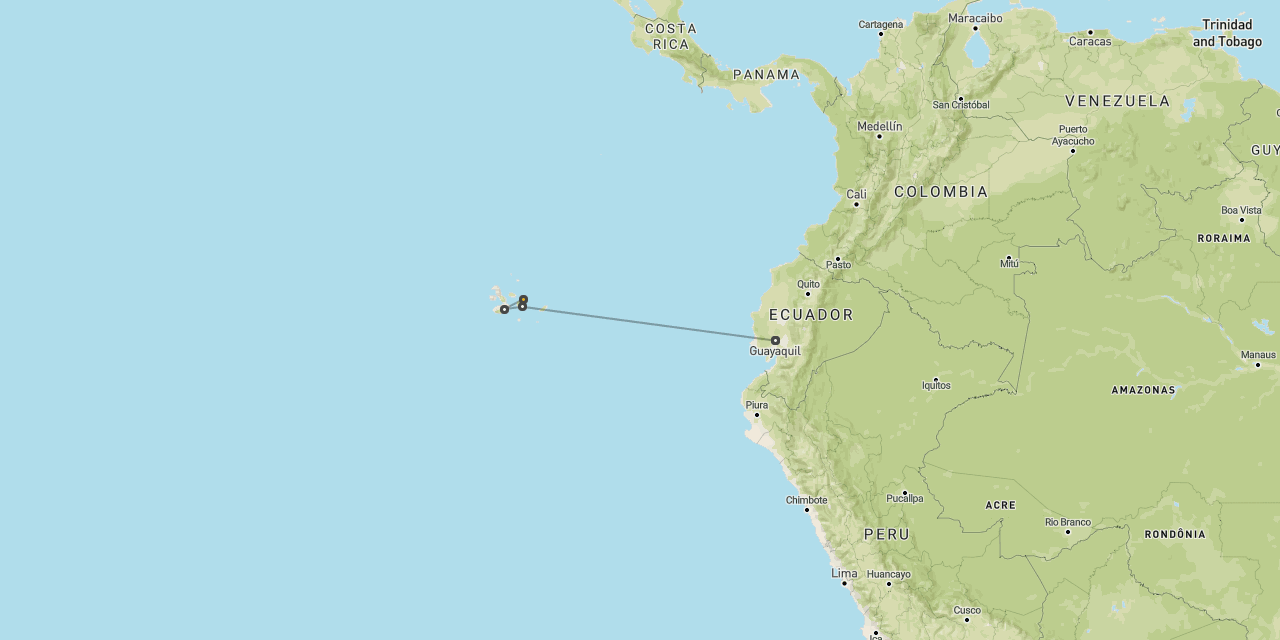
Map
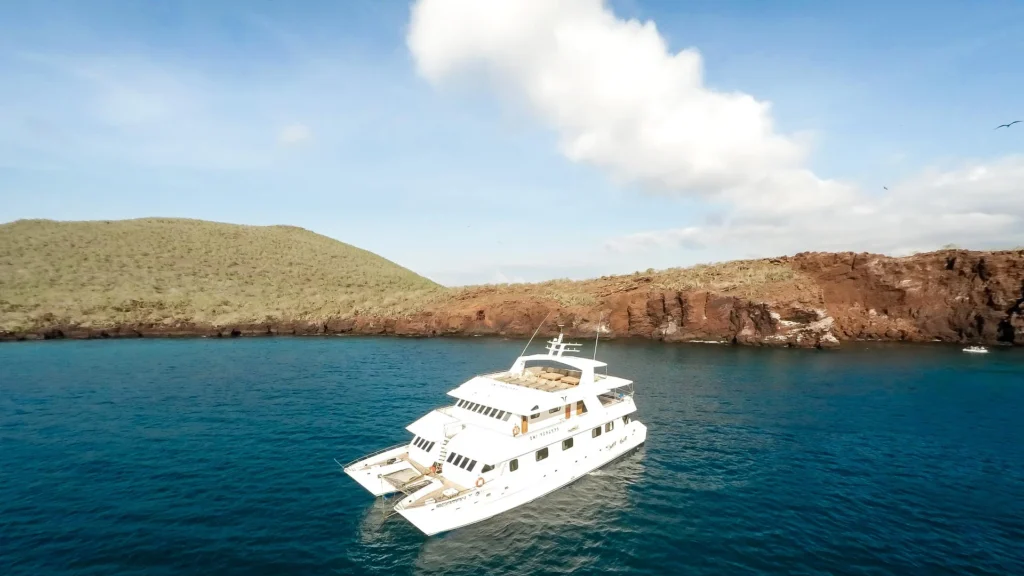
If you specifically want to include Isla Fernandina in your trip, then do let us know and we will make sure that you get onto the best and most appropriate vessel.
The island is usually included in the following live-aboard cruise itineraries.
features in longer and more westerly boat itineraries
let us know your thoughts about Galapagos
and we will help you create the perfect trip
Extraordinary tailor-made adventures,
from earthy and edgy to easy and extravagant
From around USD 2500 per person, you set the ceiling
Sample Trips
Here are some of our popular trip shapes
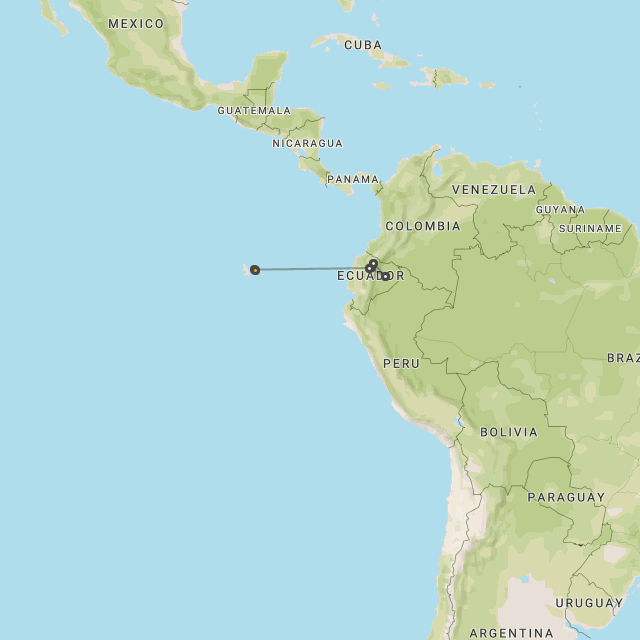
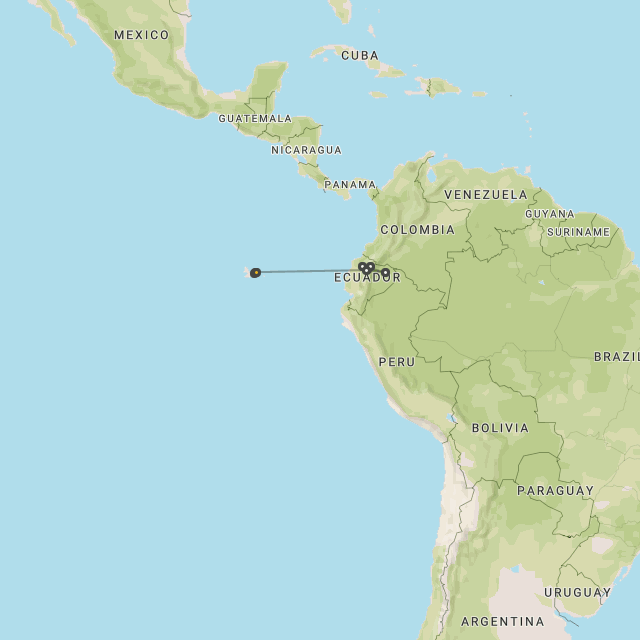
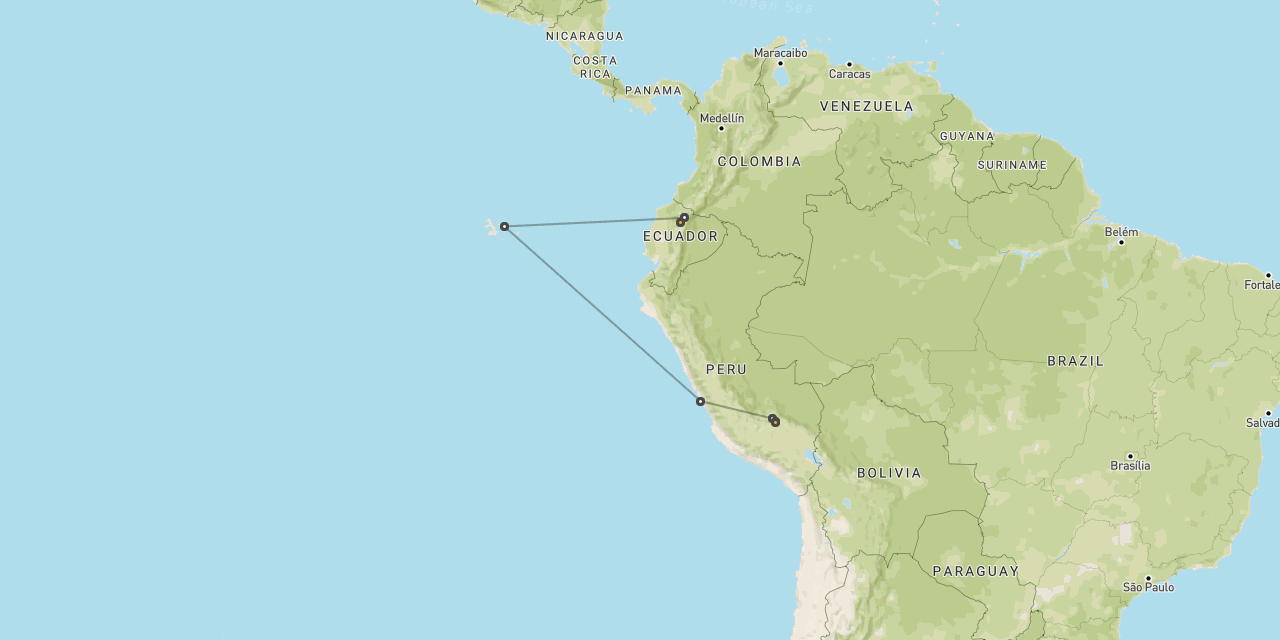

Get started on your trip
It’s never too soon to get in touch, we are here to help with every stage of your planning.
Best Lodges
We regularly inspect and photograph all of the the best lodges, to ensure that we always recommend the most suitable options

Key Locations
Take a look around related locations. Click ‘View more’ to explore locations further afield.