Nxabega Under Canvas
8.5 Rating
USD 900
Nxabega Under Canvas
is an intimate mobile camp
in the fabulous Okavango Delta
on the classic wetland Nxabega Concession
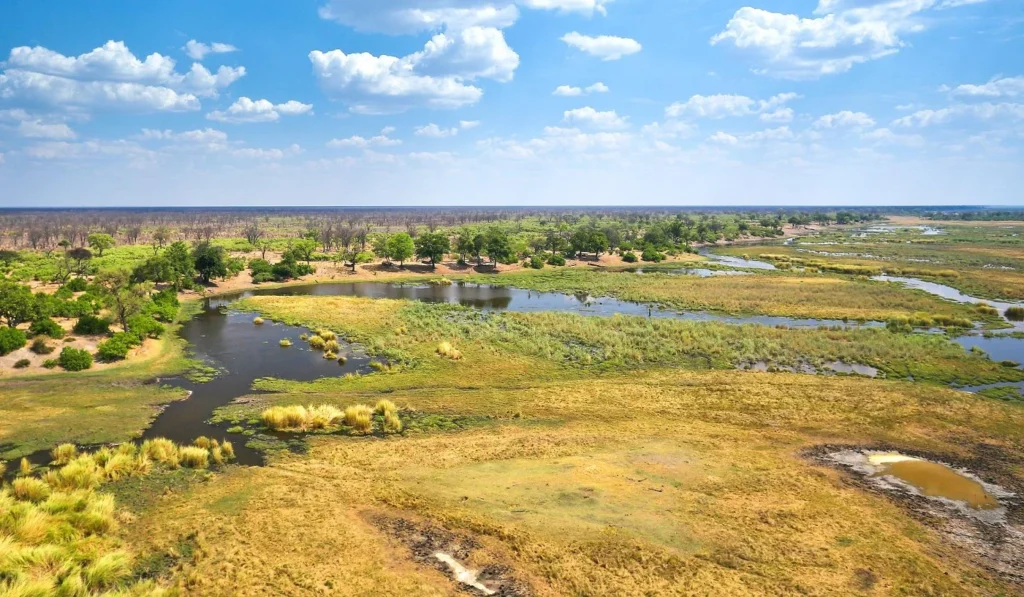
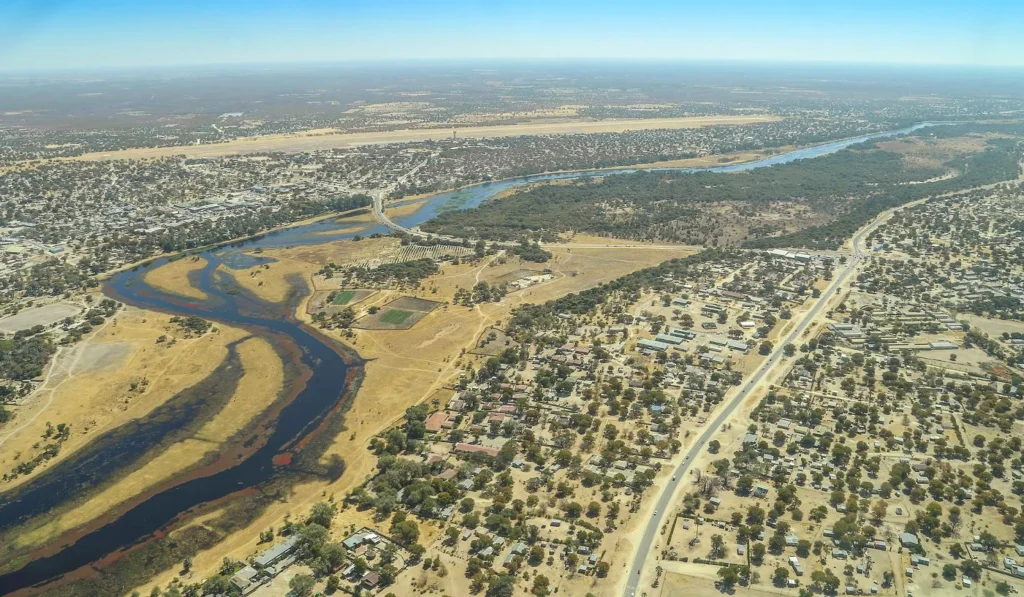
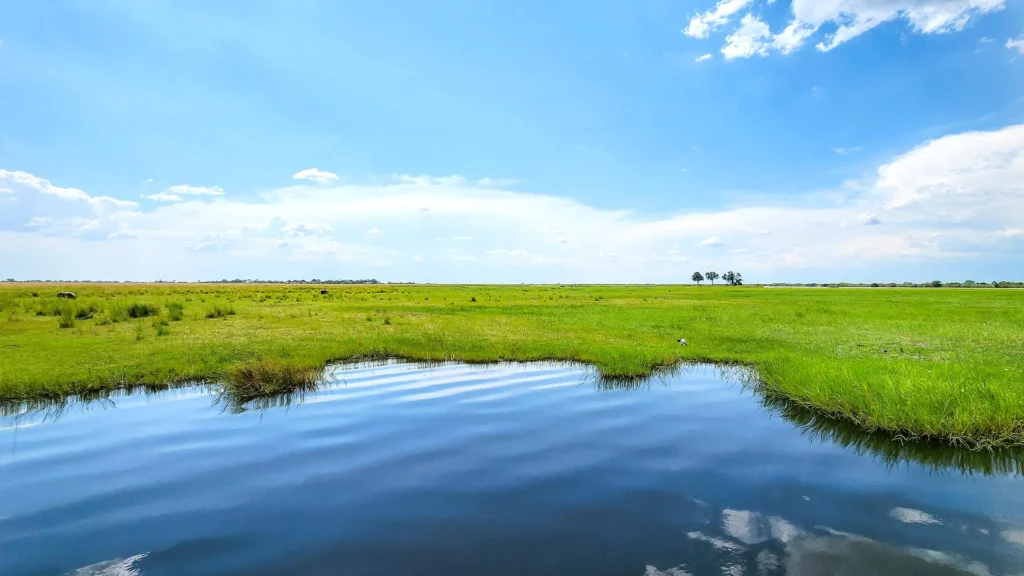
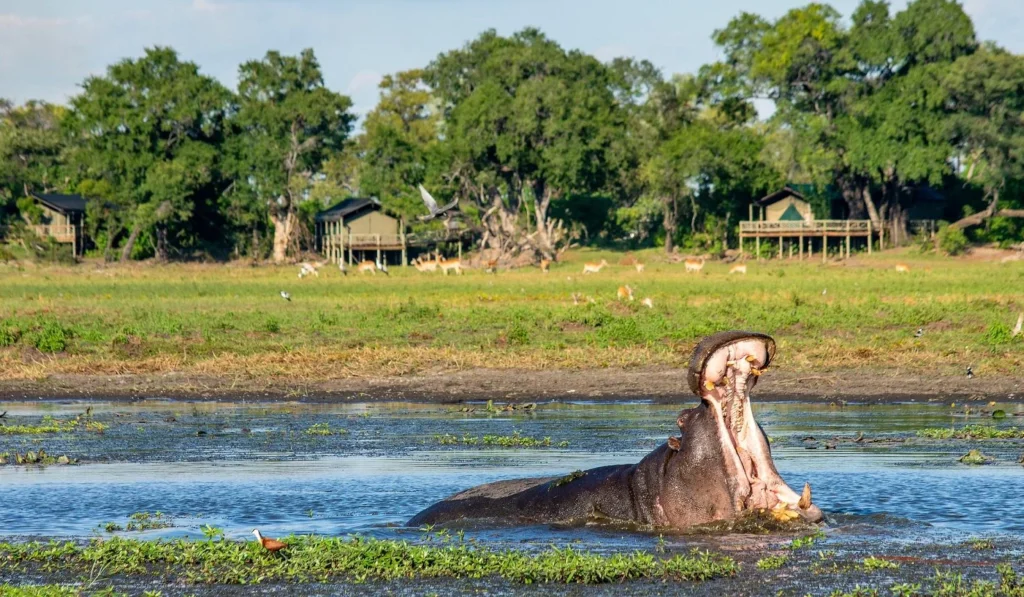
Nxabega Under Canvas sits beside a seasonal floodplain on the Nxabega Concession, a classic wetland sector on the southern side of the Okavango Delta, west of Chief’s Island and close to the Moremi Game Reserve.
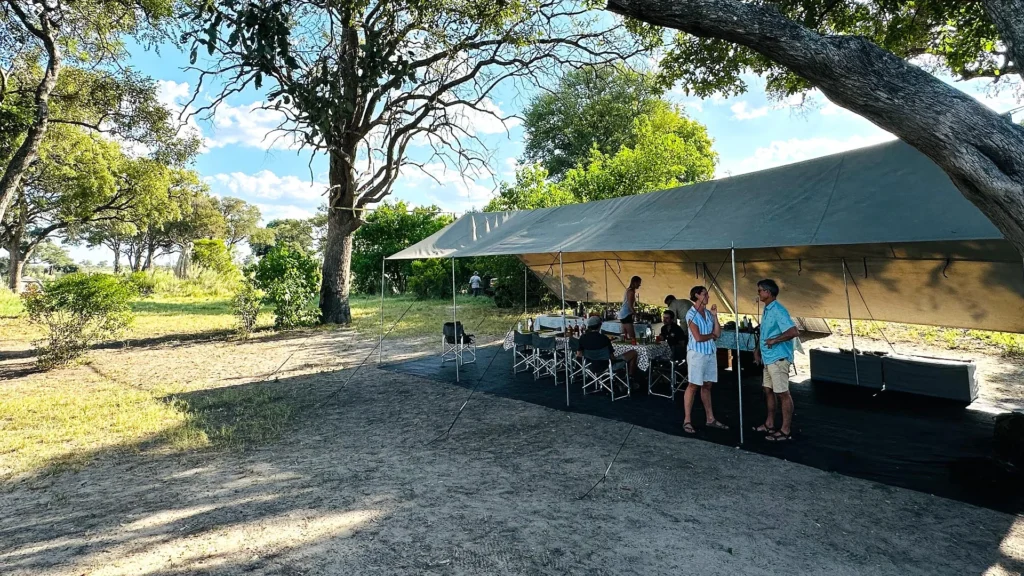
The camp is owned and operated by andBeyond, sharing the concession with the operator’s long-established Nxabega Okavango Tented Camp. It sits alongside Sandibe Under Canvas and Chobe Under Canvas in andBeyond’s Botswana Under Canvas circuit. As at Sandibe, the format is deliberately stripped back, a modern take on the classic mobile camp.
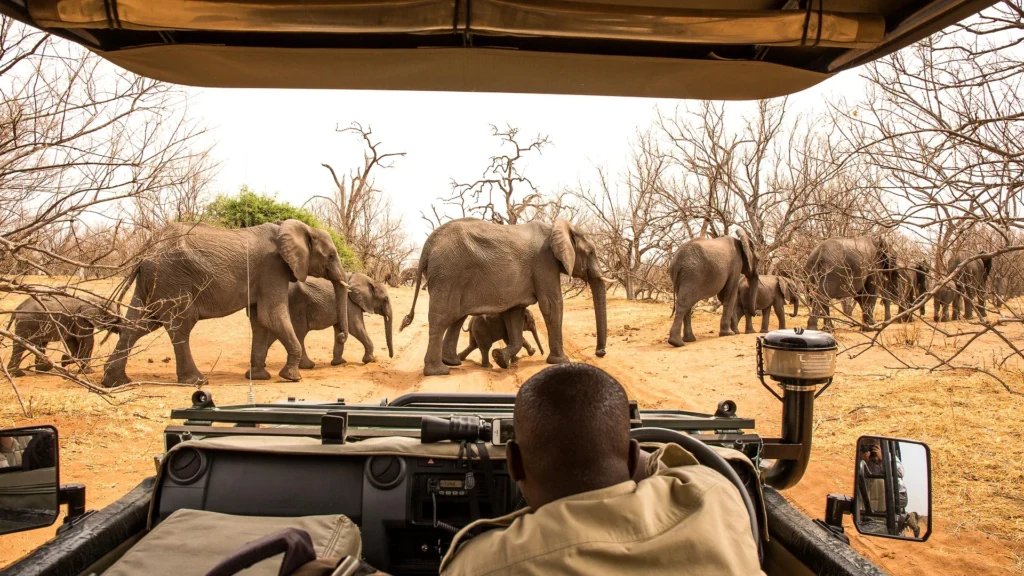
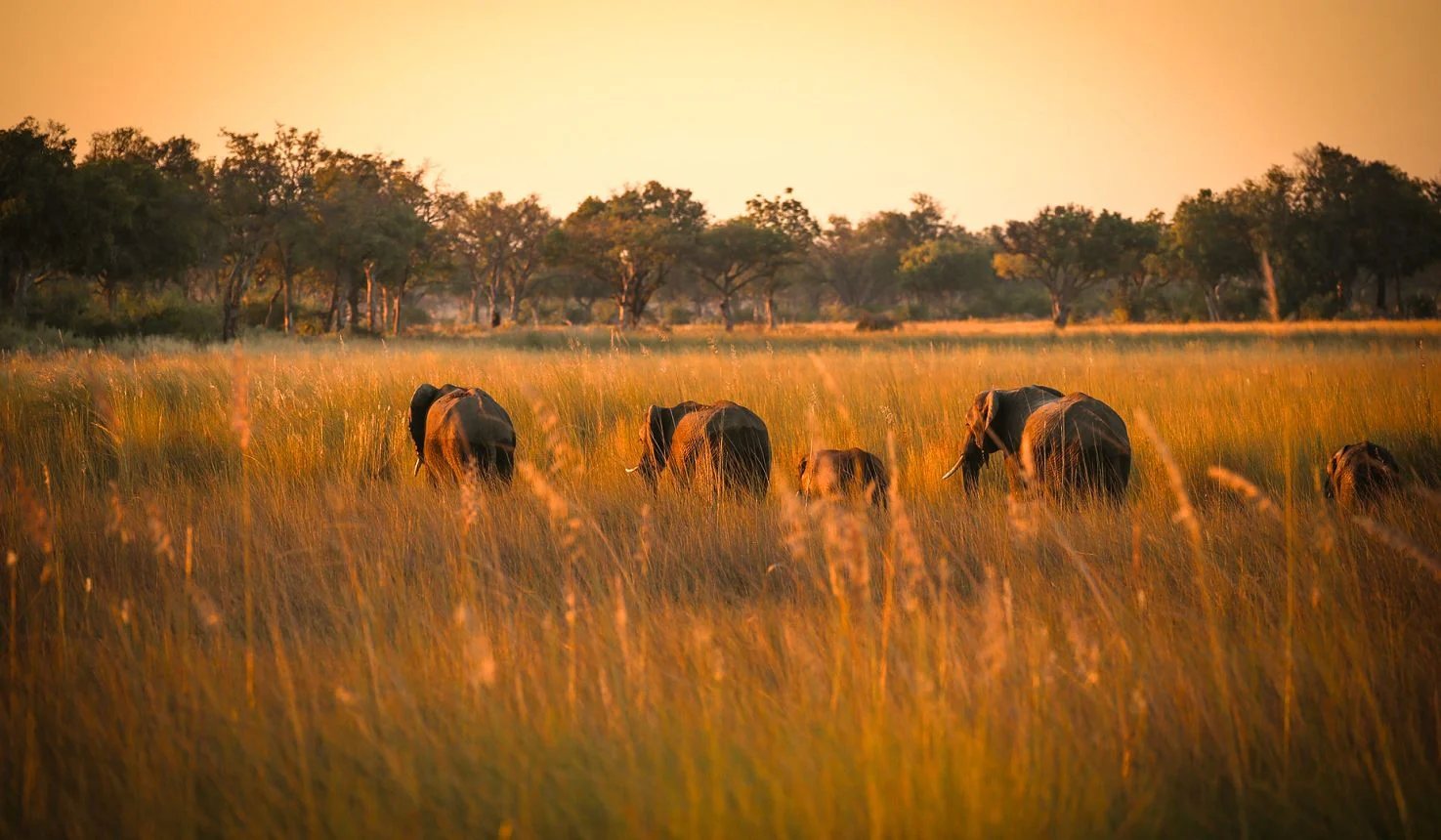
Where Sandibe is predator country, Nxabega leans to the water. The concession is a patchwork of seasonally flooded grassland and mature woodland, with islands of jackalberry, sausage and real-fan palm and a permanent floodplain in front of camp.
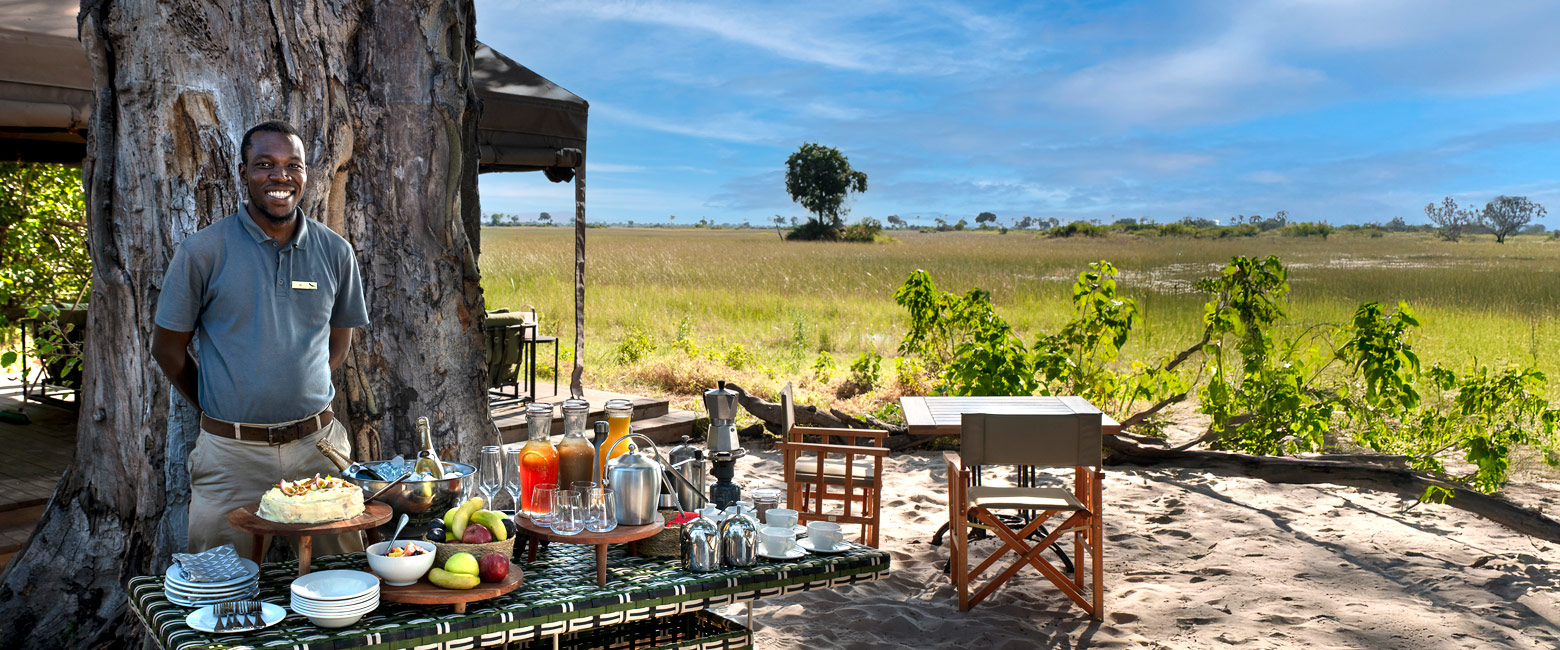
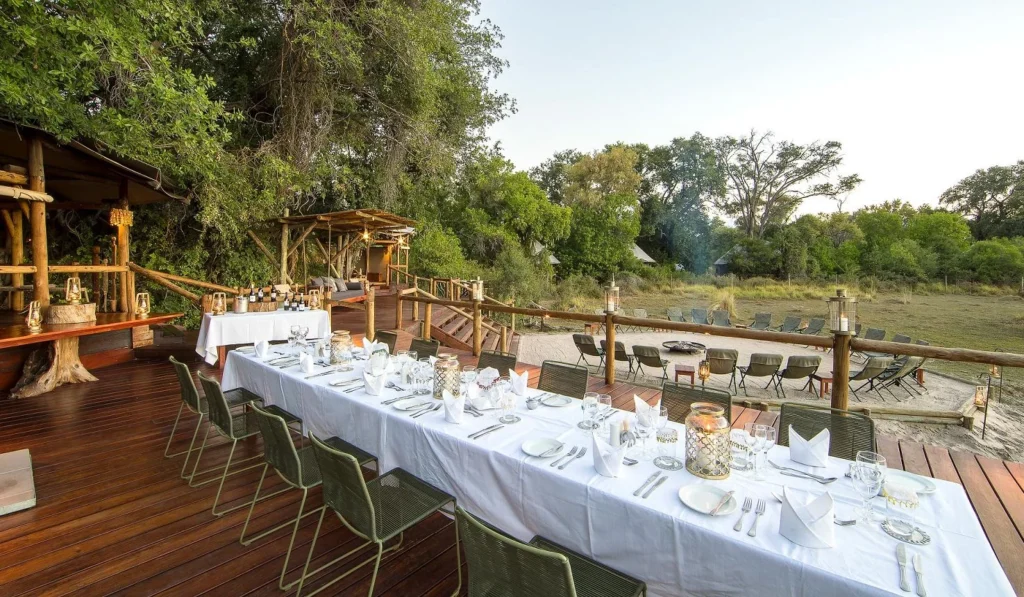
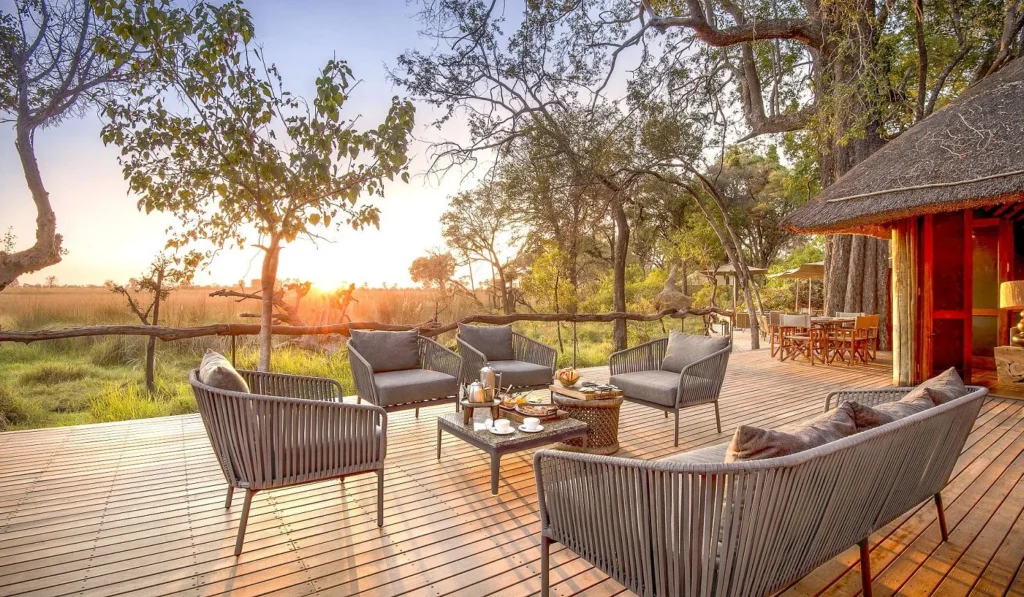
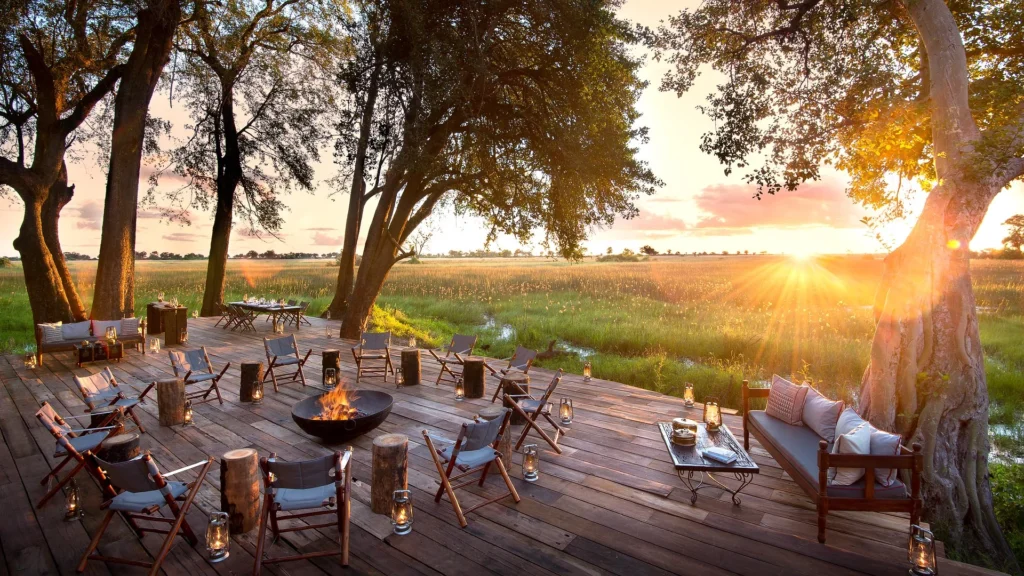
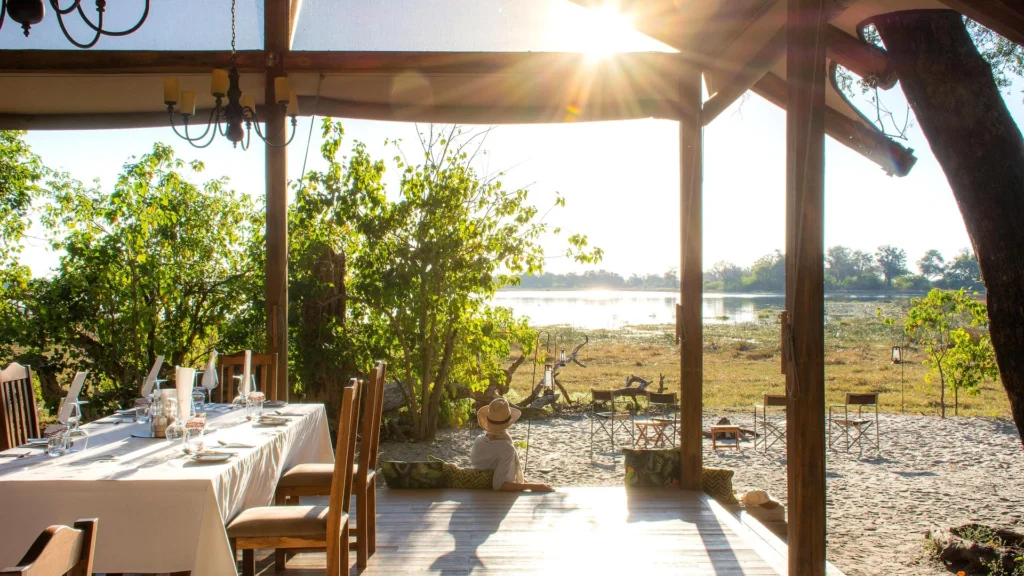
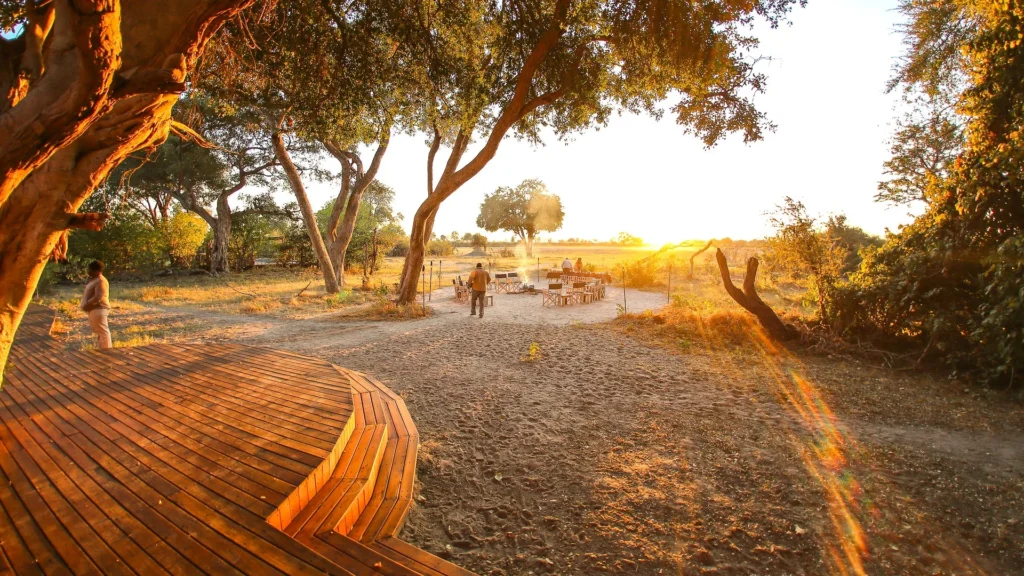
The camp is small and low-impact, with three widely spaced tents, an open canvas mess and lounge, and a fire pit set for meals under the stars.
Rooms
Guest accommodation is in three canvas tents, each fully netted and insect-proofed, sleeping a maximum of six guests in total. Each has a super king bed, a standing fan, running water throughout, USB points and in-room power packs, and Starlink wifi. Bathrooms are en-suite, with a double shower, double vanities, hot water and a flushing toilet.
Canvas Tent : x3 : super king bed, en-suite double shower and vanities, standing fan, Starlink wifi
Activities
Sandibe Okavango Safari Lodge provides the following guided activities …
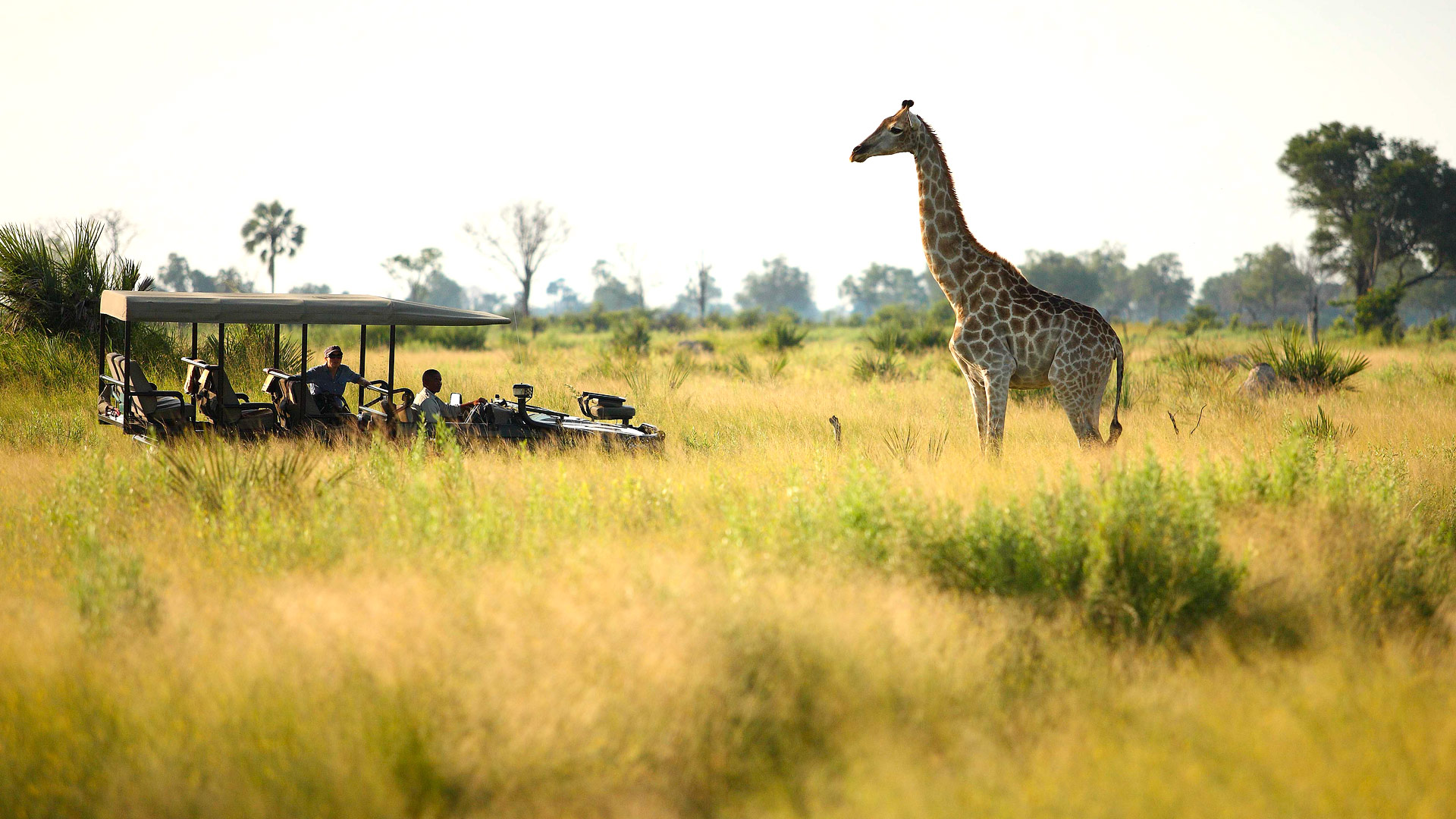
- Vehicle safari
- Walking safari
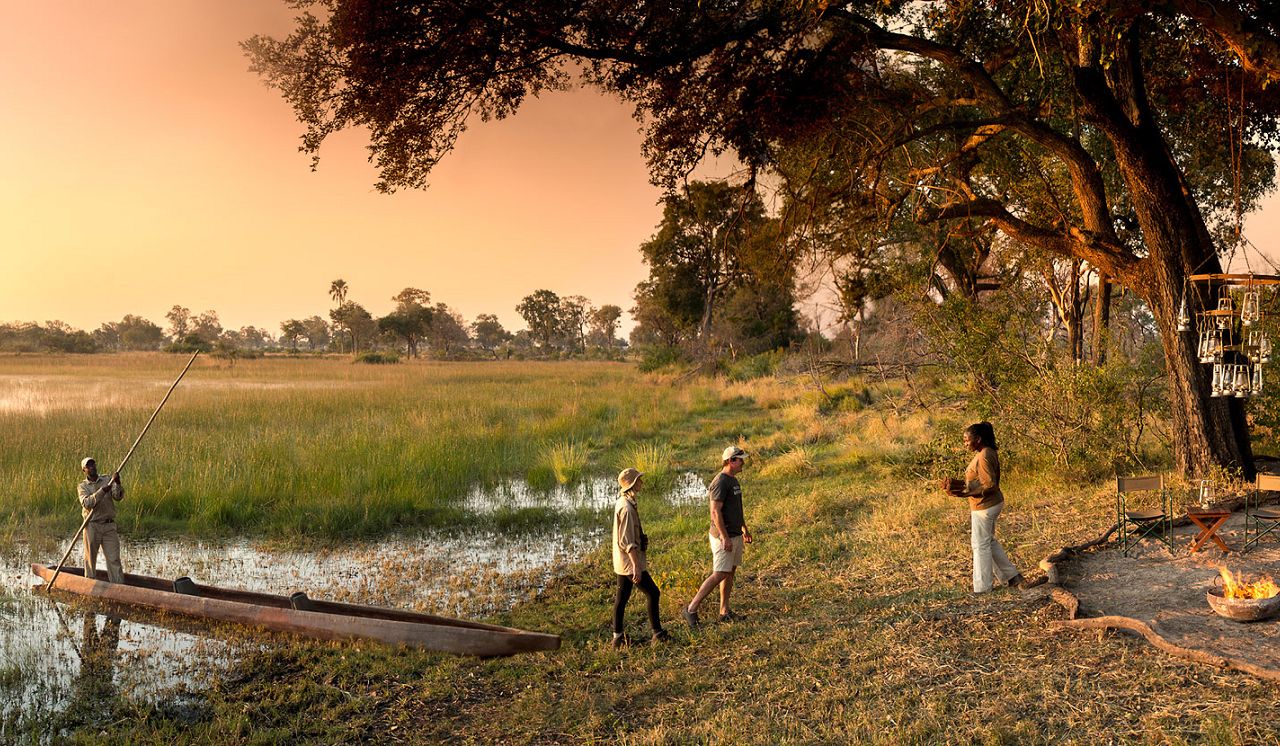
- Mokoro canoe safari (seasonal, water levels permitting)
- Motorboat safari (seasonal, water levels permitting)
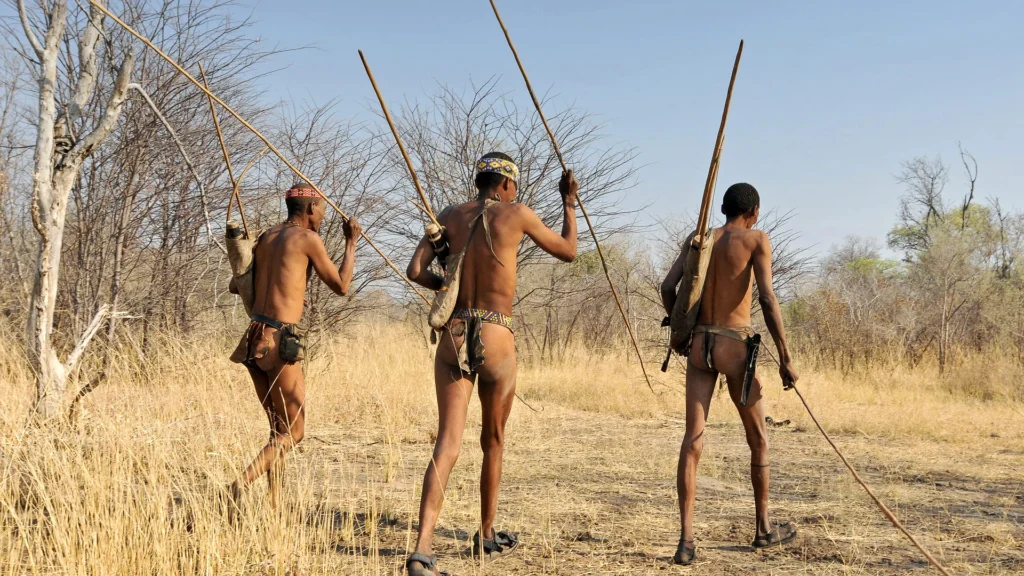
- Community visits to neighbouring villages
Community partnerships with the nearby villages of Shorobe, Sexaxa, Gogomoga and Tsutsubega run through Wild Impact, andBeyond’s long-standing conservation and community arm.
/


Gallery
Map
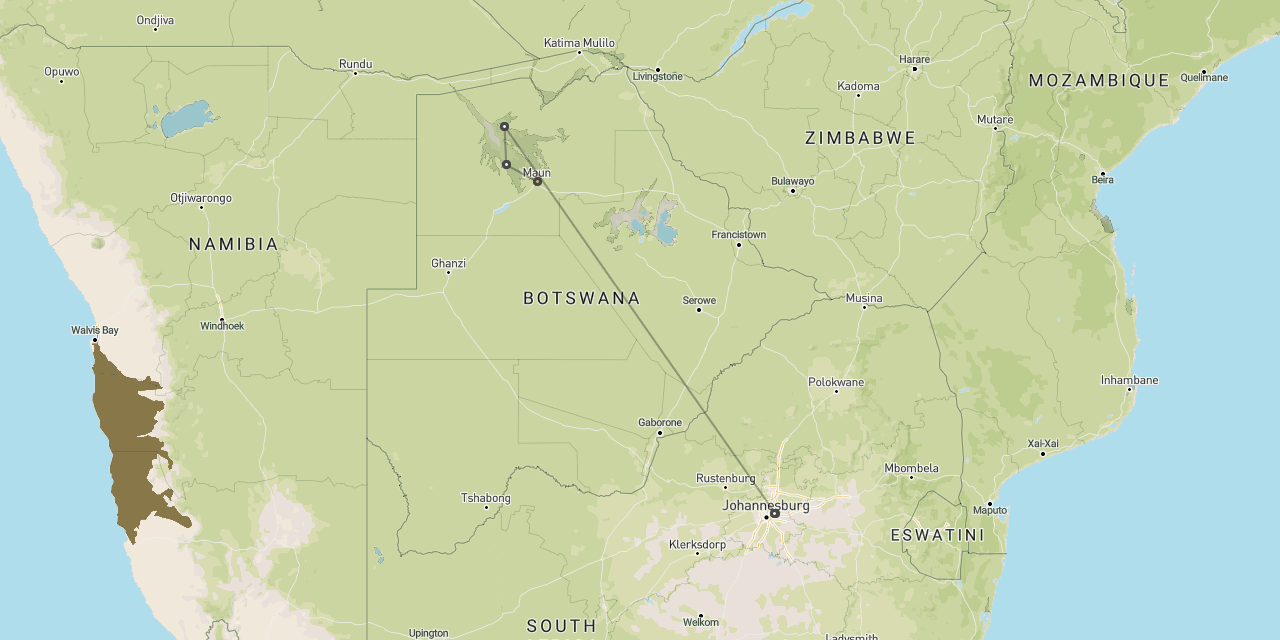
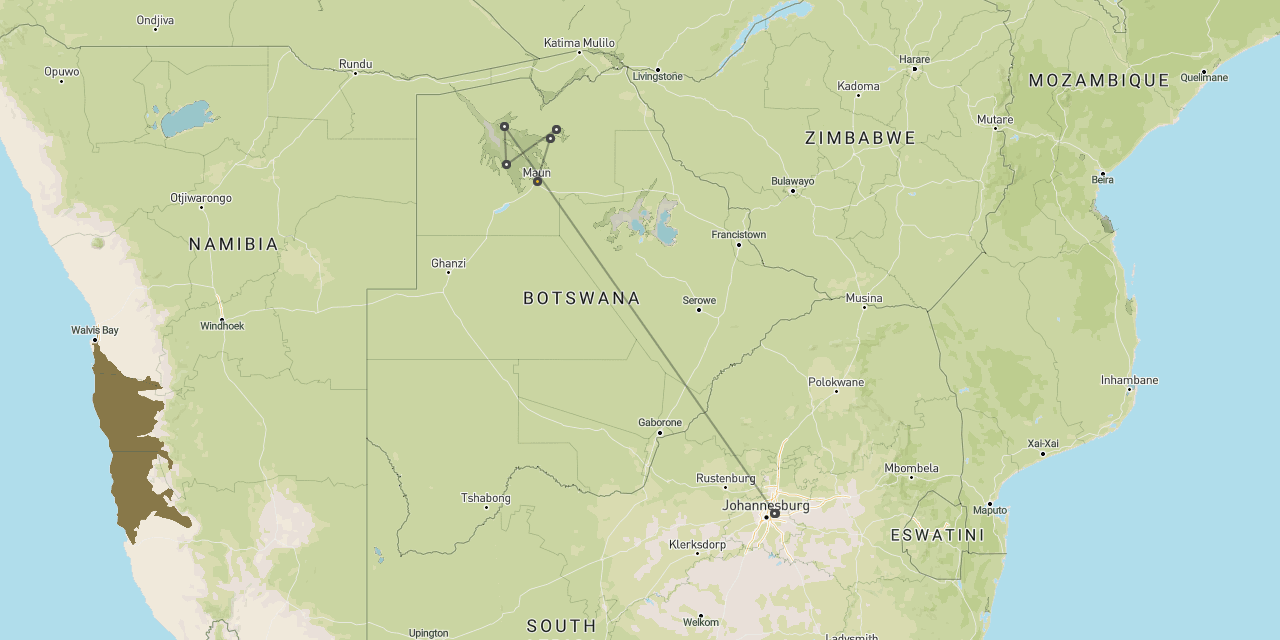
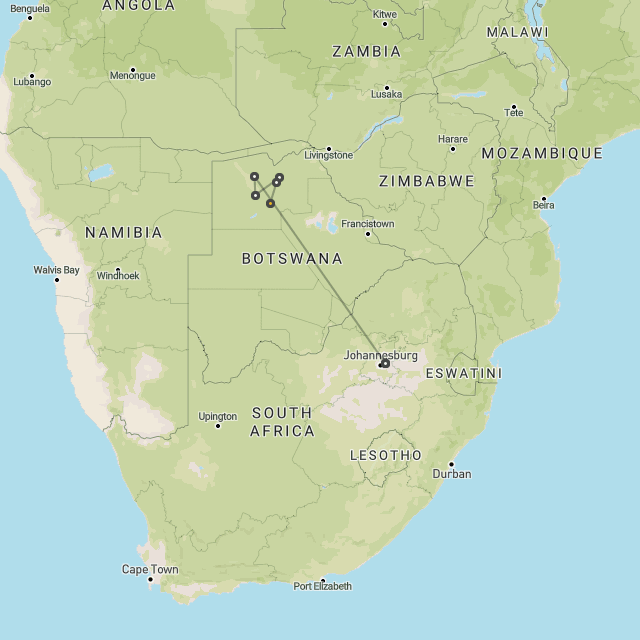
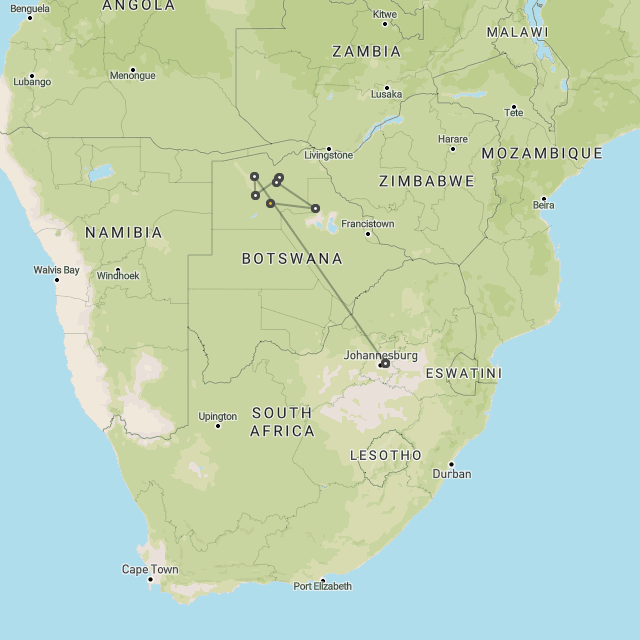
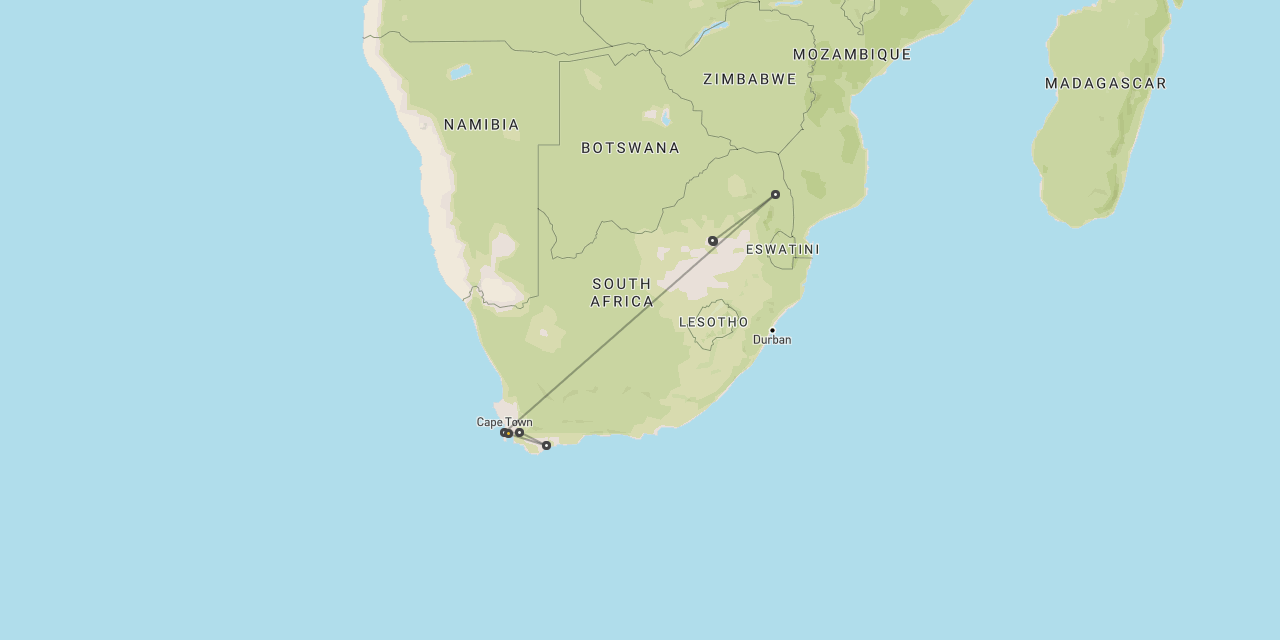
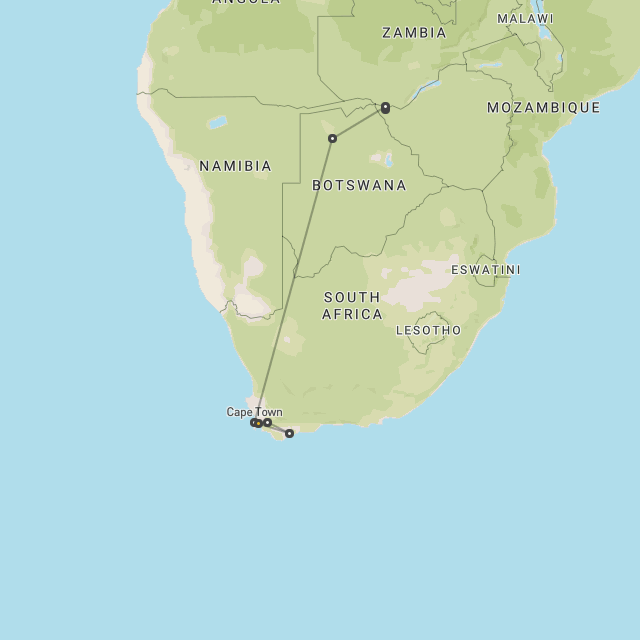
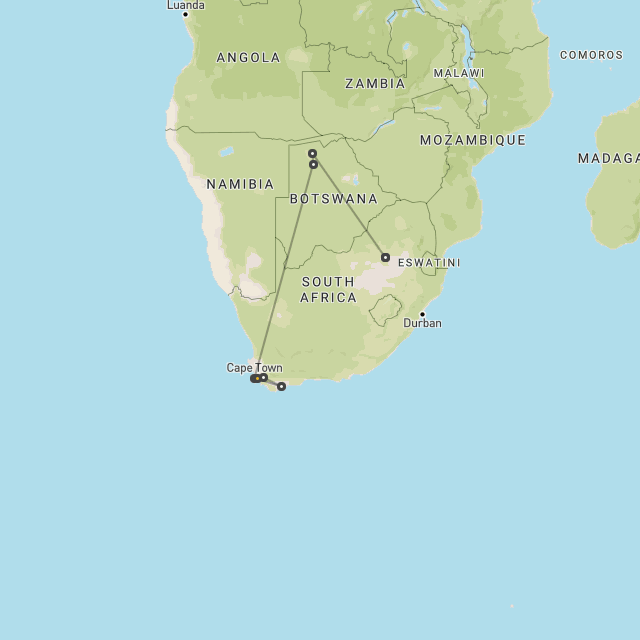
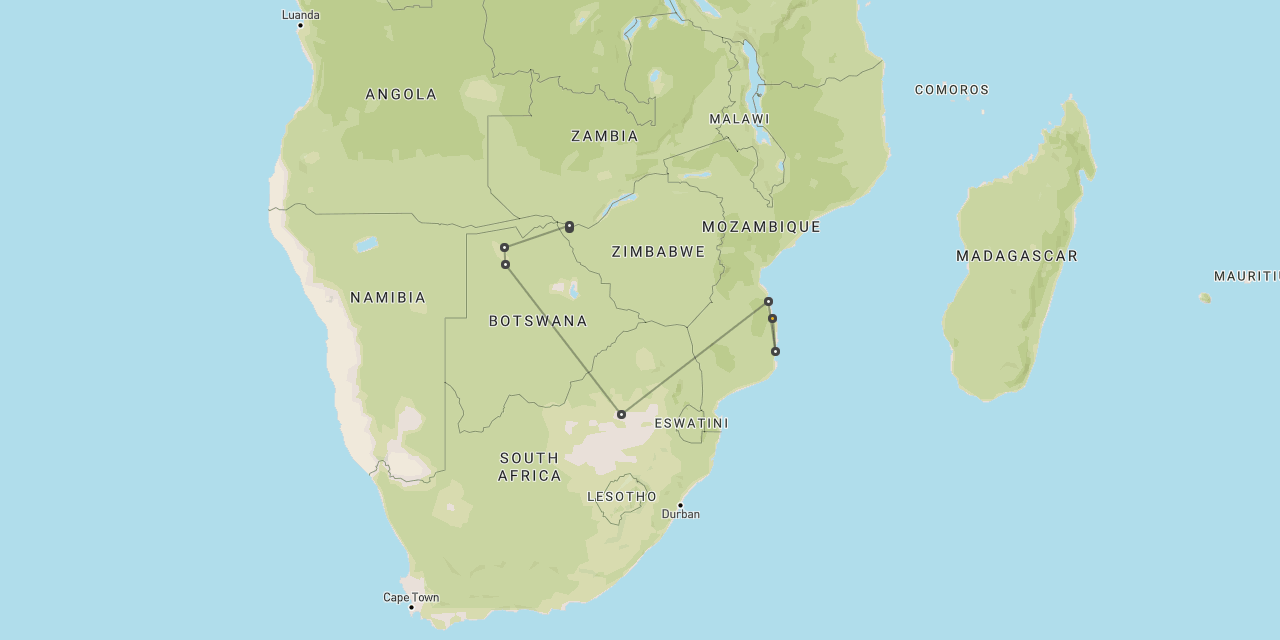
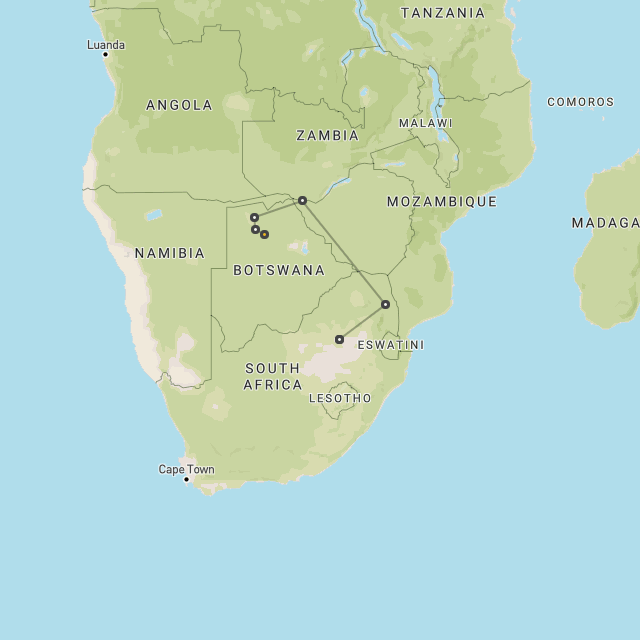
When it comes to trip shapes and durations in Botswana, most visitors combine 2, 3 or 4 lodges by light aircraft over 6-12 nights, one or two of which will usually be here in Okavango Delta, combined with the Linyanti Waterfront and/or Makgadikgadi areas.
These trips are often done in combination with further nights at the Victoria Falls and/or down in the Cape.
The stay duration here on the Nxabega Concession is usually limited to three nights. At times when the area is wetter, it is important to combine with a camp in a drier safari area, to ensure sufficient wildlife sightings.
Seasonality
The Okavango Nxabega Concession can be visited year round, but there are considerable seasonal variations.
The Jul-Sep dry season is the classic time to visit the Okavango Delta and is considered the best time for wildlife viewing, as many animals are drawn to the water from the dry surrounding hinterland. Temperatures can be cool at night but the days are perfect for safari and there are few insects around. Floodwaters have reached or just passed their peak so there is usually good access to both land and water activities. However, this is very much the high season in terms of prices and visitor numbers. The flood in this southwestern part of the delta is usually relatively late and can be very variable. During this period the flood waters allow for some stunning boat and mokoro safaris to sit alongside the reliable predator viewing that the vehicle safaris deliver.
The Oct-Dec hot wet season represents the transition period between the peak of the dry season and the start of the rains. Temperatures and humidities can become uncomfortably high in advance of the rains, particularly in Oct-Nov. With the floods having receded in most areas, the wildlife tends to become very concentrated around the few remaining water sources, making for very strong wildlife viewing. Boating activities become much less widely available, only those camps with access to permanent deepwater channels being able to continue operations. If significant rainfall does arrive it usually comes in short showers with little negative effect on safari conditions. Some animals may start to migrate outwards from the delta, potentially causing a slight drop off in sightings. The majority of camps are significantly discounted during Nov-Dec. There is rarely enough water for significant boating activities during this period, but vehicle safari should be at its best, with stronger than usual sightings, often enhanced by animals migrating outwards from the central parts of the delta with the first rain showers.
Jan-Apr is the main green season in the Okavango Delta, when the area experiences the majority of its rainfall and temperatures have dropped slightly. At this time the landscapes tend to be verdant and beautiful, the animals well fed and there’s lots of babies around. The Dec-Feb period threatens the greatest chance of cloud and rain. As the seasonal waterholes out in the vast dry hinterland become replenished, some animals disperse in search of better grazing, but sightings remain strong. The majority of camps are significantly discounted throughout this season making it a smart time to travel, especially towards April. Water levels can remain too low for boating activities throughout this period. This situation can change if the rains are heavy enough to fill the local watercourses and floodplains, but this would be unusual. During this period there is a large amount of dry land available for vehicle safari, so sightings should remain reasonably strong.
The May-Jun flood season is a period of transition from the hot wet summer to the cool dry winter and is a great time to visit. Temperatures can drop towards freezing during the night, but this has little adverse effect on safari as there are lots of baby animals around. The majority of camps are also significantly discounted during this time making it a smart time to travel. The flood in this southwestern part of the delta is usually relatively late and can be very variable. During this period the camps are usually focused on vehicle safari, but in the event of an early flood, there may be an increasing focus on motorboat safari and mokoro canoe safari.
Getting there
All of the camps in the Okavango Nxabega Concession area can only be accessed by light aircraft, with each camp having its own bush airstrip.
From Pom Pom Airstrip it is a vehicle safari of around 20 minutes into camp, with a good chance of early animal sightings along the way.
usually combined with at least one other camp in Botswana
Extraordinary tailor-made adventures,
from earthy and edgy to easy and extravagant
From around USD 2500 per person, you set the ceiling
Sample Trips
Here are some of our popular trip shapes

Get started on your trip
It’s never too soon to get in touch, we are here to help with every stage of your planning.
Best Lodges
We regularly inspect and photograph all of the the best lodges, to ensure that we always recommend the most suitable options

Key Locations
Take a look around related locations. Click ‘View more’ to explore locations further afield.