The world’s leading tailor-made safari company

4.9
Google reviews
The best time of year for your safari in Botswana
Our favourite times
Although we would be happy to go on safari any time of year, our three favourite windows are …
September : Late dry season, with epic wildlife, but before the heat of October.
May : Early dry season, with lovely cool nights and the arrival of the floodwaters.
March : Late green season, with the bush looking verdant and lots of baby animals around. Plus massively discounted prices.

Four seasons
Botswana experiences four distinct seasons, affecting the quality and cost of safari.
May to September is the cool dry season, the best time for wildlife, but also with the highest prices.
October is the hot end of the dry season, with epic wildlife, high prices but very high temperatures.
November to February is the warm green season, with great prices, interesting wildlife, but a hot and humid with occasional magnificent downpours.
Mar-Apr is a transition season, with fast improving conditions and some great pricing.

January
The month of January lies in the middle of the green season.
The wildlife viewing remains relatively strong in the core Okavango Delta areas and the bush is verdant, with lots of wildflowers and baby animals. On the open grasslands of the Makgadikgadi area, large herds of wildebeest and zebras should be congregating to have their young.
The temperatures can still be a little warm and sticky, with some chance of showers, but still with plenty of sunshine.
Prices are substantially reduced.

February
The month of February lies in the middle of the green season.
The wildlife viewing remains relatively strong in the core Okavango Delta areas and the bush is verdant, with lots of wildflowers and baby animals. On the open grasslands of the Makgadikgadi area, large herds of wildebeest and zebras should be congregating to have their young.
The temperatures can still be a little warm and sticky, with some chance of showers, but still with plenty of sunshine.
Prices are substantially reduced.

March
The month of March marks the tail end of the green season, a great time for value.
Wildlife viewing conditions are improving fast. The experience is significantly different from the upcoming dry season, but not necessarily weaker. The bush is still more green than yellow and there’s still lots of wildflowers and baby animals around.
The uncomfortably high temperatures of the main green season should have subsided to very comfortable levels, with some chance of showers, but still with plenty of sunshine.
Prices remain substantially reduced.

April
The month of April starts the transition from the warm green season to the cool dry season.
By now, the landscapes should be starting to dry out significantly, with the grasses starting to yellow and drop and the wildlife starting to move back in towards permanent water, making for improved wildlife viewing.
Two huge advantages in April are the usually perfect mid-range temperatures and the fact that most lodges are quite empty, often leading to a more intimate and special safari experience.
Unfortunately, the prices in most lodges are closer to their dry season peaks than the green season lows.

May
The month of May marks the end of the transition from the warm green season to the cool dry season.
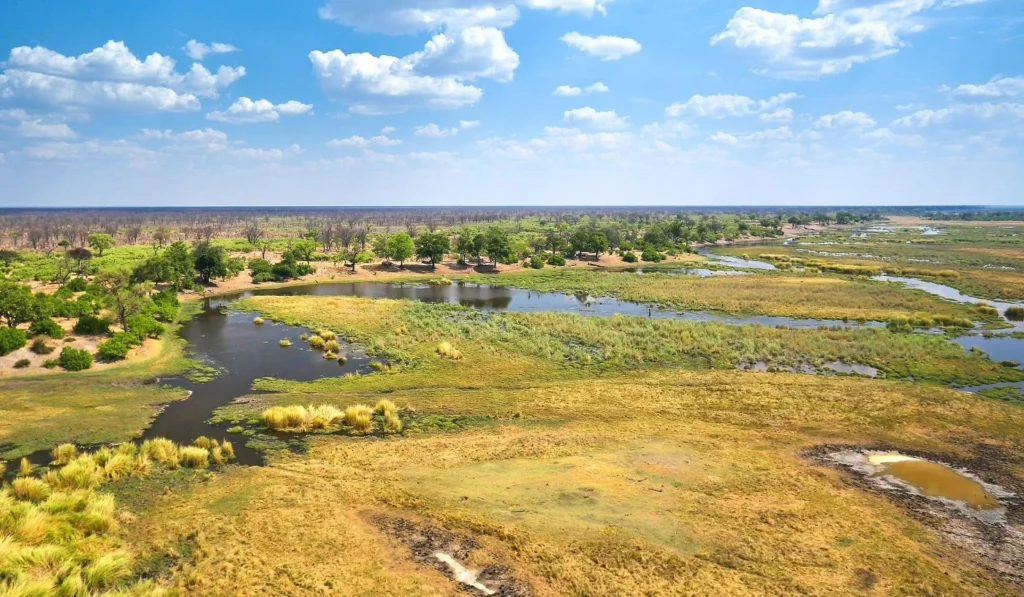
The landscapes should be drying out nicely, with the grasses starting to yellow and drop and the wildlife starting to move back in towards permanent water. The floods typically arrive into the western side of the Okavango and Linyanti wetlands.
The night time temperatures are low, meaning hot water bottles in bed and ponchos on morning drives.
Unfortunately, the prices in most lodges are closer to their dry season peaks than the green season lows.
June
June is the first month of the cool dry season in Botswana, the prime period for wildlife viewing.
By now, the landscapes should be almost dried out, with the long grasses having yellowed and toppled and the wildlife significantly migrated back towards permanent water. This is the month when the floods fully arrive into the west and northcentral parts of the Okavango and Linyanti wetlands.
The night time temperatures are low, meaning hot water bottles in bed and ponchos on morning drives.
Unfortunately, the prices in almost all lodges are now at their highest.
July
July is the second month of the cool dry season in Botswana, the prime period for wildlife viewing.
By now, the landscapes should be almost dried out, with the long grasses having yellowed and toppled and the wildlife significantly migrated back towards permanent water. The floods arrive into the Okavango and Linyanti wetlands.
The night time temperatures remain low, meaning hot water bottles in bed and ponchos on morning drives.
Unfortunately, the prices in almost all lodges are now at their highest.
August
August is the third month of the cool dry season in Botswana, the prime period for wildlife viewing.
By now, the landscapes will have dried out, with the vegetation having long since died back and the wildlife now settled around permanent water. The flood should have arrived into most areas.
The night time temperatures are likely to remain quite low, meaning hot water bottles in bed and ponchos on morning drives.
Unfortunately, the prices in almost all lodges are now at their highest.
September
September is the fourth month of the dry season in Botswana, arguably the best month of the year.
By now, the landscapes will be very desiccated, with the vegetation having long since died back and the wildlife migrating daily in and out of permanent water sources. The flood will be starting to subside.
The weather should be perfect.
Unfortunately, the prices in almost all lodges are at their highest.
October
October is the fifth and final month of the dry season in Botswana, with epic wildlife viewing.
The landscapes are very desiccated, with the vegetation having long since died back and the wildlife migrating daily in and out of permanent water sources. it can be a painful scene, as the animals struggle with the harsh conditions. The flood is receding.
The daytime temperatures can soar, in advance of the upcoming rains and can become quite oppressive.
Unfortunately, the prices in almost all lodges remain at their highest.
November
By November, we are entering the most challenging time to be on safari in Botswana.
The temperatures climb in advance of the rains, making for potentially uncomfortable nights. Once the rains break, temperatures should ease, but the timing is unpredictable.
Before the rains, wildlife viewing can be truly epic. Once the rains break, the wildlife starts to disperse, but still with good sightings.
Many camps are massively discounted.
December
December is usually a continuation of the challenging conditions of the previous month.
The temperatures climb in advance of the rains, making for potentially uncomfortable nights. Once the rains break, temperatures should ease, but the timing is unpredictable.
Before the rains, wildlife viewing can be truly epic. Once the rains break, the wildlife starts to disperse, but still with good sightings. The migration event in Makgadikgadi should be underway.
Many camps are massively discounted up to the holiday period.

We’re all ears!
Insider tips for safari in Botswana

Flood fluctuations
Safari in Botswana is incredibly seasonal, not just month-by-month, but literally camp-by-camp.
There are great things going on year round, but you need to choose your camps with absolute precision.
Uniquely, we rate every camp for every activity and animal in every month of the year, base upon our own expertise, endless conversations with the guides and regular updates from the bush.
We take this very seriously.

Beware the heat
Having just said that safari in Botswana is great year round, we should warn you about the heat during the Oct-Dec transition from dry to green seasons. It can be genuinely hot and humid.
This is not so much of an issue during the day, but at night you either need to be hardy or choose one of the few camps with aircon.
By contrast, the genuinely cold nights of Apr-Aug are cosy and fun, especially when shared with a cuddly ‘bushbaby’ (hot water bottle).

Serious safari
With the ever increasing levels of polish delivered by the camps in Botswana, it’s no surprise that the core safari experience can become diluted.
You don’t have to spend all day and night out in the vehicle, or do serious wildlife approaches on foot of by boat, but we think it’s really important that these options remain available.
Camps that are able to deliver serious safari are generally better operations from top to bottom.

Wet and dry
Wet camps are locations where the Apr-Oct flood is most widespread, causing a pronounced and sometimes exclusive focus on water-based activities by motorboat and mokoro canoe.
These outings are fun and hypnotic, but they can get repetitive and they do not deliver anywhere near the level of wildlife sightings as vehicle safari.
For most trips, we combine dry and mixed camps, only occasionally using a pure wet location in longer combinations of three or more camps.

Avoiding traffic
When we talk about safari in Botswana in such glowing terms, we are referring to the vast private concessions that cover over 90% of the key safari areas, where a handful of guests share hundreds of square kilometres of virgin bush.
The remaining areas (notably Kasane, Chobe, Savute and Moremi) are contained within national parks, where the vehicle traffic can be absolutely horrific. We only use these areas only very rarely and with extreme caution.

Avoiding bankruptcy
Botswana is the most expensive safari location in Africa during the Jun-Oct dry season, so we need to tread with great care.
However, during the Nov-Apr green season prices can more than halve, providing incredible value, especially during the Feb-Apr ‘secret season’, which also happens to coincide with late summer in Cape Town.
If you have the flexibility to travel during less popular months and to book last minute, we should be able to help you take advantage of some great value options.

Paws for thought
Is Botswana the place for you?

Highlights
Botswana is our favourite safari location in Africa, our happy place.
This is a vast wilderness, where you can really lose yourself in the majesty of the bush.
The country is so easy to travel in, the lodges are an utterly superb blend of comfort and authenticity. The safari experience itself can be as easy or as intense as you wish, you just need to choose your perfect blend of camps.
Above all, Botswana is the model for conservation around the world, a paragon for our future relationship with wilderness.

Duration
For most people, the length of their core safari in Botswana is limited by budget. This can be a very expensive undertaking.
Ideally, you would spend maybe six to nine nights in the bush, split between three different camps. But most people limit themselves to two or even just one camp.
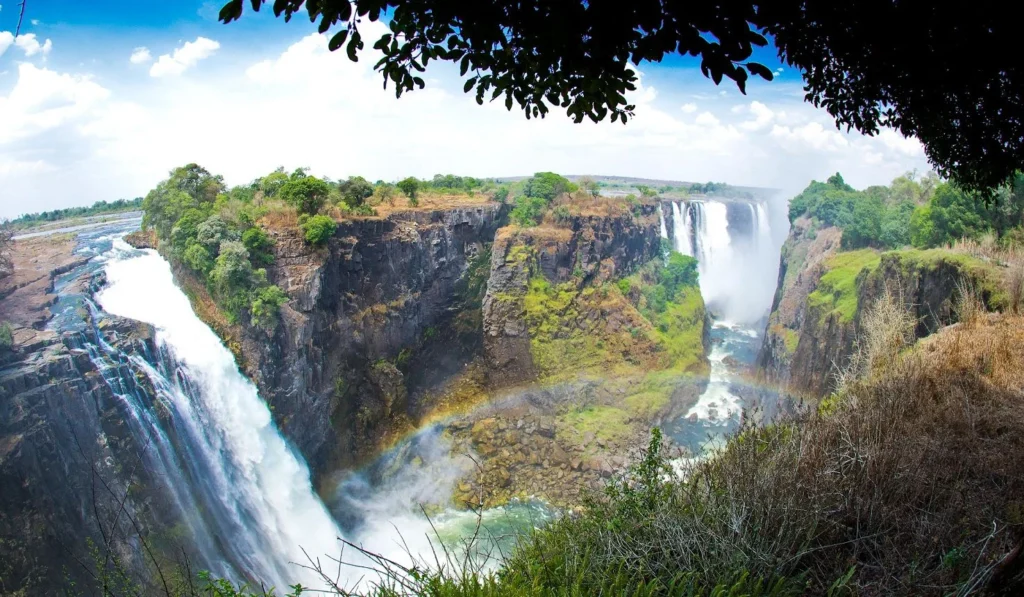
To extend that core safari into a good length trip, you can combine with lower cost locations like Victoria Falls, Cape Town or the beaches of Mozambique.
Whilst a Botswana only trip can be as short as a week, most combination trips end up between 12 and 28 nights.

Budget
Botswana is the most expensive safari location in Africa, with prices during the Jun-Oct high season in the range USD 1000-5000 per person per night.
However, during the Nov-Mar green season prices can drop as low as USD 500.
Importantly, the quality of the core safari experience does not generally vary with price. The upper end of the price range is for the most polished and luxurious lodges, where the safari experience tends to be easier and more leisurely.
Camps in the middle and lower range are mostly very comfortable, but the guests tend to be more focused on the wildlife.

Family safari
Many of us here at ATR have travelled extensively with our own kids, so we know for a fact that safari in Botswana is an absolute dream for families. This is the kind of trip that guarantees to generate memories that you will share with your kids for the rest of your lives.
The safari here is ideal for families with kids of 12 years and older, strong for kids 8-11 years and viable from 6-7 years old. If your kids are 0-5 years, then it’s probably best to look at other locations.
The only thing we really need to worry about is the price, but we will help you navigate around that. If we can’t find a solution, we can always look at other parts of Africa.

Honeymoon safari
There is a good chance that Botswana is the ideal location in Africa for your honeymoon. It does inherently deliver a magical blend of adventure, romance, comfort and relaxation.
If you want more of a hardcore adventure trip, then maybe we should look at Tanzania or Namibia.
But if you want to simply share magical moments in the bush and have the time of your lives, then Botswana will work its way into your soul, delivering a wonderfully subtle, deep and indelible set of experiences and memories.
All we need to do is build your perfect safari.

Luxury safari
Botswana offers the most luxurious and polished safari in Africa.
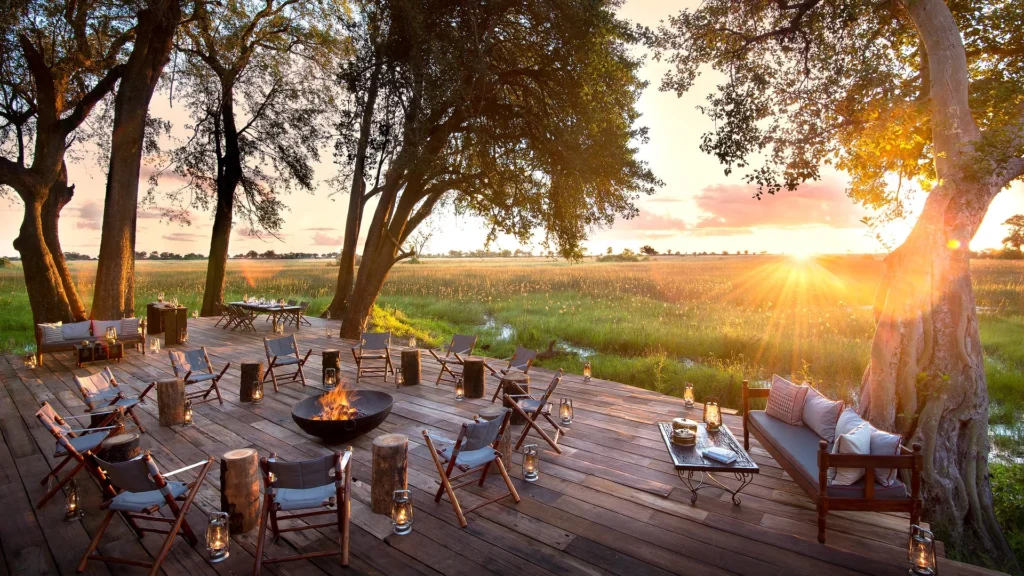
At the upper end of the price range, the camps and lodges are truly extraordinary. They manage to strike the perfect balance between delivering extremely high levels of comforts and service, whilst still feeling like proper outposts in the bush.
The connections between camps are done by convenient short hops in light aircraft or small helicopters, whilst the daily routine at the lodges can be as busy or restful as you wish. This is not luxury, this is a higher level of existence.
And we can push it further, with private camps, celebrated guides and other wonderful additions.

Striped and ready
Sample Trips
All our guests travel on tailor-made adventures, but here are some popular trip shapes to get you warmed up